 EN
APP Waterproof Membrane: High-Temperature Stability Guide
2026/11/20
How an APP waterproof membrane handles heat: 130°C softening point, torch application windows, overheating signs, summer storage, and thermal aging checks.

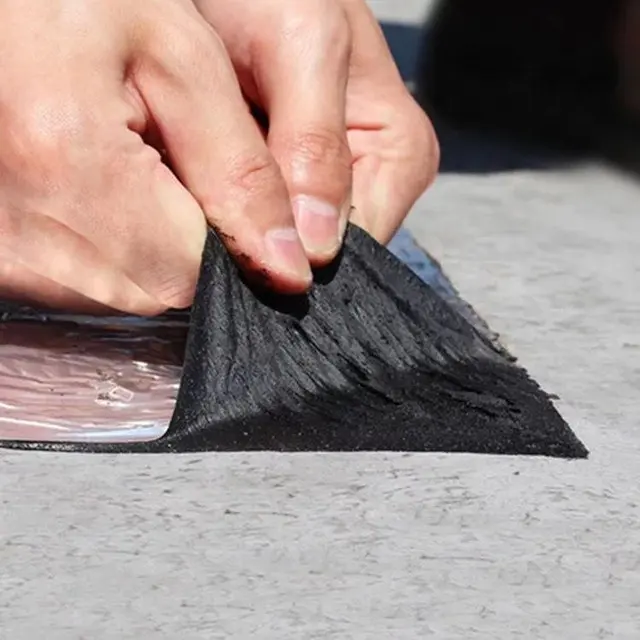
Specifying tape for exposed roof details is a materials decision first. This guide maps the product to its locations — roof edges, parapet caps, metal gutters, and metal roof flashing seam lines — then contrasts it with the PE film surface alternative.
Exposed roof details concentrate sunlight, standing water, and thermal movement into a few metres of vulnerable geometry: the roof edge flashing line, parapet caps, gutter mouths, and panel seams. An aluminium bitumen flashing tape is built for these zones. It combines a 1.5mm layer of SBS-modified bitumen adhesive with a bright aluminum foil surface, so one cold-applied strip provides heat reflective sealing, bonding, and weather shielding at once. Widths run 100mm to 600mm with roll lengths of 7.5m to 20m, covering edge trims and wide cap joints without splicing narrow bands. Peel adhesion reaches 1.5 N/mm and tensile strength 400 N/50mm — numbers that matter where wind uplift pulls at an edge line.
The aluminum foil surface is not decoration; it is the weathering system. Uncovered bitumen oxidises and crazes under UV within a few seasons; a metal face blocks it and reflects much of the solar load. That reflection lowers surface temperature on hot days, reducing the summer softening plain bitumen shows — heat reflective sealing in the literal sense. The foil also acts as a vapour barrier, keeping moisture out of the bond line. So the aluminium bitumen flashing tape is the grade wherever the strip stays exposed: ridge trims, roof edge flashing joints, parapet coping, duct seams, and gutter linings. Where the tape will be covered by counterflashing or cladding, the aluminum foil surface matters less and a cheaper face can be considered.
Edge details fail from the top down: UV splits the exposed lap, water tracks behind the trim, and wind uplift flexes the free edge. An aluminium bitumen flashing tape strip pressed over the trim-to-membrane or coping joint closes all three paths at once. The 1.5mm thickness resists puncture from foot traffic along the roof edge flashing zone, and the aluminum foil surface tolerates the direct sun that edge details never escape. On parapet walls, cap the joint between coping stones or metal cap sections the same way, and turn the tape down the wall face for a seal that reads continuously from roof to wall. Because the tape is cold applied, edge work proceeds without asphalt kettles on site.
On metal roofs the tape answers different problems. Panel laps, ridge and hip lines, and the junctions where prefabricated trim pieces meet the sheet all move with temperature; the SBS compound's elastomeric recovery absorbs that movement. The aluminum foil surface bonds readily to steel, aluminium, zinc-coated, and pre-painted panels on clean dry surfaces. Gutters and valley linings complete the metal roof flashing system and benefit even more: a strip with a metal face lines the trough, seals the outlet, and shrugs off ponding. A wide 600mm strip lines a small gutter in one pass; narrower widths close panel seams. On HVAC duct joints through the roof, the tape seals the collar perimeter at the deck penetration.
The PE film surface grade is the comparison every buyer should run. It is a 1.2mm SBS-modified bitumen tape, 50mm to 300mm wide, custom up to 1000mm, with peel adhesion of 1.2 N/mm and tensile strength of 300 N/50mm, rated for the same -20°C flexibility and 0.3 MPa water tightness. Its smooth PE film suits covered metal roof flashing joints, pipe wrappings, and detail work far from the roof edge flashing, where UV exposure is not a factor. The aluminium bitumen flashing tape trades some conformability for a face that survives daylight: 1.5mm thickness, 1.5 N/mm peel, 400 N/50mm tensile, and a foil built for heat reflective sealing. The rule: specify an aluminum foil surface grade where the strip sees the sky, and a PE film grade where something covers it. Both carry CE marking, with ISO 9001 and ISO 14001 systems behind production.
Beyond the roof edge flashing and seams, the tape earns its place at penetrations. Around pipe penetrations, a wrapped collar seals the gap where sheets struggle to conform. At daylight openings and hatches, the aluminum foil surface takes the sun that strikes those frames. At wall junctions, step the tape up the abutment and cover the leading edge with counterflashing. Heat reflective sealing has a comfort dividend too: over duct runs near occupied space, the reflective face lowers surface temperature in summer — the logic behind metal roof flashing repair work. None of these locations needs a torch, a primer on clean dry metal, or special equipment.
Yes, wherever the aluminum foil surface stays intact — it blocks UV and provides heat reflective sealing, protecting the bitumen underneath. Trim edges cleanly and overlap the next strip so no adhesive face sees daylight.
For a roof edge flashing trim joint, 100mm to 150mm strips usually suffice; parapet caps and metal roof flashing capping joints take 200mm to 600mm widths. Rolls of 7.5m to 20m let one roll serve a full elevation without end joints.
The aluminium bitumen flashing tape carries 1.5 N/mm peel and 400 N/50mm tensile against the PE grade's 1.2 N/mm and 300 N/50mm, while both hold -20°C flexibility and 0.3 MPa water tightness. For a roof edge flashing run that sees daylight, choose the aluminium grade — exposure decides, not strength alone.

2026/11/20
How an APP waterproof membrane handles heat: 130°C softening point, torch application windows, overheating signs, summer storage, and thermal aging checks.

2026/11/20
The science of a breathable waterproof membrane: water vapor diffusion, Sd values, three grammage grades, water column resistance, and wrong-use cases.

2026/11/20
Single-ply or two-ply, every flat roof is a stack. See how a self adhesive waterproof membrane for roof systems handles base, cap, insulation and drains.

2026/11/20
How the polyester scrim sets tensile strength and dimensional stability of reinforced TPO membrane rolls, with welding, roll sizes and selection tips.

2026/11/20
How an aluminum foil coated bitumen waterproof membrane reflects solar radiation, lowers surface temperature, and what maintenance keeps savings alive.

2026/11/20
SBS modified bitumen waterproof membrane property groups: tensile strength, low-temperature flexibility, heat resistance, surface finishes, applications.
Links to the corresponding full news page.

The eight questions overseas buyers ask most — factory ownership, capacity, batch consistency and lead times, answered straight.

SBS membranes, polymer sheets, coatings and geomembranes — six product lines are operating simultaneously.

Pre-sales specification, on-site technical support and post-delivery maintenance across 100+ export markets.

Waterproofing performance is decided in the specification and the detailing, not just the material. Our technical team helps you select the right system, resolve site questions as they arise, and stay reachable long after the container lands.
