
 EN
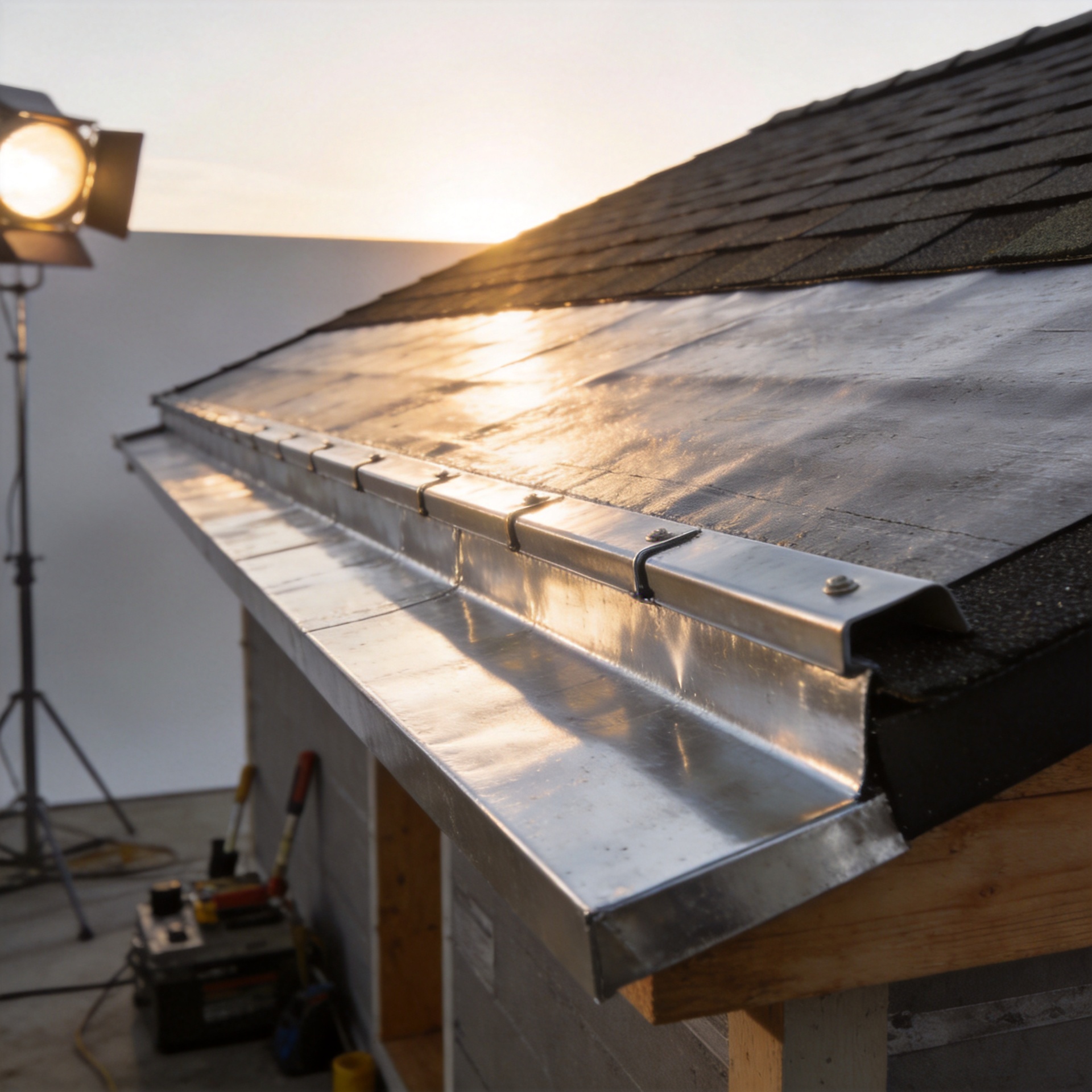
A roof without gravel or coating puts the weathering load on the top surface. That is the position an aluminum surface sbs waterproof membrane is built for. This guide compares it with PE film and a mineral granule finish, and explains what the foil gauge and reflectivity figures mean.
Where the Foil Face Sits in an SBS Modified Bitumen Membrane
An sbs bitumen membrane is a polyester or fiberglass carrier coated with bitumen blended with SBS polymer. The face goes on hot, and one line can finish the sheet with PE film, mineral, or foil. On a foil faced membrane the foil is laminated, usually 0.08–0.12 mm thick.
The core numbers do not change with the face: 3, 4, and 5 mm grades, tensile strength ≥800 N/50mm, elongation ≥40%, flexibility at -25°C, heat resistance at 90°C, 1 m × 10 m rolls, and 80–100 mm laps under GB 18242 or EN 13707. A reflective roof membrane is bought on those figures, and an aluminum surface sbs waterproof membrane keeps them.
Foil Against PE Film and Granule
Reflection comes first: foil returns a large share of solar radiation, PE film does not, and a mineral granule finish absorbs most of it. UV resistance comes second: foil is an opaque barrier, while PE film is burned off before the next ply.
Bonding comes third. Bitumen bonds to bitumen, so a granule surface melts into the ply above, while PE film must be removed or it becomes a slip plane. On a reflective roof membrane the lap needs care, and a foil faced membrane is no different, because metal does not fuse.
Foot traffic comes fourth. Granules grip a boot, foil is smoother, and an aluminum surface sbs waterproof membrane walked as a route needs boards.
What 0.08–0.12 mm Foil Means in Practice
The foil is a laminate, not a structural skin. At 0.08–0.12 mm it follows the compound through winding and stays continuous across the roll width. A crease at the lap line survives installation and collects water, so rolls travel upright and are unrolled without dragging.
Gauge is a batch property. Ask for it on the certificate of analysis and compare it with the data sheet. On a foil faced membrane the foil is the exposed face, and an aluminum surface sbs waterproof membrane is judged on that gauge. A mineral granule finish is more forgiving, which is why an sbs bitumen membrane with foil needs the extra check.
Reading the ≥80% Figure on a Reflective Roof Membrane
The page states the foil reflects more than 80% of incident solar radiation and gives 0.08–0.12 mm as the foil gauge. Both belong to the surface as supplied and tested. They are not a calculated energy result for a particular building.
What the figure supports is a comparison: a foil face has a measured reflective surface, a dark bitumen cap does not. Ask for the test report and record the measurement condition. An sbs bitumen membrane with foil is specified for the surface it presents, and an aluminum surface sbs waterproof membrane should be described the same way. A foil faced membrane is not a promise about energy bills.
Where the Face Fits and Where It Does Not
The foil face belongs on exposed cap sheets over flat and low-slope roofs where no gravel or ballast will follow, on parapet flashings, and on plant screens where UV drives aging. It suits refurbishment where a brighter surface is wanted without a coating programme. A reflective roof membrane is the right description only when the face stays visible.
An aluminum surface sbs waterproof membrane does not belong under a screed, under ballast, or in an inverted assembly where the face is buried. It is a poor choice for a heavily walked terrace, and for details folded repeatedly. There a mineral granule finish does the job with less risk, and an sbs bitumen membrane base sheet is the better partner.
A facilities team at a coastal plant had a 4 mm foil-faced cap over a sound existing bitumen layer. The crew kept rolls upright, cut laps to a line, and walked on boards. Two seasons later the surface was bright and every lap tight.
Specifying and Inspecting the Sheet
Write the clause in three parts: core, face, and documentation. For the core, state the modifier, reinforcement, thickness, tensile strength, elongation, cold flexibility, heat resistance, and standard. For the face, state foil and the gauge range. For documentation, ask for the technical data sheet, the batch certificate, and the reflectivity report.
At delivery, check that foil covers the full width, the roll has no hard creases, and the wrapper is dry. Store on timber in shade and sweep the deck before torching. A foil faced membrane is only as good as its lap, an sbs bitumen membrane only as good as its core, and an aluminum surface sbs waterproof membrane only as good as the foil bond. A reflective roof membrane adds a surface to protect, while a mineral granule finish would ask for less care.
Frequently Asked Questions
Can foil-faced SBS be used as a base ply?
It can, but the foil brings no benefit where it will be covered, and the surface is harder to fuse. Use a PE film sheet below and keep the foil for the exposed ply of an aluminum surface sbs waterproof membrane.
Does the foil affect waterproofing?
No. Watertightness comes from the compound and carrier, not the surface. A foil faced membrane changes the exposure side of an sbs bitumen membrane, not its resistance to water.
How is foil different from a granule finish?
Foil reflects and blocks UV; a mineral granule finish grips and takes traffic. A reflective roof membrane is chosen for exposure, a granule face for wear.










