 EN
APP Waterproof Membrane: High-Temperature Stability Guide
2026/11/20
How an APP waterproof membrane handles heat: 130°C softening point, torch application windows, overheating signs, summer storage, and thermal aging checks.

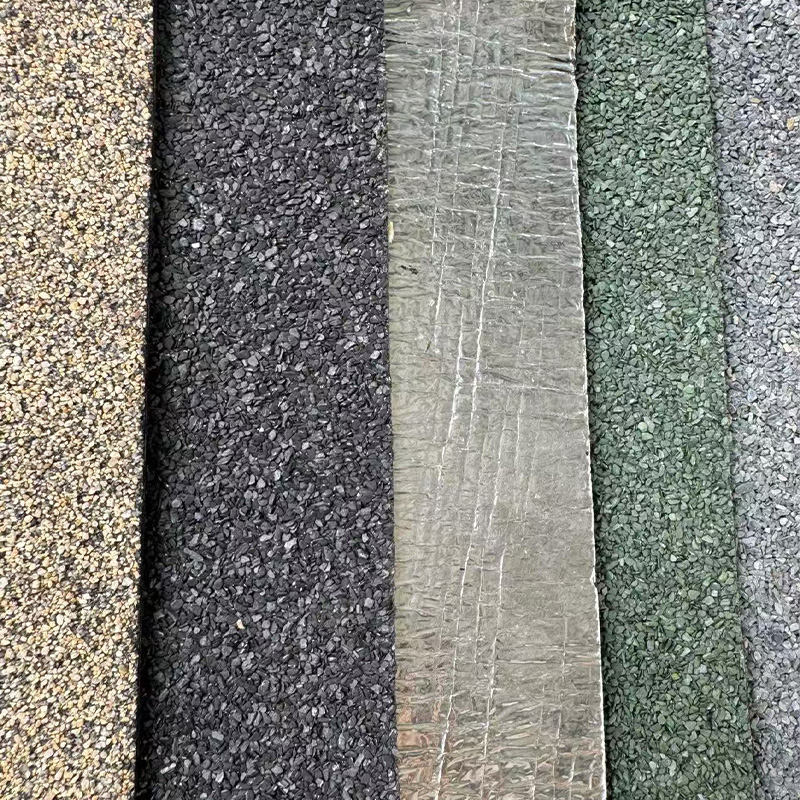
Sourcing an APP waterproofing membrane exporter China buyers can verify takes more than catalog pages. An APP modified bitumen membrane suits hot climates: its atactic polypropylene compound holds a 130°C-plus softening point where plain bitumen would flow. The market mixes factories, repackaging traders, and booking agents, so a repeatable routine — sampling, pre-shipment inspection, loading checks, export documentation review — protects any budget agreed with a waterproofing membrane supplier.
Every APP waterproofing membrane exporter China search surfaces should face one question: does it melt, coat, and finish an APP modified bitumen membrane roll itself? Ask for a business license with a manufacturing scope. Request a live video walkthrough — coating lines, mat unwinding, and a lab with tensile testers are hard to fake on camera. A genuine maker quotes a plant address inside a recognized cluster, welcomes audits, and discusses modifier formulation freely. Then ask for references: one shipment that passed pre-shipment inspection, one project under warranty. A trading intermediary, by contrast, quotes any thickness and surface within minutes and offers no verifiable paper trail — a useful tell when screening a waterproofing membrane supplier.
Complete export documentation is the cheapest insurance in this trade. Before the deposit moves, an APP waterproofing membrane exporter China buyers shortlist should provide:
Cross-check the CE file: the cited standard should match reinforced bitumen sheets, and the notified body number should verify. If an APP modified bitumen membrane maker stalls for days over a COA, treat that silence as data. Customs delays trace back to thin export documentation more often than to product failure.
Order a courier sample pulled from a current production run, not from a showroom shelf, and send it to an independent laboratory for tensile strength, softening point, and low-temperature flexibility testing. Results should sit inside the published TDS ranges. At contract stage, reserve inspection rights in the payment terms: a pre-shipment inspection happens after production ends, with rolls sampled at random from finished pallets, thickness gauged, roll length verified, and the batch COA photographed beside the goods. One container held at this gate costs a few hundred dollars; a defective shipment that sails to a tropical jobsite costs far more in removal and re-laying. Seal and keep a sample from every approved pre-shipment inspection as the reference for any later claim.
Bitumen rolls deform under heat and pressure, so loading matters as much as lab numbers — raise it with any APP waterproofing membrane exporter China shortlist before booking the vessel. Specify that each APP modified bitumen membrane roll is wrapped in PE film, palletized rather than floor-stacked, and kept away from the door end where solar gain is strongest. Require the pre-shipment inspection photos to show pallet arrangement, dunnage, and final bracing. The bill of lading should describe the goods precisely, and the export documentation — CE copy, COA — should travel inside the container. A disciplined waterproofing membrane supplier treats these steps as routine; resistance to photos is a warning sign.
Not every APP waterproofing membrane exporter China promotes publishes the same spec depth, so read the TDS line by line. The values should also match what the courier sample and the pre-shipment inspection produced. For a 4mm polyester-reinforced APP modified bitumen membrane grade, credible declared values include a softening point of at least 130°C, tensile strength of 600 N/50mm or better, elongation at break of 25% or more, low-temperature flexibility of -5°C to -10°C, and 3mm to 5mm thickness in 1m × 10m rolls. Surface finishes — PE film for buried layers, sand for decks, foil for exposed roofs — should be selectable, with guidance covering torch and cold-adhesive application where flame is restricted. A serious producer will also share export documentation from earlier shipments. Where a data sheet quotes only "excellent" without a number, move to the next waterproofing membrane supplier.
A procurement engineer speccing roofing for a coastal warehouse complex ran this sequence under deadline pressure. Two vendors collapsed at the video-audit stage: one had no laboratory to show; the other reused footage watermarked by another company. The chosen APP waterproofing membrane exporter China shipped only after a documented pre-shipment inspection, with APP modified bitumen membrane rolls gauge-checked at 4.0mm and COA values matching the independent lab result. Shandong Dingtai Waterproof was the factory in that case; the complete export documentation set arrived before the deposit did, which is exactly the order it should arrive in — and any waterproofing membrane supplier on your shortlist should meet that bar.
Book a video audit of the coating line and laboratory, verify the license scope, and request a batch COA from the latest APP modified bitumen membrane production cycle. An APP waterproofing membrane exporter China buyers can audit this way is a serious counterparty — and every waterproofing membrane supplier should welcome the request.
At minimum: CE copy, ISO 9001 certificate, batch COA, TDS, MSDS, invoice, and packing list. Complete export documentation protects customs clearance and gives your site team a quality baseline.
Yes. Random gauge checks and photo records during a pre-shipment inspection catch thickness shortfalls and finish errors while correction is still cheap.

2026/11/20
How an APP waterproof membrane handles heat: 130°C softening point, torch application windows, overheating signs, summer storage, and thermal aging checks.

2026/11/20
The science of a breathable waterproof membrane: water vapor diffusion, Sd values, three grammage grades, water column resistance, and wrong-use cases.

2026/11/20
Single-ply or two-ply, every flat roof is a stack. See how a self adhesive waterproof membrane for roof systems handles base, cap, insulation and drains.

2026/11/20
How the polyester scrim sets tensile strength and dimensional stability of reinforced TPO membrane rolls, with welding, roll sizes and selection tips.

2026/11/20
How an aluminum foil coated bitumen waterproof membrane reflects solar radiation, lowers surface temperature, and what maintenance keeps savings alive.

2026/11/20
SBS modified bitumen waterproof membrane property groups: tensile strength, low-temperature flexibility, heat resistance, surface finishes, applications.
Links to the corresponding full news page.

The eight questions overseas buyers ask most — factory ownership, capacity, batch consistency and lead times, answered straight.

SBS membranes, polymer sheets, coatings and geomembranes — six product lines are operating simultaneously.

Pre-sales specification, on-site technical support and post-delivery maintenance across 100+ export markets.

Waterproofing performance is decided in the specification and the detailing, not just the material. Our technical team helps you select the right system, resolve site questions as they arise, and stay reachable long after the container lands.
