 EN
APP Waterproof Membrane: High-Temperature Stability Guide
2026/11/20
How an APP waterproof membrane handles heat: 130°C softening point, torch application windows, overheating signs, summer storage, and thermal aging checks.

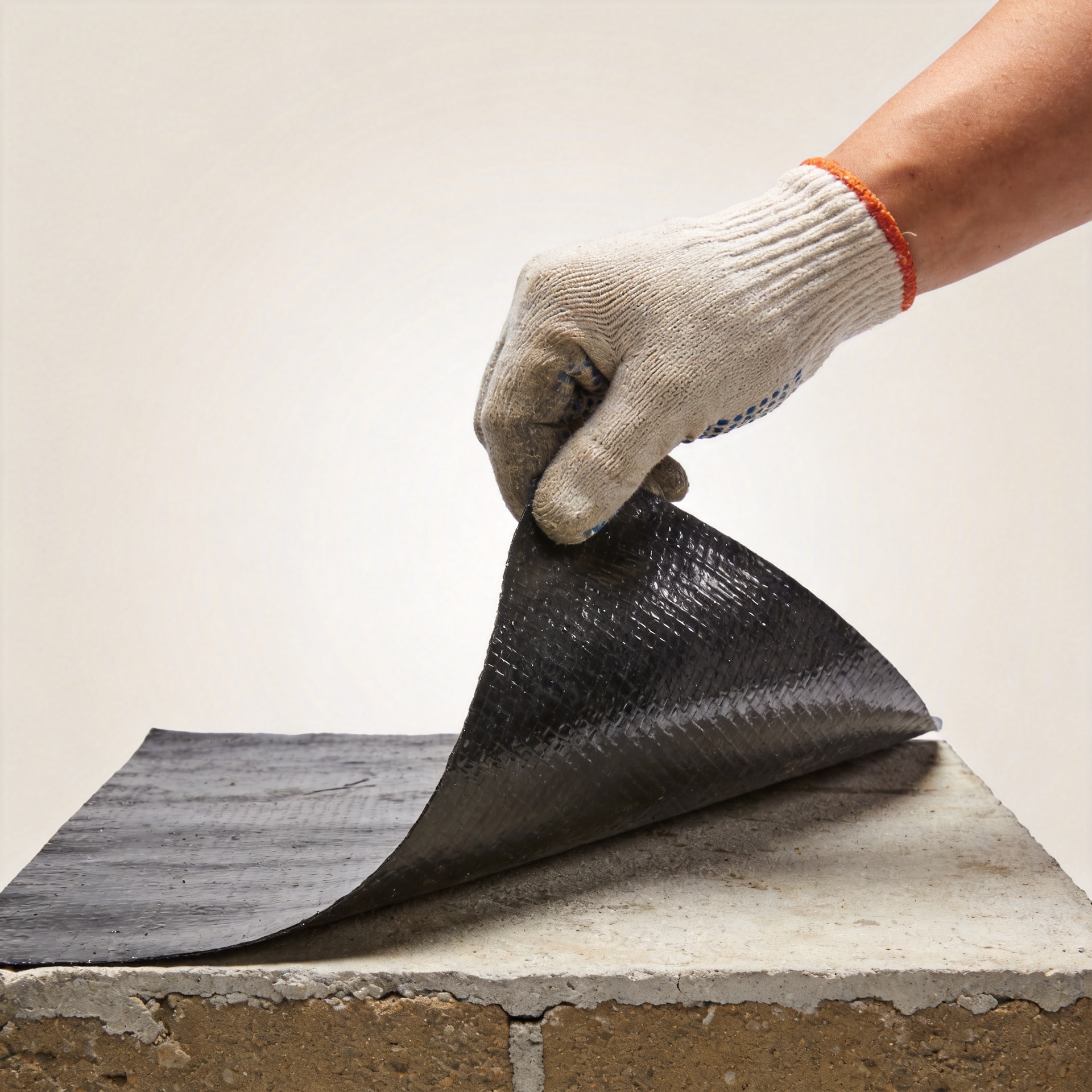
Choosing a bitumen waterproof membrane for foundation basement work starts with a question of sides: which face carries the sheet, which way does the water push? An SBS modified bitumen membrane outside and a self adhesive bitumen membrane inside are two different decisions, not one product at two prices: the positive-side build goes down before backfill, the negative-side build is fixed to the inner face after the structure stands.
The positive side is the outside face, the only position where water pressure works for the system, pressing the sheet to the concrete instead of peeling it off. A torch applied membrane suits the duty: the classic choice is an SBS modified bitumen membrane with flexibility at -25°C, tensile strength ≥800 N/50 mm and elongation ≥40%, stable to 90°C, in 3, 4 or 5 mm to GB 18242 and EN 13707, supplied 1 m × 10 m with laps of 80-100 mm. The constraint is access: every square metre goes down before soil returns, because a bitumen waterproof membrane for foundation basement duty buried under backfill cannot be reached, inspected or repaired without re-excavation.
Climate moves the positive-side choice. An APP modified bitumen membrane carries ≥600 N/50 mm tensile, ≥25% elongation, heat resistance to 130°C and cold flexibility of -5 or -10°C, in the same 3, 4 and 5 mm range. Where summer walls stay hot or the sheet waits in the sun before covering, heat tolerance matters more than low-temperature elasticity. In cold regions the logic reverses, and the SBS modified bitumen membrane keeps its -25°C advantage over any plastomeric sheet. No grade is universal; selection begins with the site temperature profile, and a torch applied membrane in winter asks for competent hands.
When backfill is done or the building occupied, only the inner face remains, and the system changes character. A self adhesive bitumen membrane is bonded or mechanically fixed to the inner slab and walls, and water pressure holds the sheet against the concrete instead of pulling it away - the one direction a negative-side build can rely on. The published 1.2 mm PE-film grade shows peel adhesion ≥1.5 N/mm, tensile strength ≥300 N/50 mm, elongation ≥30%, flexibility at -20°C and watertightness of 0.3 MPa for 120 minutes, in 1 m × 10 m or 20 m rolls with an MOQ of 500 m². Cold application matters indoors: unlike an APP modified bitumen membrane, no flame or permit is needed in a confined basement.
Some sites leave no choice. A blindside wall against sheet piling or stable rock takes its bitumen waterproof membrane for foundation basement system before the pour, fixed to the facing with the laps turned outward - there is no second chance once concrete rises. An occupied basement with leaks takes the opposite path, because excavation around a standing building is rarely affordable; the self adhesive bitumen membrane goes on inside, cold and quiet. On one retrofit, a contractor sealed a leaking plant-room wall from within after the client rejected digging beside a live roadway, and the torch applied alternative died on that site constraint.
Both systems fail at the same three details. A post-cast strip needs continuity of the bitumen waterproof membrane for foundation basement layer across the future pour, backed by a waterstop, because the strip moves after it closes. Penetrations need collars clamped to the pipe, not wrapped sheets. Internal and external corners need fillets or extra plies, since a torch applied membrane bridging a sharp arris thins exactly where stress concentrates. Grade choice removes none of this: the same SBS modified bitumen membrane that lays easily on a slab still needs a competent corner, and an APP modified bitumen membrane dressed at a pipe collar is a hand skill no datasheet replaces.
The decision rests on access, water table and timing. Access decides whether the positive side exists at all; the water table, whether the negative side is comfort or necessity; timing, what the programme pays for. Many serious projects run both: an SBS modified bitumen membrane outside where access allowed, a self adhesive bitumen membrane inside as the second line where it did not - the two systems fail in different directions and cover each other. In hot regions an APP modified bitumen membrane takes the outside duty. A bitumen waterproof membrane for foundation basement specification that names a grade without its side is not yet a specification.
Not sensibly: outside, where flame and access exist, a torch applied membrane; inside, where cold application rules, a self adhesive bitumen membrane. The same SBS modified bitumen membrane family may cover both, but grade and bitumen waterproof membrane for foundation basement detail set follow the side.
An APP modified bitumen membrane, with 130°C heat resistance and -5 or -10°C cold flexibility, is the natural pick in mild winters. Indoors, on the other hand, the self adhesive bitumen membrane avoids flame altogether. Where winter application is likely instead, the SBS modified bitumen membrane with -25°C flexibility stays workable.
Positive-side laps run 80-100 mm, and a torch applied membrane welds them into one layer; indoor laps follow the same overlap logic and are sealed the same way. On either face, the roll end of a self adhesive bitumen membrane is butted and closed like any lap, because a bitumen waterproof membrane for foundation basement system is only as tight as its laps, and an APP modified bitumen membrane waiting in the sun needs the same discipline.

2026/11/20
How an APP waterproof membrane handles heat: 130°C softening point, torch application windows, overheating signs, summer storage, and thermal aging checks.

2026/11/20
The science of a breathable waterproof membrane: water vapor diffusion, Sd values, three grammage grades, water column resistance, and wrong-use cases.

2026/11/20
Single-ply or two-ply, every flat roof is a stack. See how a self adhesive waterproof membrane for roof systems handles base, cap, insulation and drains.

2026/11/20
How the polyester scrim sets tensile strength and dimensional stability of reinforced TPO membrane rolls, with welding, roll sizes and selection tips.

2026/11/20
How an aluminum foil coated bitumen waterproof membrane reflects solar radiation, lowers surface temperature, and what maintenance keeps savings alive.

2026/11/20
SBS modified bitumen waterproof membrane property groups: tensile strength, low-temperature flexibility, heat resistance, surface finishes, applications.
Links to the corresponding full news page.

The eight questions overseas buyers ask most — factory ownership, capacity, batch consistency and lead times, answered straight.

SBS membranes, polymer sheets, coatings and geomembranes — six product lines are operating simultaneously.

Pre-sales specification, on-site technical support and post-delivery maintenance across 100+ export markets.

Waterproofing performance is decided in the specification and the detailing, not just the material. Our technical team helps you select the right system, resolve site questions as they arise, and stay reachable long after the container lands.
