 EN
APP Waterproof Membrane: High-Temperature Stability Guide
2026/11/20
How an APP waterproof membrane handles heat: 130°C softening point, torch application windows, overheating signs, summer storage, and thermal aging checks.

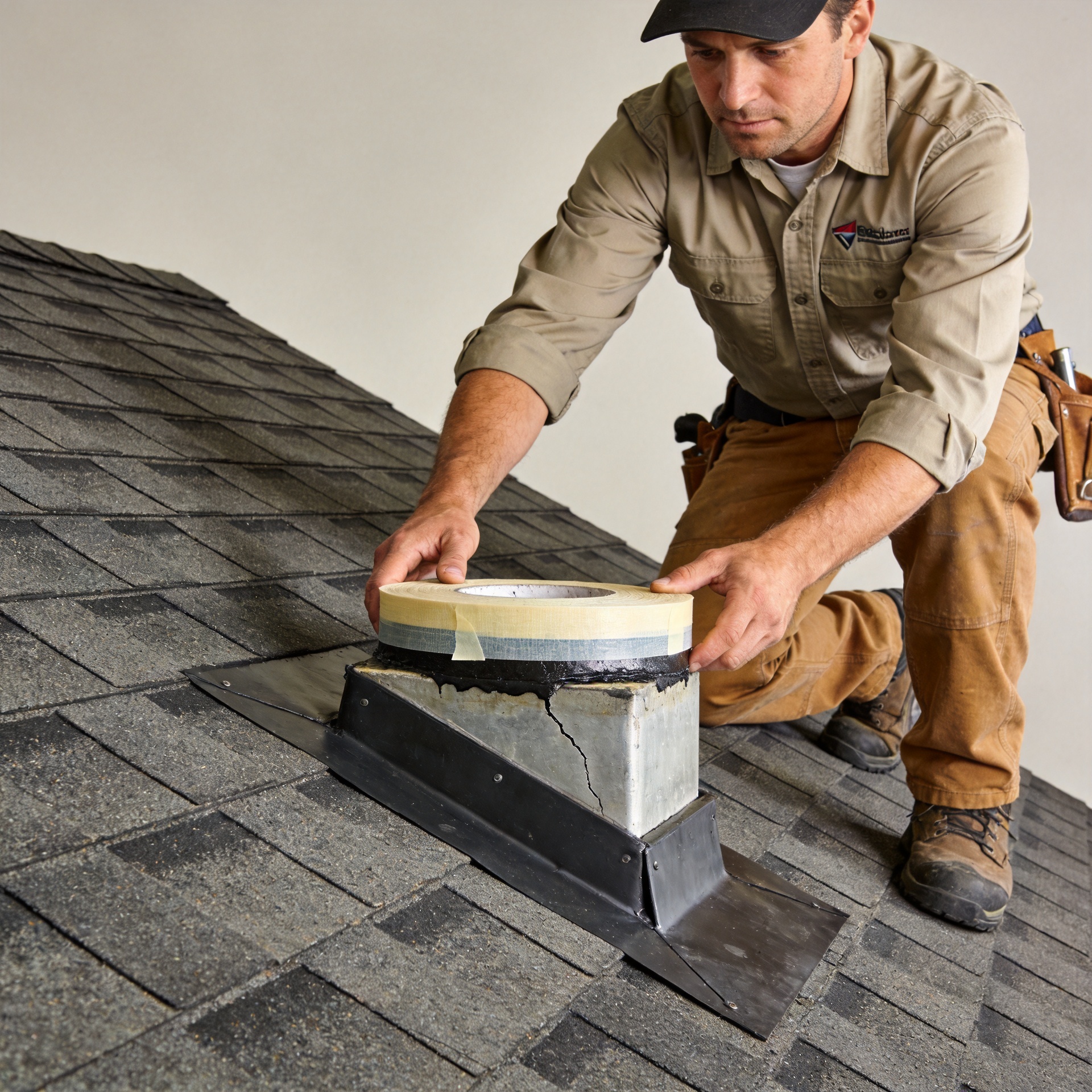
Roof leaks concentrate in three places: lap seams between sheets, detail joints around flashings and penetrations, and surface cracks in ageing coverings. Purpose-chosen tape addresses all three — but only when width, thickness, and facing match the defect and the sequence is right. This guide organises selection by defect type and states when waterproof sealing tape stops being the answer.
Lap seams fail at their edges, where wind uplift peels the overlap before water crosses the flat face. A bitumen tape for roof lap reinforcement — typically a self-adhesive flashing tape run — must extend wider than the lap itself, with equal margins onto both sheets. The 1.2mm PE-faced bitumen waterproof tape covers 50–300mm widths (custom up to 1000mm) with peel adhesion ≥1.2 N/mm and tensile ≥300 N/50mm, a secondary seal over laps on bituminous systems.
On metal roofing, the 1.5mm aluminum foil-faced grade — widths 100–600mm, peel ≥1.5 N/mm, tensile ≥400 N/50mm — adds UV protection for exposed seam lines. Both bitumen waterproof tape grades stay flexible at -20°C and are water tight at 0.3 MPa — defensible waterproof sealing tape figures for lap duty.
Detail joints at parapet bases, ridge caps, pipe collars, gutter edges combine movement with awkward geometry. Here a self-adhesive flashing tape must conform while bridging the transition. For pipe collars of 50–150mm diameter, a 75–150mm width gives adequate overlap onto the deck; wider structural joints take formats to 1000mm, covering the widest bitumen tape for roof details.
Where the detail moves thermally, butyl is the better match: the 1.2mm butyl grade elongates ≥300% and holds tack from -40°C to +70°C, bonding to metal, PVC, and glass primerless; a PE-faced bitumen waterproof tape takes the static parapet base. Whatever the compound, every self-adhesive flashing tape demands a clean, dry substrate before pressing.
A crack in an ageing bituminous roof covering can be bridged by a waterproof sealing tape when that crack is static or moves only slightly. Apply a wider format centred over the crack so each side carries an equal bonded margin; the PE-faced 1.2mm grade suits cracks to be overlaid later, the foil-faced 1.5mm grade cracks left exposed to weather on the roof.
Remember always that a self-adhesive flashing tape bridges; a waterproof sealing tape never fills. Cracks wider than a few millimetres, or cracks that open and close seasonally, exceed what any bitumen tape for roof use can carry and point toward membrane-level repair instead.
Choosing between grades is easier when each bitumen waterproof tape parameter maps to a defect property. Width follows defect span: 75–100mm for standard laps, 100–150mm for collars and flashings, 300–1000mm for structural joints. Facing follows exposure: foil for UV, PE film for burial under screeds and tiles.
Thickness follows mass demand. A 1.2mm self-adhesive flashing tape conforms around collars at peel from ≥1.2 N/mm; the 1.5mm foil grade raises tensile to ≥400 N/50mm for exposed lines. Any waterproof sealing tape specified this way — width to span, facing to exposure, thickness to load — will not be the weak link.
Sequence decides whether a bitumen tape for roof detailing survives its first winter. Clean and dry the zone; prime rough or porous substrates before any bitumen waterproof tape goes down. Work from the lowest point upward so upper edges shed water over lower ones, press from the centre outward to expel air, and roll every lap. At corners run continuous strips, not butt joints; between tape lengths of waterproof sealing tape keep 60mm of bonded lap minimum.
Where a crack sits beneath a lap, seal the crack first, then tape the lap above it — never the reverse. On a hillside community roof after storm damage, crews ran a self-adhesive flashing tape along gutter edges before the sheet-lap passes; the patched zones held through the next wet season — order mattered as much as any bitumen tape for roof grade choice.
There is a boundary beyond which tape-based roof repair stops being economic. Extensive alligatored surfaces, widespread seam failure, saturated insulation, or deck movement are system defects, not local ones; they require a self-adhesive or torch-applied membrane across the field, not any bitumen waterproof tape. The 1.2mm self-adhesive bitumen membrane — peel adhesion ≥1.5 N/mm on concrete, flexibility at -20°C, water tightness at 0.3 MPa for 120 minutes — covers such rebuilds without flame.
Use a waterproof sealing tape as the detailing layer on a sound roof, or the repair layer for isolated defects. When defects cluster beyond roughly a quarter of the surface, budget for a membrane system instead of repeated patching.
Match tape width to the lap plus equal margins on both sides. Standard lap seams take 75–100mm; a self-adhesive flashing tape of 100–150mm covers most pipe collars and flashings, while custom widths to 1000mm serve structural joints in bitumen waterproof tape form.
Within limits. Bitumen grades keep flexibility to -20°C, and butyl compounds hold tack from -40°C. Substrates must still be clean and dry; firm pressure at low temperature is what secures the bond.
No service-life figure is published, and responsible suppliers avoid inventing one. Durability tracks surface preparation, compression, and UV exposure for a bitumen waterproof tape — which is why a foil-faced self-adhesive flashing tape serves exposed lines while PE-faced grades sit covered — the same logic as any bitumen tape for roof specification.

2026/11/20
How an APP waterproof membrane handles heat: 130°C softening point, torch application windows, overheating signs, summer storage, and thermal aging checks.

2026/11/20
The science of a breathable waterproof membrane: water vapor diffusion, Sd values, three grammage grades, water column resistance, and wrong-use cases.

2026/11/20
Single-ply or two-ply, every flat roof is a stack. See how a self adhesive waterproof membrane for roof systems handles base, cap, insulation and drains.

2026/11/20
How the polyester scrim sets tensile strength and dimensional stability of reinforced TPO membrane rolls, with welding, roll sizes and selection tips.

2026/11/20
How an aluminum foil coated bitumen waterproof membrane reflects solar radiation, lowers surface temperature, and what maintenance keeps savings alive.

2026/11/20
SBS modified bitumen waterproof membrane property groups: tensile strength, low-temperature flexibility, heat resistance, surface finishes, applications.
Links to the corresponding full news page.

The eight questions overseas buyers ask most — factory ownership, capacity, batch consistency and lead times, answered straight.

SBS membranes, polymer sheets, coatings and geomembranes — six product lines are operating simultaneously.

Pre-sales specification, on-site technical support and post-delivery maintenance across 100+ export markets.

Waterproofing performance is decided in the specification and the detailing, not just the material. Our technical team helps you select the right system, resolve site questions as they arise, and stay reachable long after the container lands.
