 EN
APP Waterproof Membrane: High-Temperature Stability Guide
2026/11/20
How an APP waterproof membrane handles heat: 130°C softening point, torch application windows, overheating signs, summer storage, and thermal aging checks.

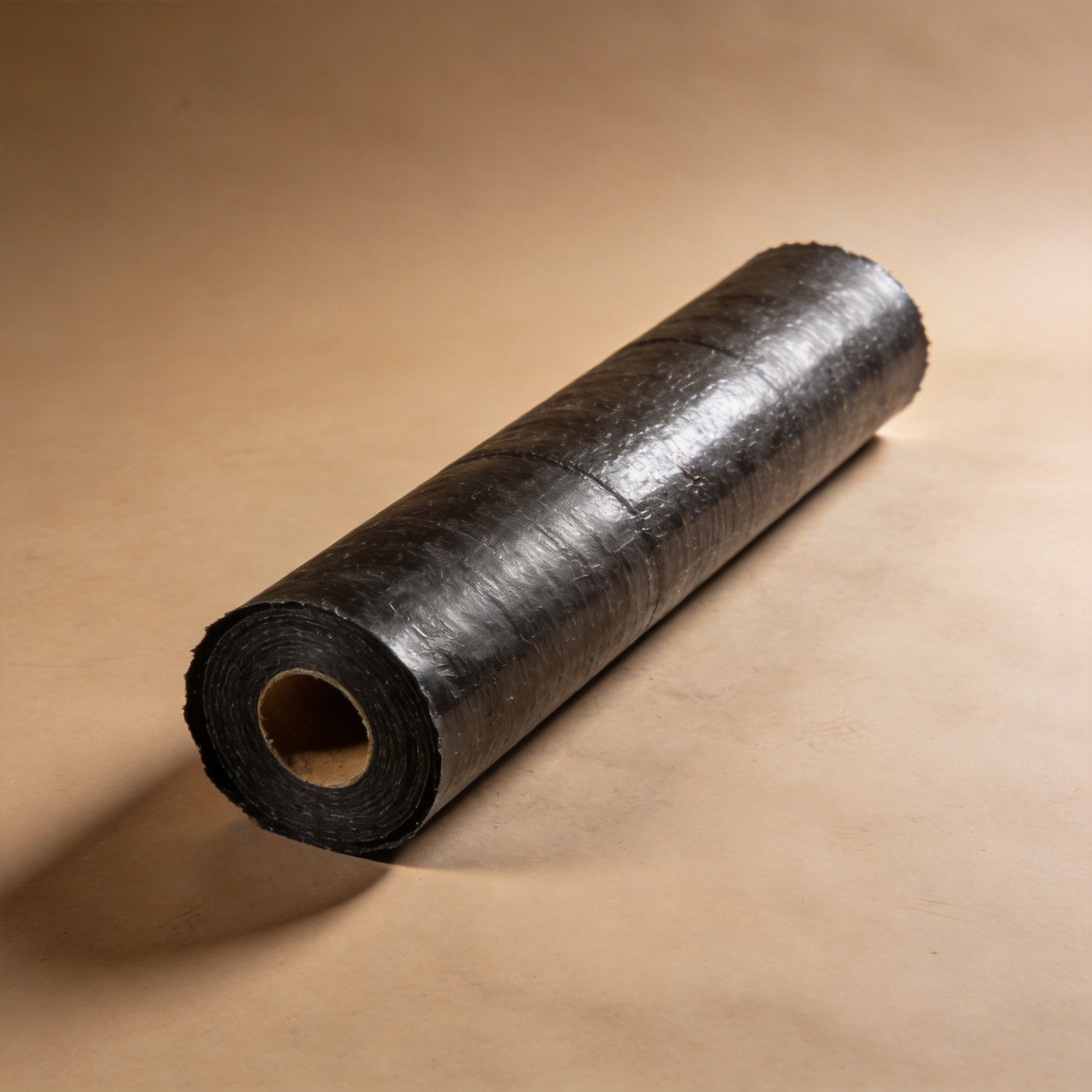
Choosing a bitumen waterproof membrane manufacturer from a distance is mostly a desk exercise: registrations, production addresses, certificates, shipment histories and packaging details all tell a story long before anyone books a flight. This article sets out the checks that separate a real producer of modified bitumen rolls from a trader with a good website.
Identity decides everything after it. A bitumen waterproof membrane manufacturer mixes, oxidizes and coats at its own plant; a trader relays orders to someone else's line, and production capacity is the first place the two stories separate. The signals differ. A manufacturer's business scope names production of waterproofing materials, not merely sales and import-export. Its registered and shipping addresses sit in the same industrial zone, and its export records name real ports year after year. Equipment photos and videos show tanks, impregnation lines, cooling drums and roll winders, not just a warehouse and a logo. No single signal proves anything, but a trader's story wobbles exactly where questions about the line begin: an intermediary can quote, can negotiate, and cannot describe the mixing line at all.
Five checks cover most of the ground. First, the business license: scope and registered capital, read against the factory address. Second, production capacity: ask what the line runs per shift, how many lines exist and what they make; answers that dodge are answers. Third, export records: a plant that has shipped containers of modified bitumen rolls for years leaves customs traces a fresh entity cannot fake. Fourth, certificates: test reports against GB 18242 or EN 13707 in the company's own name, with a real laboratory behind them. Fifth, batch traceability: ask how a roll carries its number and what records sit behind it. A bitumen waterproof membrane manufacturer answers these in its sleep; a trader forwards the questions and returns late with borrowed answers.
Certificates deserve scrutiny even on paper. For SBS modified bitumen rolls, the benchmark figures are low-temperature flexibility at minus 25 degrees Celsius, tensile strength of at least 800 N/50mm, elongation of at least 40 percent, heat resistance at 90 degrees, and thickness classes of 3, 4 or 5 mm. For APP plastomeric rolls the picture shifts: tensile of at least 600 N/50mm, elongation of at least 25 percent, heat resistance at 130 degrees, and low-temperature ratings of minus 5 or minus 10 degrees. A bitumen waterproof membrane manufacturer quoting such figures with the right standard numbers, GB 18242 or EN 13707, at least shows it knows its own product and that production capacity stands behind the line, and that export records show other buyers already rely on it. A certificate that cannot name the production batch it describes proves little, which is why batch traceability belongs beside testing.
On the roll itself, the packaging is a document printed at the coating line during production, not in a sales office, and it is the one artifact you can examine before any visit. A producer prints its name, plant address, standard, thickness class and batch, and keeps internal records connecting it to a dated run. Weak batch traceability shows in small ways: batch numbers that skip logical sequences, packaging that names no plant, labels whose fonts and layouts shift from roll to roll. Counterfeit packaging has habits too: a brand printed crisp and new on an old-looking roll, two rolls of modified bitumen in one pallet carrying different claimed standards, English and Chinese labels that disagree. A printed lap of 80 to 100 mm for a torch-applied or self-adhesive product should match the stated standard; a mismatch is a quiet confession.
Buyers fail these checks in predictable ways. They accept a certificate's logo as batch traceability, when the report may not name a production run. They take website figures as production capacity without asking about shifts, lines or output, then wonder why delivery slips. They read export records as a volume contest, when one container of modified bitumen rolls to one port says little about consistency. And they let the price email do the talking, so answers arrive shaped to close the deal. Slow the process down, put the checks in writing, and ask the same questions twice; a real bitumen waterproof membrane manufacturer's answers stay stable, a relay's answers drift.
Shipment history rewards a careful reader. Longevity matters more than volume: a plant shipping modified bitumen rolls for many years to many ports has survived audits, rejections and claims, which is its own test. Consistency matters too, the same company name across bills of lading, invoices and certificates. A fresh entity with no export records is not disqualified, but the burden shifts: ask which customers took the risk before you. Production capacity claims can be cross-checked against shipments, roughly and honestly: a line has a rhythm, and numbers that outrun it deserve questions.
Read the business scope against the shipping address, then ask for a video of the line running. A bitumen waterproof membrane manufacturer can show mixing tanks and winders within a day; an intermediary sends slides.
The standard number, the laboratory, and the batch the report describes. Certificates tied to batch traceability let you match a delivered roll to a dated test; one with no batch reference protects no one.
Yes, for small or mixed orders a trader adds convenience, and using one for a trial lot is a reasonable shortcut. But insist that the underlying plant is checked directly, including its export records, production capacity and batch traceability, and keep the modified bitumen certificates in the bitumen waterproof membrane manufacturer's name, not the middleman's.

2026/11/20
How an APP waterproof membrane handles heat: 130°C softening point, torch application windows, overheating signs, summer storage, and thermal aging checks.

2026/11/20
The science of a breathable waterproof membrane: water vapor diffusion, Sd values, three grammage grades, water column resistance, and wrong-use cases.

2026/11/20
Single-ply or two-ply, every flat roof is a stack. See how a self adhesive waterproof membrane for roof systems handles base, cap, insulation and drains.

2026/11/20
How the polyester scrim sets tensile strength and dimensional stability of reinforced TPO membrane rolls, with welding, roll sizes and selection tips.

2026/11/20
How an aluminum foil coated bitumen waterproof membrane reflects solar radiation, lowers surface temperature, and what maintenance keeps savings alive.

2026/11/20
SBS modified bitumen waterproof membrane property groups: tensile strength, low-temperature flexibility, heat resistance, surface finishes, applications.
Links to the corresponding full news page.

The eight questions overseas buyers ask most — factory ownership, capacity, batch consistency and lead times, answered straight.

SBS membranes, polymer sheets, coatings and geomembranes — six product lines are operating simultaneously.

Pre-sales specification, on-site technical support and post-delivery maintenance across 100+ export markets.

Waterproofing performance is decided in the specification and the detailing, not just the material. Our technical team helps you select the right system, resolve site questions as they arise, and stay reachable long after the container lands.
