 EN
APP Waterproof Membrane: High-Temperature Stability Guide
2026/11/20
How an APP waterproof membrane handles heat: 130°C softening point, torch application windows, overheating signs, summer storage, and thermal aging checks.

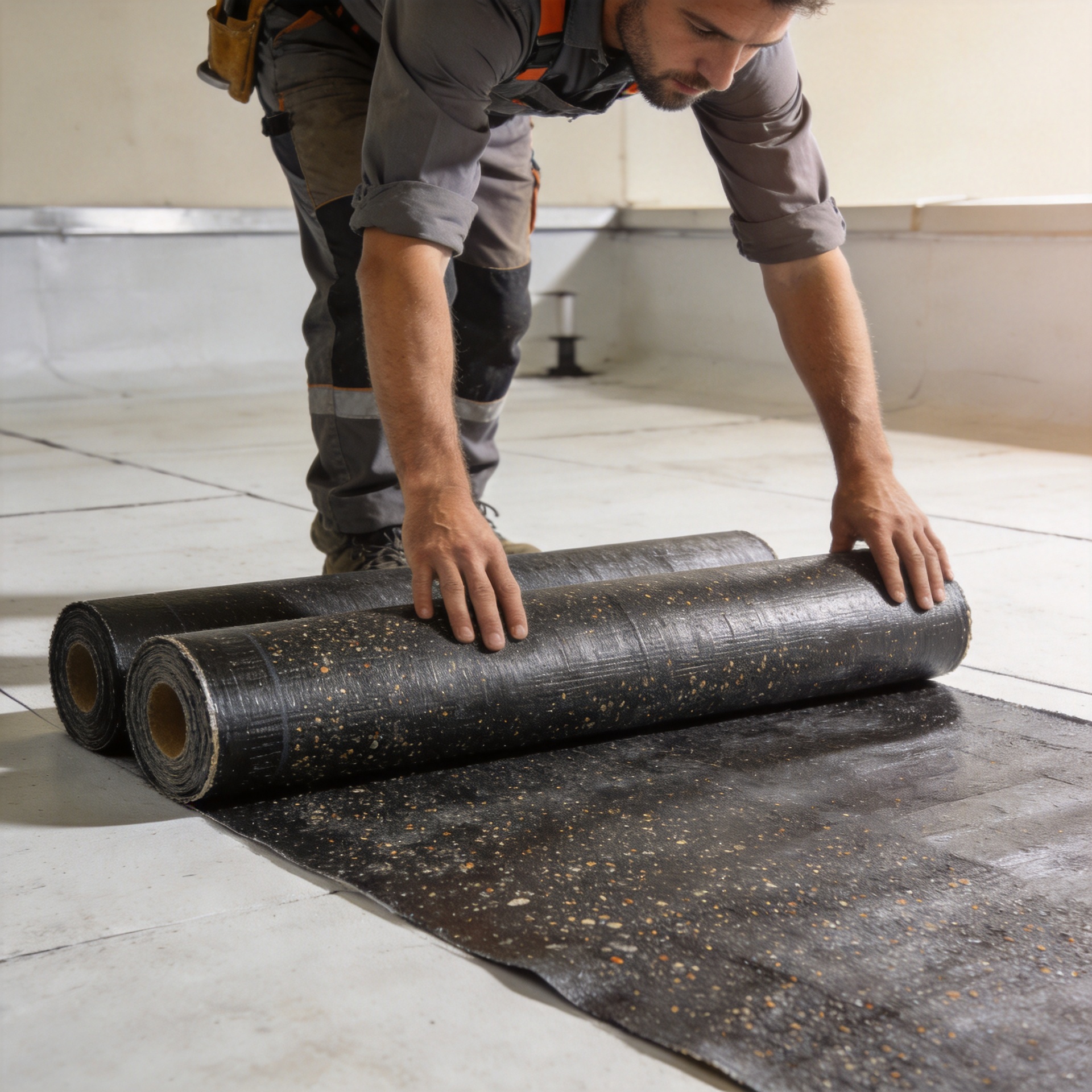
Bitumen has waterproofed buildings for over a century, but the material on a modern site is not the binder of a hundred years ago. It is modified bitumen: a compound engineered around two weaknesses raw asphalt never solved alone. Following the path — oxidation, then SBS and APP modification, then carriers and finishes — explains why one bitumen waterproof membrane bends at -25°C while another holds its profile at 130°C.
Oxidized bitumen is the chemistry behind traditional built-up roofing felts and damp-proof courses: blowing air through hot binder raises the softening point and stiffens the sheet. It worked in warm weather but paid at the cold end — the hardened material cracked along contraction lines in its first hard winters and accumulated fatigue splits, while multi-layer felt and hot mopping completed the system. The lesson defines what followed: stiffening a binder is easy; keeping oxidized bitumen heat-stable and cold-flexible at once is the actual engineering problem — and solving it is the reason modified bitumen exists.
Brittleness was answered by styrene-butadiene-styrene rubber. In hot bitumen, SBS forms a continuous elastomeric network: styrene end blocks act as physical crosslinks, and the rubbery mid-sections stretch and recover. An SBS modified sheet inherits that network, which is why its datasheet reads as it does: low temperature flexibility at -25°C, elongation at break of at least 40% with elastic recovery, tensile strength of at least 800 N/50mm from the polyester mat, heat resistance of 90°C. Certified under GB 18242 and EN 13707 in 3mm, 4mm, and 5mm grades, SBS modified bitumen is specified for roof layers, basements, and bridge decks — positions where a bitumen waterproof membrane must follow movement and survive winters that would crack an oxidized bitumen sheet. The modifier does not add a property; it changes what the compound is.
The second modifier attacks the opposite weakness. Atactic polypropylene dissolved into bitumen raises the softening point dramatically and gives the compound a plastic, dimensionally stable character. An APP modified sheet is rated for heat resistance around 130°C, with flexibility of -5°C to -10°C and elongation at break of at least 25%; the formulation is UV-stabilized for exposed service. The rating matters because a dark tropical roof runs far hotter than air; a softer binder would re-flow, while the APP compound holds its profile — no softening, no blistering. Where an SBS modified product bends through a northern winter, its APP counterpart stands still in the heat — two answers, one bitumen waterproof membrane technology. The two modifiers are complementary: each compound trades range at one end of the thermometer for decisiveness at the other.
The modified binder is only the middle of the sandwich. The carrier supplies the mechanical frame, and the certified numbers attach to it: the ≥ 800 N/50mm tensile strength and ≥ 40% elongation of an SBS modified membrane belong to the polyester mat, while fiberglass brings dimensional stability where movement is minimal. Thickness grades of 3mm, 4mm, and 5mm — tested separately under GB 18242 and EN 13707 — let a specifier match mass to traffic and service life. Reading a modified bitumen datasheet without asking which carrier produced the numbers is a classic error for any bitumen waterproof membrane buyer.
Surfacing completes the system. PE film suits concealed layers; mineral granules shield exposed cap sheets; aluminum foil adds reflectivity — a common pairing for APP modified sheets in hot regions. The finish also signals position: a granule-surfaced roll faces the weather, a film-surfaced roll does not. Each modified bitumen sheet therefore arrives as a designed assembly — binder chemistry, carrier, thickness, finish — and every datasheet line belongs to one specific combination of the four, not to the family name alone.
For a purchaser, the history since oxidized bitumen is a reading guide for any bitumen waterproof membrane purchase: three checks decide most of it. First, in any modified bitumen range the modifier name predicts the certified numbers: SBS modified products quote low-temperature flexibility and elongation, APP modified products quote heat resistance and UV stability — figures that ignore that logic deserve a question. Second, batch conformity beats brochure claims: a -25°C or 130°C rating belongs to a specific thickness grade tested under GB 18242 or EN 13707, and the batch certificate should reproduce it. Third, confirm the assembly: reinforcement, thickness, finish, not the family name. A buyer who ordered the same membrane for a hot-region depot and a cold-region warehouse learned this: the APP modified rolls stiffened through the northern winter; the replacement order — modified bitumen split by family, each bitumen waterproof membrane roll matched to its climate — ended the cycle. Two centuries of development compress into one habit: buy the modification, not the word.
Oxidation raises the softening point so the binder stops flowing in heat, but it hardens the material at low temperature — the reason sheets made this way crack in cold weather and under repeated thermal movement.
Each bitumen waterproof membrane datasheet differs by modifier: -25°C flexibility with ≥ 40% elongation on one side, about 130°C heat resistance with -5°C to -10°C flexibility on the other. The SBS modified sheet serves movement and cold; the APP modified sheet serves heat and sun — elasticity versus stability.
Yes. Tensile and elongation figures belong to the mat or fiberglass carrier, and film, granule, or foil finishes match layer position — confirm all three with the modified bitumen grade.

2026/11/20
How an APP waterproof membrane handles heat: 130°C softening point, torch application windows, overheating signs, summer storage, and thermal aging checks.

2026/11/20
The science of a breathable waterproof membrane: water vapor diffusion, Sd values, three grammage grades, water column resistance, and wrong-use cases.

2026/11/20
Single-ply or two-ply, every flat roof is a stack. See how a self adhesive waterproof membrane for roof systems handles base, cap, insulation and drains.

2026/11/20
How the polyester scrim sets tensile strength and dimensional stability of reinforced TPO membrane rolls, with welding, roll sizes and selection tips.

2026/11/20
How an aluminum foil coated bitumen waterproof membrane reflects solar radiation, lowers surface temperature, and what maintenance keeps savings alive.

2026/11/20
SBS modified bitumen waterproof membrane property groups: tensile strength, low-temperature flexibility, heat resistance, surface finishes, applications.
Links to the corresponding full news page.

The eight questions overseas buyers ask most — factory ownership, capacity, batch consistency and lead times, answered straight.

SBS membranes, polymer sheets, coatings and geomembranes — six product lines are operating simultaneously.

Pre-sales specification, on-site technical support and post-delivery maintenance across 100+ export markets.

Waterproofing performance is decided in the specification and the detailing, not just the material. Our technical team helps you select the right system, resolve site questions as they arise, and stay reachable long after the container lands.
