 EN
APP Waterproof Membrane: High-Temperature Stability Guide
2026/11/20
How an APP waterproof membrane handles heat: 130°C softening point, torch application windows, overheating signs, summer storage, and thermal aging checks.

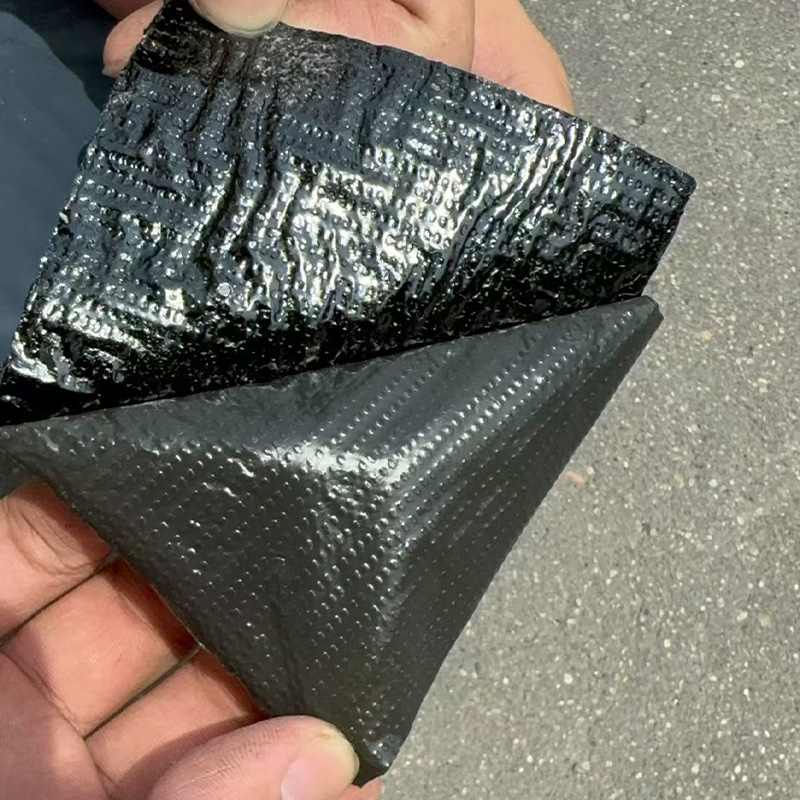
Every sheet in this category starts from the same base: an asphalt core on a polyester mat or fiberglass mesh. What separates the rolls on a supplier's shelf is the modifier blended into that core and the way the sheet is installed. In practice, buyers meet three families: SBS modified bitumen, APP modified bitumen, and the self-adhesive membrane group. Each solves a different site problem, and treating them as interchangeable is a common specification mistake. This overview works as a map: it positions each family, states its mechanism in one sentence, and shows where it belongs on a building. Installation details deserve separate guides; the focus here is selection.
The mechanism in one sentence: styrene-butadiene-styrene rubber forms an elastic network inside the asphalt, so the sheet stays flexible at low temperature and follows substrate movement. Typical grades run 3 mm, 4 mm and 5 mm thick, with tensile strength of at least 800 N/50mm and low-temperature flexibility down to -25°C under standards such as GB 18242 and EN 13707. Heat resistance sits around 90°C, adequate for most roofs but not the selling point here. In positioning terms, SBS modified bitumen is the bitumen waterproof membrane that cold-climate projects specify first, the natural candidate for torch-applied work on roof layers, basement walls and bridge decks in cold or temperate regions, where night temperature drops and structural movement would crack a rigid sheet.
One sentence of mechanism: atactic polypropylene raises the softening point of the asphalt, so the sheet behaves like a stable plastic film under high surface temperature. In procurement terms, this family is selected for what it resists under a dark roof surface in summer, not for what it stretches over in winter. That is why APP modified bitumen is specified for exposed roofing in tropical, subtropical and hot-arid zones. Representative data include heat resistance around 130°C, low-temperature flexibility of -5°C to -10°C, and tensile strength of at least 600 N/50mm. The compound is UV-stabilized, and installation uses the same torch method crews already know, so no new equipment is required. For buyers, this is the bitumen waterproof membrane rated against heat rather than cold. Where a hot flat roof also faces wear, a mineral or aluminum foil surface grade is available. The trade-off is equally clear: in cold regions the sheet gives up the deep-flexibility advantage that SBS modified bitumen holds.
One sentence of mechanism: a pressure-sensitive adhesive layer on the underside bonds to the primed substrate as soon as it is pressed and rolled, so no open flame is needed anywhere on site. A representative 1.5 mm grade with a colored mineral sand surface offers peel adhesion of at least 1.5 N/mm, tensile strength of at least 400 N/50mm, and flexibility at -15°C, produced under ISO 9001 with CE marking. A thinner 1.2 mm PE-film version serves as a concealed layer, with water tightness tested at 0.3 MPa for 120 minutes without leakage. Because no flame is involved, a self-adhesive membrane is the practical choice on balconies, timber-adjacent details, occupied refurbishment sites and any position where hot work is restricted, and it is the only bitumen waterproof membrane of the three installed without heat.
| Type | One-line mechanism | Typical positions | Main limitation |
|---|---|---|---|
| SBS modified bitumen | Rubber-modified core stays elastic in cold weather | Roof layers, basement walls, bridge decks | Heat resistance limited to about 90°C |
| APP modified bitumen | Plastic-modified core resists heat and UV | Exposed flat roofs in hot climates | Flexibility fades below -10°C |
| Self-adhesive membrane | Pressure-sensitive bond without flame | Balconies, details, concealed auxiliary layers | Needs a primed, smooth, dry substrate |
Each waterproof membrane in the table wins in its own niche.
The answer was a blend, not a single roll. A renovation contractor in a coastal city asked the Dingtai team to price one product for a job that mixed a pitched roof, a sheltered balcony and a retaining wall below grade. Splitting the bill of quantities into three families of bitumen waterproof membrane solved the conflict: SBS modified bitumen covered the cold-exposed roof and wall, while the balcony took a flame-free sheet because hot work near windows was prohibited. The roof area faced full sun, which ruled out any sheet without a UV-stable compound. One container, three products, each where its mechanism matters.
Read the data sheet rather than the brochure. Confirm thickness, reinforcement, the referenced standard and the installation method your crew can execute. Any bitumen waterproof membrane performs only on a sound substrate, so agree on primer, surface preparation and overlap widths before the order. For a self-adhesive membrane, check substrate temperature rules, because pressure-sensitive adhesive needs a clean, dry, workable surface. Store rolls upright, shaded, off the ground, and rotate stock. Request third-party test reports and a sample roll for a trial section, especially when several families share one building.
Start from the coldest condition the sheet must survive. When flexibility at low temperature drives the design, SBS modified bitumen rated to -25°C is the starting point, then confirm the roof build-up allows torch application.
No. It excels on balconies, details and auxiliary layers, but large exposed roof fields usually still justify APP modified bitumen or SBS sheets, which tolerate higher surface temperatures.
Compare like with like: thickness, reinforcement, referenced standard and installation cost behind each bitumen waterproof membrane. A cheaper roll that demands primer, extra laps or specialist crews rarely stays cheaper on site.

2026/11/20
How an APP waterproof membrane handles heat: 130°C softening point, torch application windows, overheating signs, summer storage, and thermal aging checks.

2026/11/20
The science of a breathable waterproof membrane: water vapor diffusion, Sd values, three grammage grades, water column resistance, and wrong-use cases.

2026/11/20
Single-ply or two-ply, every flat roof is a stack. See how a self adhesive waterproof membrane for roof systems handles base, cap, insulation and drains.

2026/11/20
How the polyester scrim sets tensile strength and dimensional stability of reinforced TPO membrane rolls, with welding, roll sizes and selection tips.

2026/11/20
How an aluminum foil coated bitumen waterproof membrane reflects solar radiation, lowers surface temperature, and what maintenance keeps savings alive.

2026/11/20
SBS modified bitumen waterproof membrane property groups: tensile strength, low-temperature flexibility, heat resistance, surface finishes, applications.
Links to the corresponding full news page.

The eight questions overseas buyers ask most — factory ownership, capacity, batch consistency and lead times, answered straight.

SBS membranes, polymer sheets, coatings and geomembranes — six product lines are operating simultaneously.

Pre-sales specification, on-site technical support and post-delivery maintenance across 100+ export markets.

Waterproofing performance is decided in the specification and the detailing, not just the material. Our technical team helps you select the right system, resolve site questions as they arise, and stay reachable long after the container lands.
