 EN
APP Waterproof Membrane: High-Temperature Stability Guide
2026/11/20
How an APP waterproof membrane handles heat: 130°C softening point, torch application windows, overheating signs, summer storage, and thermal aging checks.

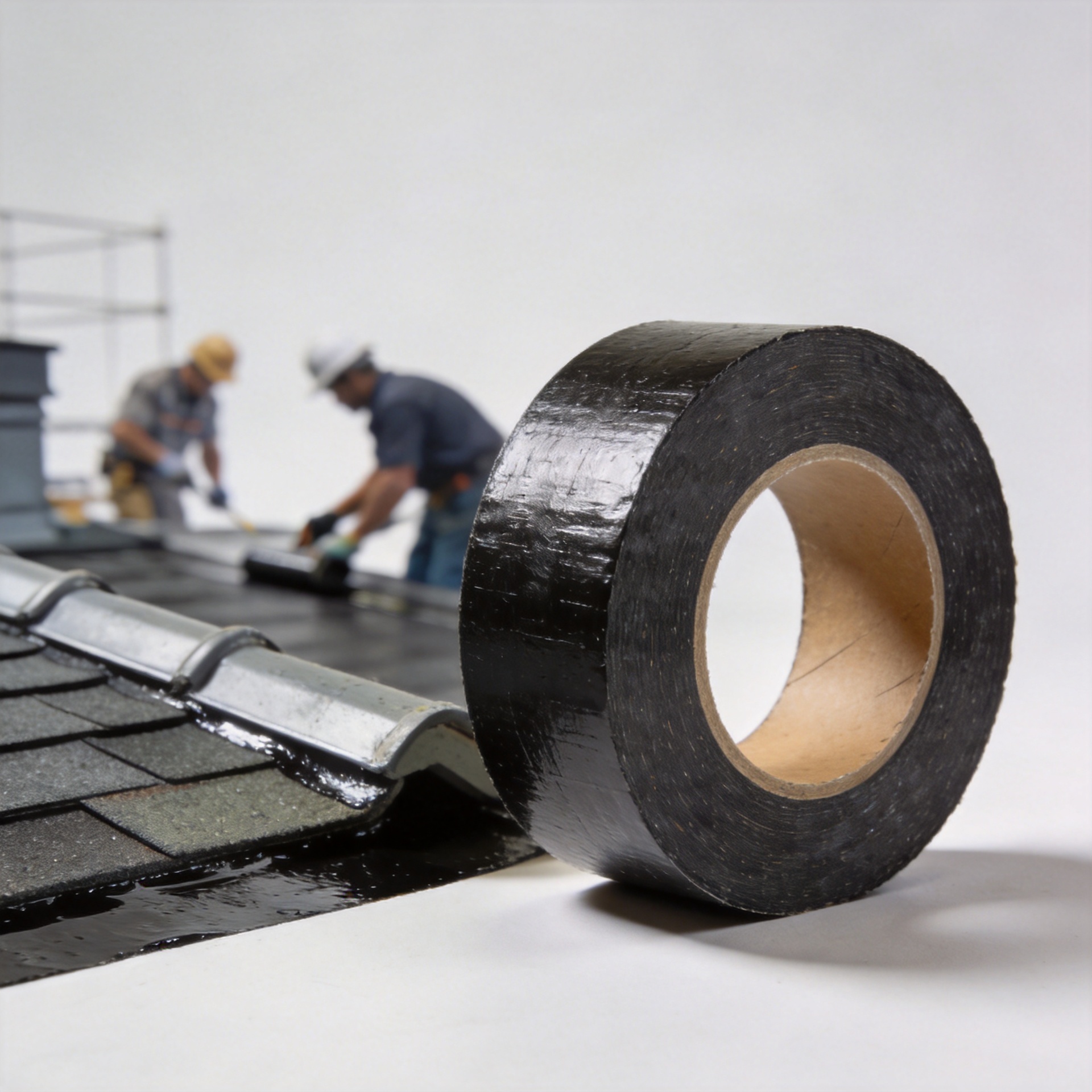
Most product pages frame this product family as a roofing accessory, yet a surprisingly large share of its work happens below and all around the building envelope: foundation walls and basements, pipe penetration sealing, window openings, precast panel joints, and bridge or tunnel details. This guide then lists the construction positions where bitumen waterproof tape earns its place, with selection logic and published data for each of them.
Below grade, the tape serves as the detail layer around a primary system. At wall-to-slab transitions, at overlaps between sheet membranes, and at pipe penetration sealing points through the slab, it reinforces the joints that carry the highest hydrostatic exposure. The heavy-duty 2.0mm butyl waterproof tape is rated for water tightness at 0.4 MPa with widths of 300–1000mm — a single strip spans a full kick-up joint without longitudinal seams.
For construction joint sealing on foundations, the 1.2mm PE-faced bitumen waterproof tape grade bonds to concrete with peel adhesion ≥1.2 N/mm and tolerates the alkalinity of later mortar or blinding layers, so it can be buried in the build-up. Where groundwater presses on a basement wall, the 0.4 MPa grade keeps the transition zone covered through seasonal water-level changes, which is the whole point of construction joint sealing below grade.
Pipe penetration sealing is the classic non-roof use: sheet membranes cannot wrap a round collar without cutting and patching, while tape conforms. Applied in overlapping segments around the pipe and onto the surrounding slab, a 75–150mm width covers standard penetrations of 50–150mm diameter.
Where the penetration crosses a metal sleeve or a PVC pipe, a butyl waterproof tape is preferred: it bonds to metal, PVC, and HDPE without primer and elongates ≥300%, absorbing the differential movement between pipe and structure. In a municipal pump chamber retrofit, crews finished pipe penetration sealing on a dozen pass-throughs in one shift, then poured the surrounding plinth next morning — covering construction joint sealing at the wall base in the same visit.
At the window and door perimeters of any multi-storey building, the tape acts as a transition layer between frame and rough opening — smaller-scale duty, yet still kin to pipe penetration sealing. A butyl waterproof tape of 50–200mm width suits frame perimeters: permanently tacky, rated -40°C to +70°C, and elastic enough to follow settlement deflection without cracking. Its elongation ≥300% keeps the barrier continuous where a rigid sealant line would split.
The PE-faced bitumen waterproof tape serves the sill and threshold zone, where overlay compatibility with mortar and tile adhesive lets finishing trades work directly over it. Widths of 50–300mm cover standard reveal depths, with custom cuts available to 1000mm for wide openings and oversized patio doors.
Construction joint sealing between precast panels demands a bridge, not a filler. Panel joints move with thermal cycling and structural settlement, so the sealant layer must stretch while staying bonded to both faces. The 1.2mm butyl grade — peel ≥1.5 N/mm, elongation ≥300%, service range -40°C to +70°C — handles this duty on panel interiors and connection pockets.
For wide structural joints and panel-to-foundation connections, the 2.0mm heavy-duty butyl waterproof tape spans 300–1000mm widths, carrying water tightness at 0.4 MPa for zones exposed to standing water or backfill drainage. Construction joint sealing here is a design decision, not an afterthought: the bitumen waterproof tape is on the drawing before the panels arrive, along with any penetration detailing through the panels.
On bridge decks and their approach structures, tape details the edges that site-cast membranes cannot form cleanly: expansion joint transitions, parapet bases, drainage outlets, utility slots, and pipe penetration sealing through deck thickenings. The foil-faced 1.5mm grade — tensile ≥400 N/50mm, water tightness at 0.3 MPa — suits exposed deck-edge lines where UV accompanies traffic loading.
In tunnels and attached structures, a butyl waterproof tape handles the movement joints while the PE-faced bitumen waterproof tape handles construction joint sealing in side walls and utility niches, where resistance to cement alkalinity and compatibility with shotcrete or panel overlays matter more than UV. Flame-free application is also the default requirement in enclosed tunnel bores.
Across all these positions, the selection logic is consistent. Substrate family first: butyl waterproof tape for metal, glass, PVC, and HDPE; bitumen waterproof tape for concrete, masonry, and membranes. Movement second: elongation ≥300% for live construction joint sealing duties, standard grades for static ones. Exposure third: foil facings for UV, PE facings for buried or overlaid zones, and the 0.4 MPa heavy-duty grade wherever hydrostatic pressure persists — pipe penetration sealing below the water table included.
A tape is a detailing product, not a system: it completes a primary waterproofing layer where that layer cannot finish itself. Specified that way, one roll range covers foundations, openings, panels, and infrastructure details through a single procurement line.
Yes, as a detail layer. The PE-faced grade tolerates cement alkalinity and burial in build-ups; the 2.0mm butyl waterproof tape is rated at 0.4 MPa for below-grade joints under hydrostatic pressure.
The butyl grade is the match. It bonds to PVC without primer, elongates ≥300% to absorb pipe-to-structure movement, and holds tack from -40°C to +70°C across service conditions — the working profile of a purpose-designed butyl waterproof tape for penetration duty.
No. Construction joint sealing tape forms the surface barrier on accessible joints; waterstops remain the embedded line in cast joints. The two functions complement each other where detailing allows both — one rarely replaces the other.

2026/11/20
How an APP waterproof membrane handles heat: 130°C softening point, torch application windows, overheating signs, summer storage, and thermal aging checks.

2026/11/20
The science of a breathable waterproof membrane: water vapor diffusion, Sd values, three grammage grades, water column resistance, and wrong-use cases.

2026/11/20
Single-ply or two-ply, every flat roof is a stack. See how a self adhesive waterproof membrane for roof systems handles base, cap, insulation and drains.

2026/11/20
How the polyester scrim sets tensile strength and dimensional stability of reinforced TPO membrane rolls, with welding, roll sizes and selection tips.

2026/11/20
How an aluminum foil coated bitumen waterproof membrane reflects solar radiation, lowers surface temperature, and what maintenance keeps savings alive.

2026/11/20
SBS modified bitumen waterproof membrane property groups: tensile strength, low-temperature flexibility, heat resistance, surface finishes, applications.
Links to the corresponding full news page.

The eight questions overseas buyers ask most — factory ownership, capacity, batch consistency and lead times, answered straight.

SBS membranes, polymer sheets, coatings and geomembranes — six product lines are operating simultaneously.

Pre-sales specification, on-site technical support and post-delivery maintenance across 100+ export markets.

Waterproofing performance is decided in the specification and the detailing, not just the material. Our technical team helps you select the right system, resolve site questions as they arise, and stay reachable long after the container lands.
