 EN
APP Waterproof Membrane: High-Temperature Stability Guide
2026/11/20
How an APP waterproof membrane handles heat: 130°C softening point, torch application windows, overheating signs, summer storage, and thermal aging checks.

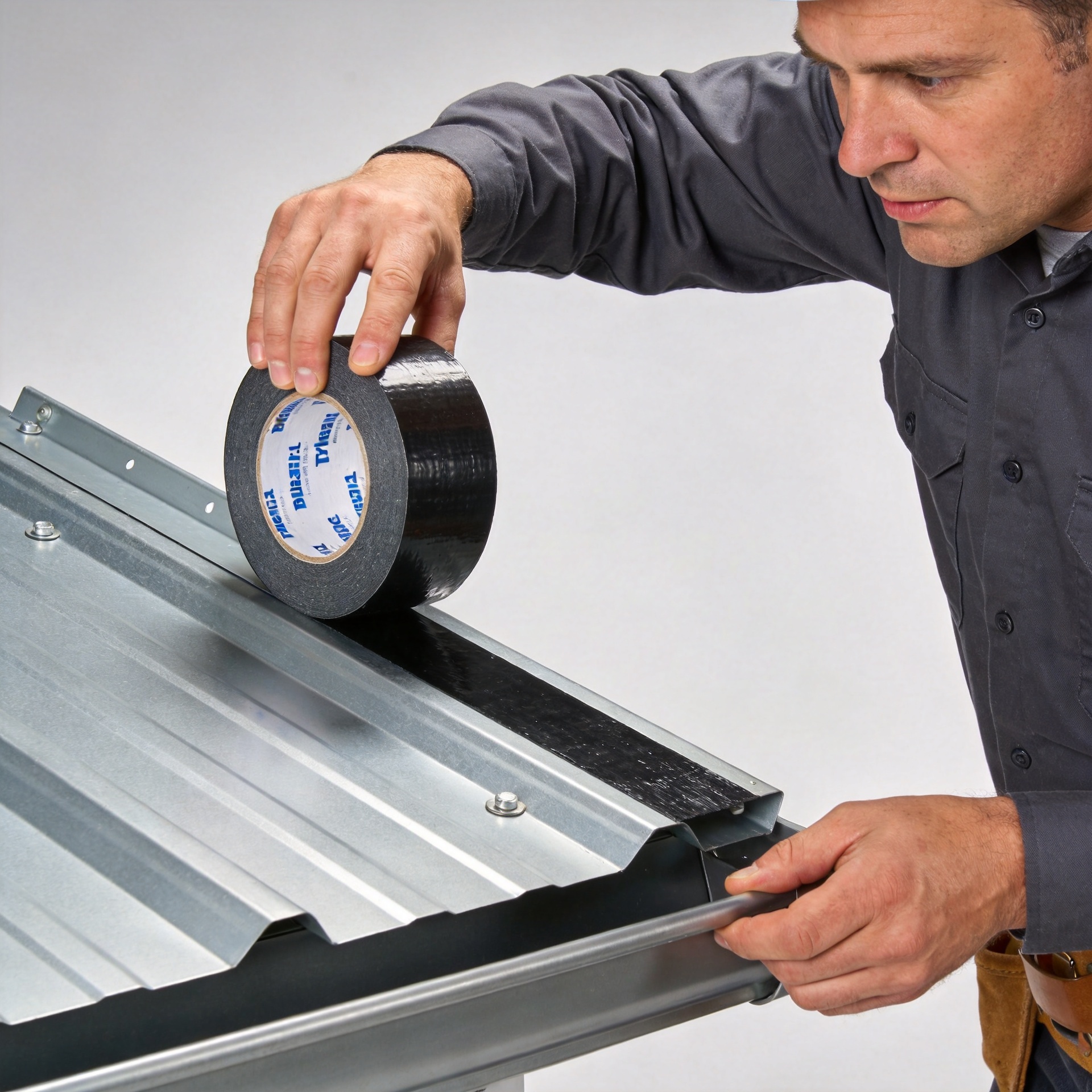
A metal roof sheds water well across its broad panels. Leaks usually begin where a panel stops, overlaps, changes direction, or is interrupted. Butyl tape for metal roofing is a non-curing, pressure-sensitive sealing material that stays workable after installation. Confined between compatible parts and compressed correctly, it fills minor surface irregularities and blocks water paths at laps, fasteners, penetrations, and flashing interfaces.
The key word is confined. Butyl tape for metal roofing is a concealed compression seal, not a universal exposed repair bead. A successful detail depends on panel geometry, coating compatibility, surface condition, compression, drainage, and movement allowance—not simply on choosing the thickest roll.
Butyl tape for metal roofing is commonly specified at four detail types.
Side laps and end laps: beneath overlapping panel edges where wind-driven rain can reach the lap.
Trim and flashing: under ridge caps, closures, eave trim, and wall-flashing flanges where the detail calls for a compressed seal.
Penetrations: beneath compatible pipe-boot or vent flanges, together with the fastening method specified for that component.
Fastener zones: at details designed to compress the tape around the fastener path. Tape does not correct an overtightened, crooked, or missing fastener.
A good tape cannot compensate for a back-lapped flashing, a missing closure, a poorly supported panel edge, or drainage that directs water into the joint.
Butyl tape seals by wetting and conforming to the mating surfaces under pressure. Unlike a cured adhesive that becomes rigid, the butyl mass remains tacky and accommodates small irregularities. Proper compression spreads the material into a continuous gasket. Gaps, wrinkles, open ends, or insufficient fastener pressure leave a capillary path for water.
On a long roof run, thermal movement matters too. The tape must remain inside a detail that allows panels and trim to move as designed. Do not bridge a designed expansion location with a tape configuration that locks movement or stretches across an open gap.
Choose width from the actual contact area, not the roll price. The tape should stay fully covered by the upper component after assembly and leave a continuous compressed path inside the overlap.
A narrow strip suits a clean, straight panel lap with a controlled bearing surface. Match the designed lap and keep the bead inside the compressed zone, while verifying lap direction, fastener line, closure location, and drainage path.
A wider strip is more appropriate when a flashing flange, irregular profile, oversized hole, or broader contact zone needs coverage. Cover the contact footprint without squeezing tape into a visible water path, and check flange width, bends, corners, and screw spacing.
For corrugated or profiled panels, follow the manufacturer’s closure-and-seal arrangement rather than relying on tape alone, and confirm rib geometry and whether closures are required. At penetration bases, use a continuous route that remains inside the flange and supports the flashing design, checking flange flatness, roof profile, and movement around the penetration.
Ask the panel or trim supplier to identify the required seal line and finished overlap. That is more useful than assuming one width fits every roof profile.
Thickness is a balance. Thinner butyl waterproof tape can work on smooth, well-aligned metal surfaces where the joint has controlled compression. A thicker tape can better absorb small surface variation or a less uniform flange, but it is not automatically better. Too much bulk may prevent parts from seating, distort trim, or create excessive squeeze-out.
If the detail contains broad gaps, sharp bends, wet contamination, failed substrate coating, or unstable framing, correct the underlying condition instead of trying to fill it with more tape. Request the supplier’s technical data sheet and verify compatibility with the panel coating, flashing material, temperature range, and intended roof detail.
Read the roof-system detail. Confirm lap direction, seal line, closures, fastener pattern, and movement provisions before unrolling material.
Prepare the surfaces. Remove dust, oil, loose oxidation, protective-film residue, standing water, and debris. A clean, dry, stable surface is the baseline.
Lay one continuous line. Keep the strip straight, avoid stretching, and butt ends carefully rather than leaving gaps. At corners and penetrations, use the detail’s required overlap.
Assemble without delay. Position the mating component accurately, then install fasteners in the prescribed pattern so compression is even along the seal line.
Inspect before moving on. Look for skipped segments, displaced tape, excessive squeeze-out, open corners, misaligned fasteners, and flashing that rocks instead of seating flat.
Dingtai’s butyl waterproof tape is produced in controlled batches for cold-applied lap and flashing sealing; confirm the current TDS for thickness, width, and service-temperature limits before specification.
Leak at a lap soon after installation. Start with lap direction and surface preparation. Check whether the tape line was continuous, whether fasteners delivered uniform compression, and whether the joint was contaminated or wet. A thin, uneven contact line is more likely to leak than a properly seated gasket.
Edge squeeze-out or distorted trim. Review tape thickness, width, fastener torque, and flange alignment. Excess material is not proof of a good seal; it can mean the tape is too bulky for the joint or the assembly was forced together unevenly.
Leak around a pipe or vent. Inspect the entire penetration system: boot condition, flange seating, fastener placement, panel profile, uphill water path, and any closure specified by the component maker. Butyl tape for metal roofing is one part of this detail, not the only water-control layer.
Specify the roof detail first, then select tape width and thickness for the real compression zone. Confirm coating compatibility, keep storage and surfaces clean, retain technical data for the supplied lot, and train crews to inspect seams before panels disappear under the next course. Shandong Dingtai Waterproof Technology Co., Ltd. supplies self-adhesive butyl tape alongside other waterproofing materials for export projects; final selection should follow the approved roof-system detail and applicable local project requirements.
That disciplined approach turns a low-cost accessory into what it should be: a reliable component of a coordinated metal-roof water-management system.

2026/11/20
How an APP waterproof membrane handles heat: 130°C softening point, torch application windows, overheating signs, summer storage, and thermal aging checks.

2026/11/20
The science of a breathable waterproof membrane: water vapor diffusion, Sd values, three grammage grades, water column resistance, and wrong-use cases.

2026/11/20
Single-ply or two-ply, every flat roof is a stack. See how a self adhesive waterproof membrane for roof systems handles base, cap, insulation and drains.

2026/11/20
How the polyester scrim sets tensile strength and dimensional stability of reinforced TPO membrane rolls, with welding, roll sizes and selection tips.

2026/11/20
How an aluminum foil coated bitumen waterproof membrane reflects solar radiation, lowers surface temperature, and what maintenance keeps savings alive.

2026/11/20
SBS modified bitumen waterproof membrane property groups: tensile strength, low-temperature flexibility, heat resistance, surface finishes, applications.
Links to the corresponding full news page.

The eight questions overseas buyers ask most — factory ownership, capacity, batch consistency and lead times, answered straight.

SBS membranes, polymer sheets, coatings and geomembranes — six product lines are operating simultaneously.

Pre-sales specification, on-site technical support and post-delivery maintenance across 100+ export markets.

Waterproofing performance is decided in the specification and the detailing, not just the material. Our technical team helps you select the right system, resolve site questions as they arise, and stay reachable long after the container lands.
