 EN
APP Waterproof Membrane: High-Temperature Stability Guide
2026/11/20
How an APP waterproof membrane handles heat: 130°C softening point, torch application windows, overheating signs, summer storage, and thermal aging checks.

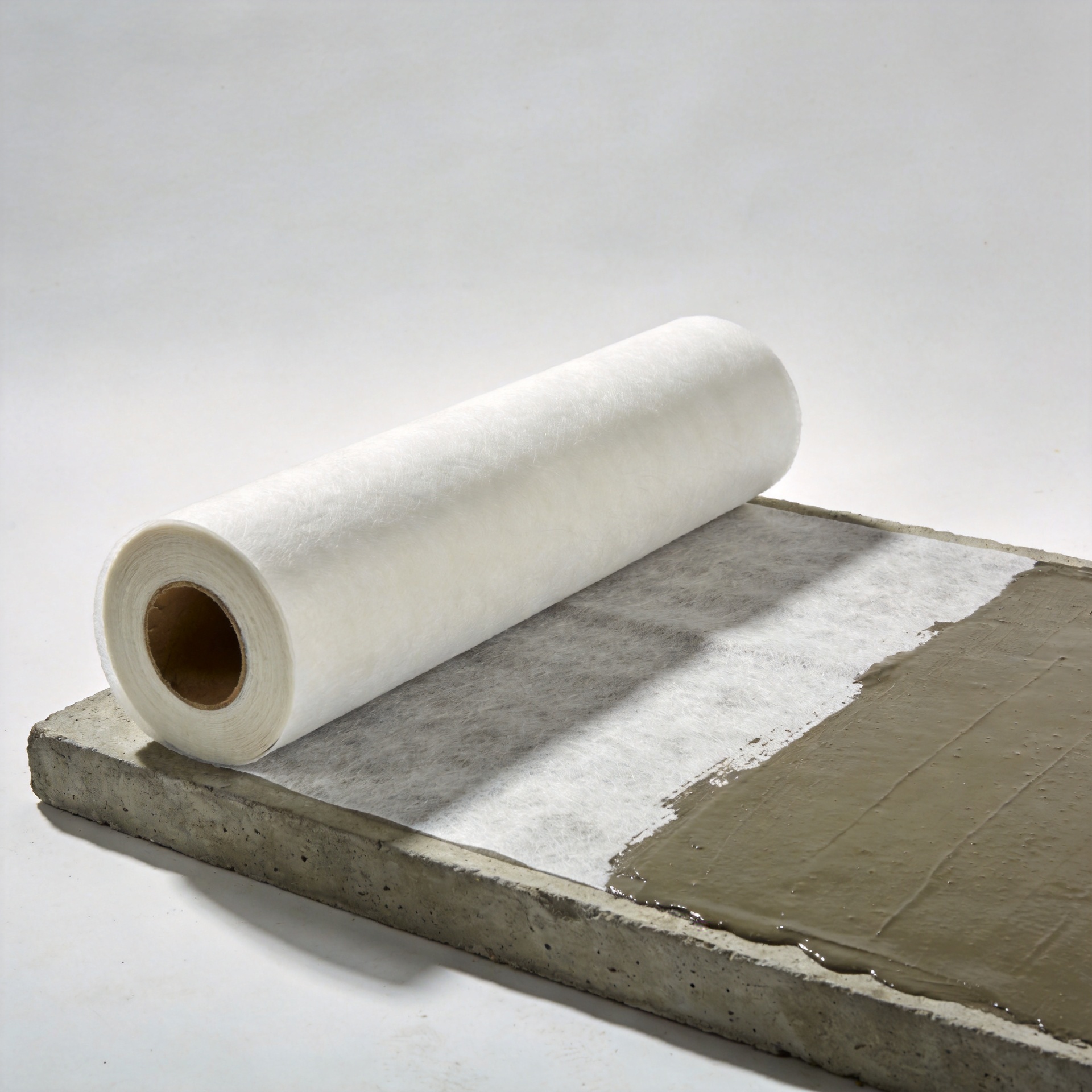
Wet rooms and basements punish membranes that rely on mechanical fixing alone. A double sided non woven pp pe waterproof membrane answers that with a simple property: both faces carry a PP non-woven facing, so tile adhesive, screed, and mortar bond to the sheet instead of sitting on top of it. This guide covers where that matters, how the build behaves in bathrooms and basements, which grade suits each wet area waterproofing duty, and how a bathroom waterproofing membrane differs from general stock.
Bathrooms and kitchens combine small areas with many penetrations: wastes, pipework, valves. Water sits rather than drains, cleaning chemicals attack the surface, tile adhesive must grip. Basements add sustained groundwater pressure.
A sheet with fleece on one face only creates a bond problem on the other. Where a bathroom waterproofing membrane must carry tiles above and mortar below, both faces must accept cement — that drives specification more than thickness. Wet area waterproofing failures are usually bond failures at an edge, corner, or pipe collar, not in mid-field — which is why a double sided non woven pp pe waterproof membrane with a PP non-woven facing each side is specified where tiles and screed meet.
Published data describes a PE core with PP non-woven fiber layers each side. The core is the barrier: lightweight passes 0.3 MPa for 30 minutes, medium 0.4 MPa, heavy 0.6 MPa, under GB/T 17643. The facings provide grip: a PP non-woven facing that cement paste, tile adhesive, and screed key.
The installation consequence is practical: wet cement bond, no open flame. On refurbishment in occupied buildings that removes gas cylinders, hot-work permits, fire watch. A double sided non woven pp pe waterproof membrane also carries the -20°C low-temperature flexibility published across the range, so unheated sites in winter stay workable for wet area waterproofing.
Sequence matters more than speed: substrate sound, clean, primed. Then the membrane, lapped with water flow, dressed into corners, cut around wastes with a collar rather than butt joint. Tile adhesive follows once bonded.
On a serviced-apartment conversion in the Gulf, 30 bathrooms and two kitchens were re-tiled over existing screeds; the contractor used the medium grade of the double sided non woven pp pe waterproof membrane, cut rolls to room width, and tiled the same shift, the PP non-woven facing accepting adhesive without a scratch coat. Wet area waterproofing there rested on two details: a 100 mm lap at wall-floor junctions and a collar at every waste. A bathroom waterproofing membrane that fails usually fails at one of those points.
Below grade, the load is hydrostatic. The heavy grade publishes 0.6 MPa water tightness for 30 minutes, at the top of the range, and its 500–600 g/m² build at 1.0 mm suits walls awaiting backfill. A double sided non woven pp pe waterproof membrane here bonds to the structural wall with cement-based adhesive and receives a protection board or screed inside.
Basements converted to habitable rooms need the same logic at the floor-wall junction, where continuity matters more than any number. In a basement gym or laundry, a bathroom waterproofing membrane needs no extra bonding agent: the PP non-woven facing carries tile adhesive, so wet area waterproofing details do not change between floors.
The manufacturer's published grades give three choices. Lightweight, 100–200 g/m² at 0.3–0.5 mm: 60 N/50 mm tensile, 0.3 MPa, 200 percent elongation — for walls and floors above grade. Medium, 300–400 g/m² at 0.6–0.8 mm: 100 N/50 mm, 0.4 MPa, 150 percent elongation — usual for shower areas and busy kitchens. Heavy, 500–600 g/m² at 1.0 mm: 150 N/50 mm, 0.6 MPa, 100 percent elongation — for below-grade, high-pressure work.
Every grade publishes heat resistance to 70°C, flexibility to -20°C, widths of 1.0, 1.5, or 2.0 m, rolls of 10–100 m, CE and ISO 14001 certification, and a 500 m² minimum. The double sided non woven pp pe waterproof membrane chosen for wet area waterproofing should match grade to water load, not tile size, and a bathroom waterproofing membrane above grade rarely needs the heavy build.
Four checks decide the outcome: substrate moisture before priming, lap width at junctions, collar coverage at penetrations, protection before tiling. A PP non-woven facing damaged by traffic loses its key, and adhesive then fails in shear rather than peel.
Keep rolls clean, avoid walking on laid membrane, board off completed areas. On wet area waterproofing work, photograph each layer before covering; laps, corners, collars are where disputes arise. A double sided non woven pp pe waterproof membrane protects itself only while intact, so the last inspection belongs before the tile, and a bathroom waterproofing membrane schedule should name its inspection points.
Yes. Both faces accept cement, so tile adhesive bonds to the PP non-woven facing without scratching; published grades run from 0.3 to 0.6 MPa water tightness, and the double sided non woven pp pe waterproof membrane needs no bonding agent.
The heavy grade, published at 0.6 MPa and 500–600 g/m². Where wet area waterproofing sits above grade, the medium grade at 0.4 MPa is usually sufficient.
Substrates must be clean and primed; adhesion depends on surface condition more than the PP non-woven facing. A bathroom waterproofing membrane is only as good as the preparation beneath it.

2026/11/20
How an APP waterproof membrane handles heat: 130°C softening point, torch application windows, overheating signs, summer storage, and thermal aging checks.

2026/11/20
The science of a breathable waterproof membrane: water vapor diffusion, Sd values, three grammage grades, water column resistance, and wrong-use cases.

2026/11/20
Single-ply or two-ply, every flat roof is a stack. See how a self adhesive waterproof membrane for roof systems handles base, cap, insulation and drains.

2026/11/20
How the polyester scrim sets tensile strength and dimensional stability of reinforced TPO membrane rolls, with welding, roll sizes and selection tips.

2026/11/20
How an aluminum foil coated bitumen waterproof membrane reflects solar radiation, lowers surface temperature, and what maintenance keeps savings alive.

2026/11/20
SBS modified bitumen waterproof membrane property groups: tensile strength, low-temperature flexibility, heat resistance, surface finishes, applications.
Links to the corresponding full news page.

The eight questions overseas buyers ask most — factory ownership, capacity, batch consistency and lead times, answered straight.

SBS membranes, polymer sheets, coatings and geomembranes — six product lines are operating simultaneously.

Pre-sales specification, on-site technical support and post-delivery maintenance across 100+ export markets.

Waterproofing performance is decided in the specification and the detailing, not just the material. Our technical team helps you select the right system, resolve site questions as they arise, and stay reachable long after the container lands.
