 EN
APP Waterproof Membrane: High-Temperature Stability Guide
2026/11/20
How an APP waterproof membrane handles heat: 130°C softening point, torch application windows, overheating signs, summer storage, and thermal aging checks.

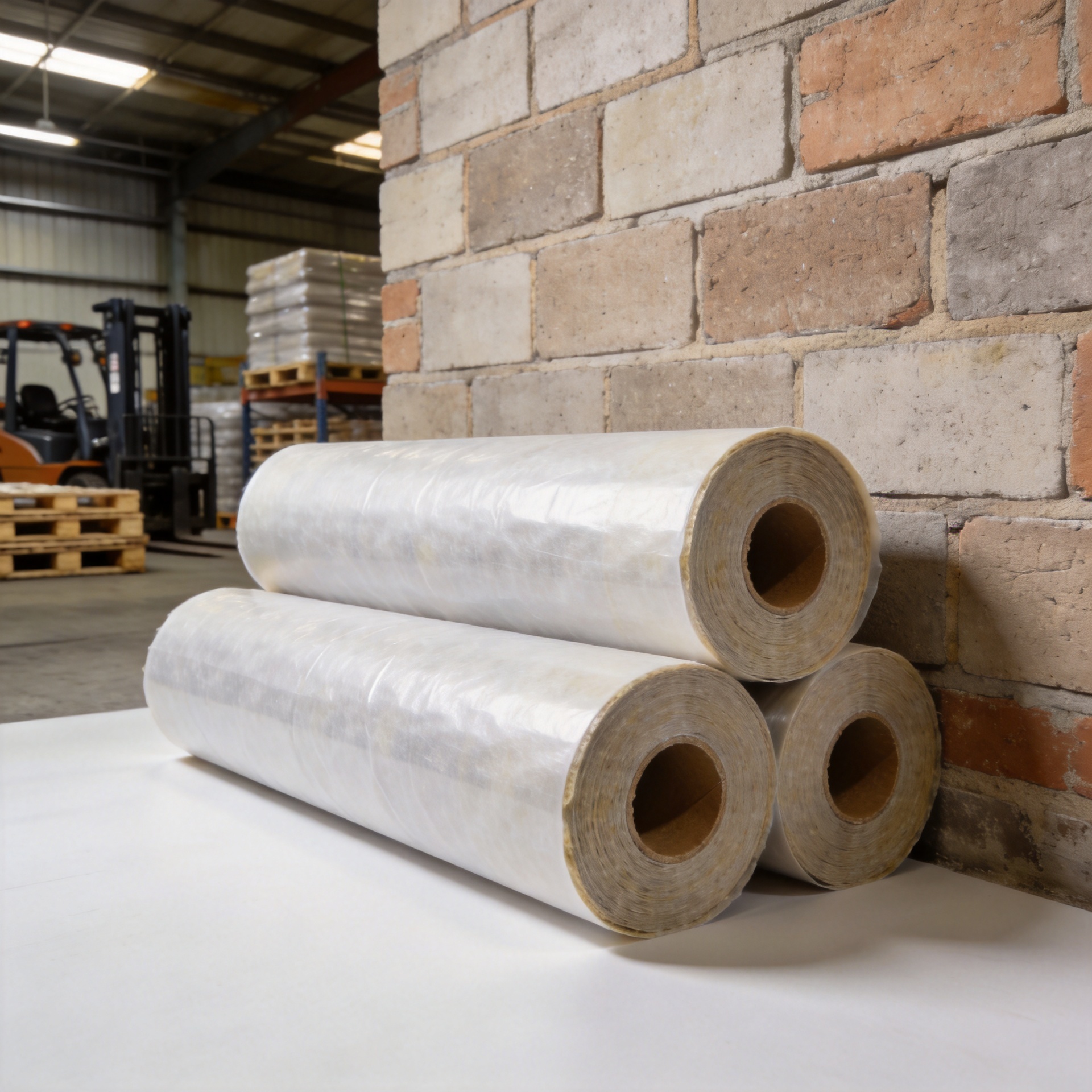
Navigating a DPC wholesale purchase requires far more commercial foresight than simply comparing a low ex-works factory quotation against a local building distributor’s price list. A damp proof course, universally abbreviated as DPC, serves as a critical horizontal moisture barrier embedded within mortar joints to stop capillary groundwater from rising through brick, block, or stone masonry walls. If a buyer compromises on polymer virgin-to-recycled ratios, embossing depth, or roll continuity merely to shave a few cents per linear meter, that minor upfront saving is rapidly erased by mortar slippage, structural dampness claims, and costly masonry demolition.
From a B2B supply chain perspective, evaluating factory direct sourcing against regional distributor channels centers on aligning order volume, lead-time tolerance, working capital, and technical compliance. Both procurement routes play vital roles in the construction industry. However, a meaningful financial comparison is only possible when procurement teams standardize the physical damp proof course specification first and calculate the complete landed cost down to the jobsite or warehouse floor.
Before requesting a DPC wholesale quotation from any production line or regional stockist, buyers must issue a unified technical schedule so competing offers reflect identical material grades. In international building material trade, generic descriptions like plastic moisture roll leave massive loopholes for quality dilution. A rigorous specification must define the base polymer chemistry—such as low-density polyethylene, high-density polyethylene, polymer-modified bitumen, or pitch-polymer composites—alongside nominal roll widths ranging from 100 millimeters to 1200 millimeters to match standard brick and cavity wall footprints.
Evaluating thickness tolerances and surface geometry is equally decisive when auditing polyethylene DPC roll quotations. Standard masonry applications typically call for nominal thicknesses between 0.5 millimeters and 1.0 millimeter, often measured in micrometers or gauge weight per square meter. However, caliper thickness alone does not guarantee structural stability; the sheet must feature a pronounced diamond or grid embossed pattern on both faces to create mechanical interlock with wet cement mortar and prevent horizontal shear sliding under heavy wall loads. Furthermore, importers must specify whether the damp proof course must comply with strict regional standards such as BS 6515 or EN 14909, which govern tensile strength, low-temperature flexibility, and puncture resistance without brittle cracking.
Partnering directly with an extrusion manufacturer for DPC wholesale supply delivers compelling margin advantages when a buyer’s annual turnover supports container-load consolidation and scheduled production runs. Direct factory engagement eliminates intermediate broker markups, grants direct access to laboratory quality control engineers, and unlocks extensive OEM customization. Building material importers and national merchant chains can specify custom roll lengths, tailored slitting widths, high-visibility brand printing on the polyethylene film, custom barcode labels, and shrink-wrapped pallet configurations optimized for automated warehouse racking.
Nevertheless, an attractive factory-gate unit price does not automatically equate to the lowest net procurement cost. Direct manufacturing contracts are governed by strict minimum order quantities—often requiring several metric tons per width setup—alongside thirty-to-sixty-day production and ocean transit lead times. To evaluate a factory direct damp proof course offer accurately, buyers must aggregate all downstream supply chain expenses, including export palletization, ocean container freight, marine insurance, customs import tariffs, port drayage, currency exchange fluctuations, and the financial carrying cost of tying up warehouse space for months of buffer inventory.
Purchasing through an established domestic distributor or wholesale merchant introduces a higher per-roll invoice price, yet that premium bundles essential logistical and financial services that protect cash flow and project schedules. Regional distributors absorb the capital risk of importing bulk containers, holding multi-width inventory across local depots, and breaking bulk pallets down into smaller, mixed-width order quantities. For masonry contractors and regional hardware stores facing unpredictable site schedules, securing immediate next-day delivery of compatible brickwork moisture barrier rolls prevents expensive mason downtime on site.
Furthermore, local distributor pricing typically incorporates flexible trade credit terms, simplified domestic tax invoicing, immediate returns for surplus unopened rolls, and access to bundled masonry accessories such as cavity trays, weep vents, mortar plasticizers, and wall ties on a single delivery truck. Therefore, comparing DPC wholesale channels should never pit a raw factory-gate figure against a delivered distributor invoice in isolation; buyers must weigh delivered unit cost against inventory turnover velocity and working capital preservation.
To execute an objective financial audit between factory direct imports and domestic distributor supply, procurement managers should run every DPC wholesale quotation through a standardized five-step landed cost model. First, normalize the unit of measurement across all quotes by converting price per roll or price per metric ton into an exact cost per square meter at a verified net thickness and roll length, ensuring a 20-meter roll is never mistakenly benchmarked against a 30-meter roll.
Second, document the commercial Incoterms and payment milestones, distinguishing between upfront telegraphic deposits required for factory production and thirty-to-ninety-day open credit lines offered by local distributors. Third, calculate total logistics overhead per roll by adding international freight, customs brokerage fees, anti-dumping or import duties, inland trucking, and forklift unloading charges to the ex-works price. Fourth, factor in an inventory holding and shrinkage allowance of five to eight percent to cover warehouse rent, insurance, slow-moving odd widths, and transit damage. Fifth, audit the supplier’s compliance documentation package, verifying third-party CE or UKCA declarations of performance, batch lot numbering, and raw resin purity before signing a supply agreement.
Regardless of which DPC wholesale channel a buyer selects, long-term damp prevention depends entirely on raw polymer integrity and disciplined site installation. Low-grade polyethylene DPC rolls extruded from unrefined post-consumer waste plastics frequently contain chalk fillers and volatile contaminants that cause the sheet to turn brittle, split at mortar bed folds, or degrade prematurely when exposed to highly alkaline Portland cement. Specifying a virgin-grade or certified high-purity recycled damp proof course ensures the membrane retains permanent elasticity across decades of structural settling.
On the construction site, procurement and engineering teams must ensure the delivered polyethylene DPC roll is installed as an unbroken waterproof plane at least 150 millimeters above external ground level to prevent rain splash-back bridging. Horizontal laps must overlap by a minimum of 100 millimeters and be fully bedded in wet mortar on both sides—never laid dry over coarse aggregate where point loads can puncture the sheet. Where horizontal damp proof course runs intersect vertical cavity trays, foundation damp-proof membranes, or window reveals, installers must utilize manufacturer-approved jointing tapes and preformed cloaks to guarantee a continuous brickwork moisture barrier.
Selecting the optimal DPC wholesale procurement route ultimately depends on matching your purchasing profile to the strengths of each supply tier. Choose factory direct manufacturing when your business manages predictable, high-volume demand across standard masonry widths, possesses international freight forwarding expertise, desires private-label OEM branding, and maintains sufficient warehouse capacity to buffer ocean transit schedules. Conversely, select a regional distributor when your projects require rapid site call-offs, mixed-width parcel deliveries, zero import administration, or integrated credit terms. By anchoring every DPC wholesale decision in verified polymer specifications, transparent landed cost calculations, and strict masonry compliance standards, B2B buyers can protect both their profit margins and the structural integrity of their buildings.

2026/11/20
How an APP waterproof membrane handles heat: 130°C softening point, torch application windows, overheating signs, summer storage, and thermal aging checks.

2026/11/20
The science of a breathable waterproof membrane: water vapor diffusion, Sd values, three grammage grades, water column resistance, and wrong-use cases.

2026/11/20
Single-ply or two-ply, every flat roof is a stack. See how a self adhesive waterproof membrane for roof systems handles base, cap, insulation and drains.

2026/11/20
How the polyester scrim sets tensile strength and dimensional stability of reinforced TPO membrane rolls, with welding, roll sizes and selection tips.

2026/11/20
How an aluminum foil coated bitumen waterproof membrane reflects solar radiation, lowers surface temperature, and what maintenance keeps savings alive.

2026/11/20
SBS modified bitumen waterproof membrane property groups: tensile strength, low-temperature flexibility, heat resistance, surface finishes, applications.
Links to the corresponding full news page.

The eight questions overseas buyers ask most — factory ownership, capacity, batch consistency and lead times, answered straight.

SBS membranes, polymer sheets, coatings and geomembranes — six product lines are operating simultaneously.

Pre-sales specification, on-site technical support and post-delivery maintenance across 100+ export markets.

Waterproofing performance is decided in the specification and the detailing, not just the material. Our technical team helps you select the right system, resolve site questions as they arise, and stay reachable long after the container lands.
