 EN
APP Waterproof Membrane: High-Temperature Stability Guide
2026/11/20
How an APP waterproof membrane handles heat: 130°C softening point, torch application windows, overheating signs, summer storage, and thermal aging checks.

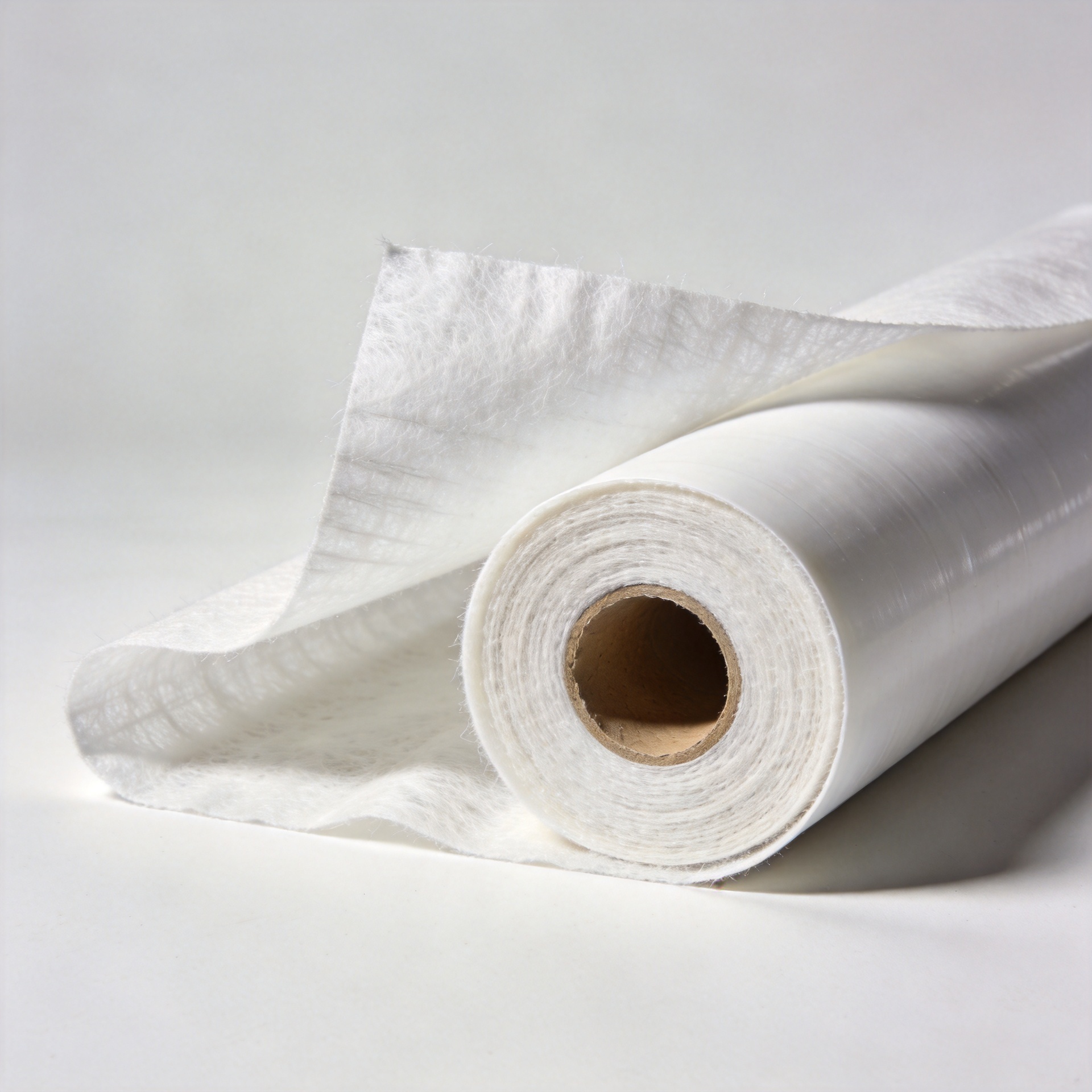
Restoring aged commercial roof decks and sealing irregular subterranean concrete structures present structural engineers with complex interfacial adhesion challenges. Specifying a Fleece Back PVC Waterproofing Membrane: Features and Uses provides building consultants with a specialized multi-tier composite designed to neutralize dynamic differential settlement while maintaining fluid barrier integrity. Unreinforced plasticized sheet membranes often transfer localized deck movements directly to heat-welded seams, resulting in stress concentrations and seam fatigue over extended thermal cycling. Conversely, integrating a synthetic non-woven polyester or polypropylene fleece liner to the bottom face of flexible polyvinyl chloride creates a structural cushion that disperses shear strains across the building substrate. Procuring engineered composites from an established Waterproof Membrane Supplier ensures that contractors receive factory-laminated materials that accommodate substrate micro-cracking and conform to international fire retardancy codes.
The unique engineering advantages of a Fleece Back PVC Waterproofing Membrane: Features and Uses stem from its dual-function textile composite architecture. At Shandong Dingtai Waterproof Technology Co., Ltd., state-of-the-art extrusion lines thermally fuse a high-tenacity non-woven filament backing onto flexible, UV-stabilized PVC resins. When installed using cold-applied polyurethane adhesives, the liquid adhesive penetrates deep into the porous fleece fibers through capillary action, forming thousands of microscopic mechanical locks upon curing. This mechanical interface achieves significantly higher peel adhesion strength than smooth-backed sheets. Furthermore, when applied directly over legacy asphalt roofs or polystyrene insulation panels, the embedded fleece acts as a continuous barrier that blocks direct contact between vinyl plasticizers and hydrocarbon substrates, completely preventing plasticizer migration and chemical degradation over the service life of the roof envelope.
Evaluating a Fleece Back PVC Waterproofing Membrane: Features and Uses for global commercial tenders requires verifying batch-to-batch physical properties through independent laboratory protocols. Shandong Dingtai Waterproof Technology Co., Ltd. operates state-of-the-art lamination equipment under certified ISO 9001 quality management and ISO 14001 environmental safety frameworks to guarantee strict product consistency. Our export-grade composite membranes satisfy recognized global engineering benchmarks, including ASTM D412 testing for ultimate tensile strength and elongation retention, ASTM D1970 for cold-temperature flexibility, and ISO 19935 for resistance to elevated hydrostatic water pressure. Each production lot undergoes automated laser thickness monitoring, fleece-to-membrane peel adhesion audits, and mandatory 24-hour hydrostatic impermeability verification prior to export palletizing. Specifying certified membranes from a trusted Waterproof Membrane Supplier guarantees reliable performance across severe freeze-thaw cycles.
Deploying a Fleece Back PVC Waterproofing Membrane: Features and Uses directly optimizes field construction safety, speeds up jobsite completion rates, and improves wind load resistance. In fully adhered commercial roof systems, cold-applied polyurethane adhesives eliminate the need for open-flame propane torches or hot asphalt kettles, drastically reducing fire hazards on high-rise buildings and occupied facilities. The continuous fleece-adhesive bonding plane distributes localized wind suction forces uniformly across the entire roof surface, preventing membrane fluttering and edge blow-offs during high-velocity storm events. Furthermore, in reroofing projects where old bituminous membranes remain intact, the fleece lining acts as an isolated separation layer, avoiding costly tear-off labor and disposal fees. Partnering directly with a verified Waterproof Membrane Supplier enables general contractors to order customized roll widths and length dimensions, minimizing on-site lap waste and lowering installation overhead.
Establishing a transparent supply chain for a Fleece Back PVC Waterproofing Membrane: Features and Uses requires evaluating export packaging standards, manufacturing capacity, and international logistics support. Sourcing directly from an established Chinese manufacturer like Shandong Dingtai Waterproof Technology Co., Ltd. provides overseas buyers with competitive factory pricing, immediate access to official technical data sheets, and flexible OEM private-label packaging options. To prevent roll deformation, edge damage, or ambient humidity contamination during ocean container shipping, every roll of Fleece Back PVC Waterproofing Membrane is wrapped in protective UV-resistant plastic film, fitted with heavy-duty end shields, and securely packed on reinforced wooden export pallets. To inspect physical specifications across our full product range—including SBS/APP bitumen rolls, TPO single-ply sheets, self-healing composite barriers, and damp proof courses (DPC)—visit our main
A fleece back PVC waterproofing membrane provides enhanced mechanical peel adhesion when fully adhered with adhesives, cushions against rough substrates, acts as a separation barrier over old bitumen roofs, and increases wind uplift resistance.
The non-woven filament fleece backing acts as a physical barrier layer between the plasticized PVC compound and underlying polystyrene insulation boards or bitumen substrates, preventing direct chemical contact and plasticizer loss.
Procurement managers should verify that the manufacturer operates under certified ISO 9001 and ISO 14001 management systems, and that products comply with recognized physical testing standards such as ASTM D412, ASTM D1970, or ISO 19935.

2026/11/20
How an APP waterproof membrane handles heat: 130°C softening point, torch application windows, overheating signs, summer storage, and thermal aging checks.

2026/11/20
The science of a breathable waterproof membrane: water vapor diffusion, Sd values, three grammage grades, water column resistance, and wrong-use cases.

2026/11/20
Single-ply or two-ply, every flat roof is a stack. See how a self adhesive waterproof membrane for roof systems handles base, cap, insulation and drains.

2026/11/20
How the polyester scrim sets tensile strength and dimensional stability of reinforced TPO membrane rolls, with welding, roll sizes and selection tips.

2026/11/20
How an aluminum foil coated bitumen waterproof membrane reflects solar radiation, lowers surface temperature, and what maintenance keeps savings alive.

2026/11/20
SBS modified bitumen waterproof membrane property groups: tensile strength, low-temperature flexibility, heat resistance, surface finishes, applications.
Links to the corresponding full news page.

The eight questions overseas buyers ask most — factory ownership, capacity, batch consistency and lead times, answered straight.

SBS membranes, polymer sheets, coatings and geomembranes — six product lines are operating simultaneously.

Pre-sales specification, on-site technical support and post-delivery maintenance across 100+ export markets.

Waterproofing performance is decided in the specification and the detailing, not just the material. Our technical team helps you select the right system, resolve site questions as they arise, and stay reachable long after the container lands.
