 EN
APP Waterproof Membrane: High-Temperature Stability Guide
2026/11/20
How an APP waterproof membrane handles heat: 130°C softening point, torch application windows, overheating signs, summer storage, and thermal aging checks.

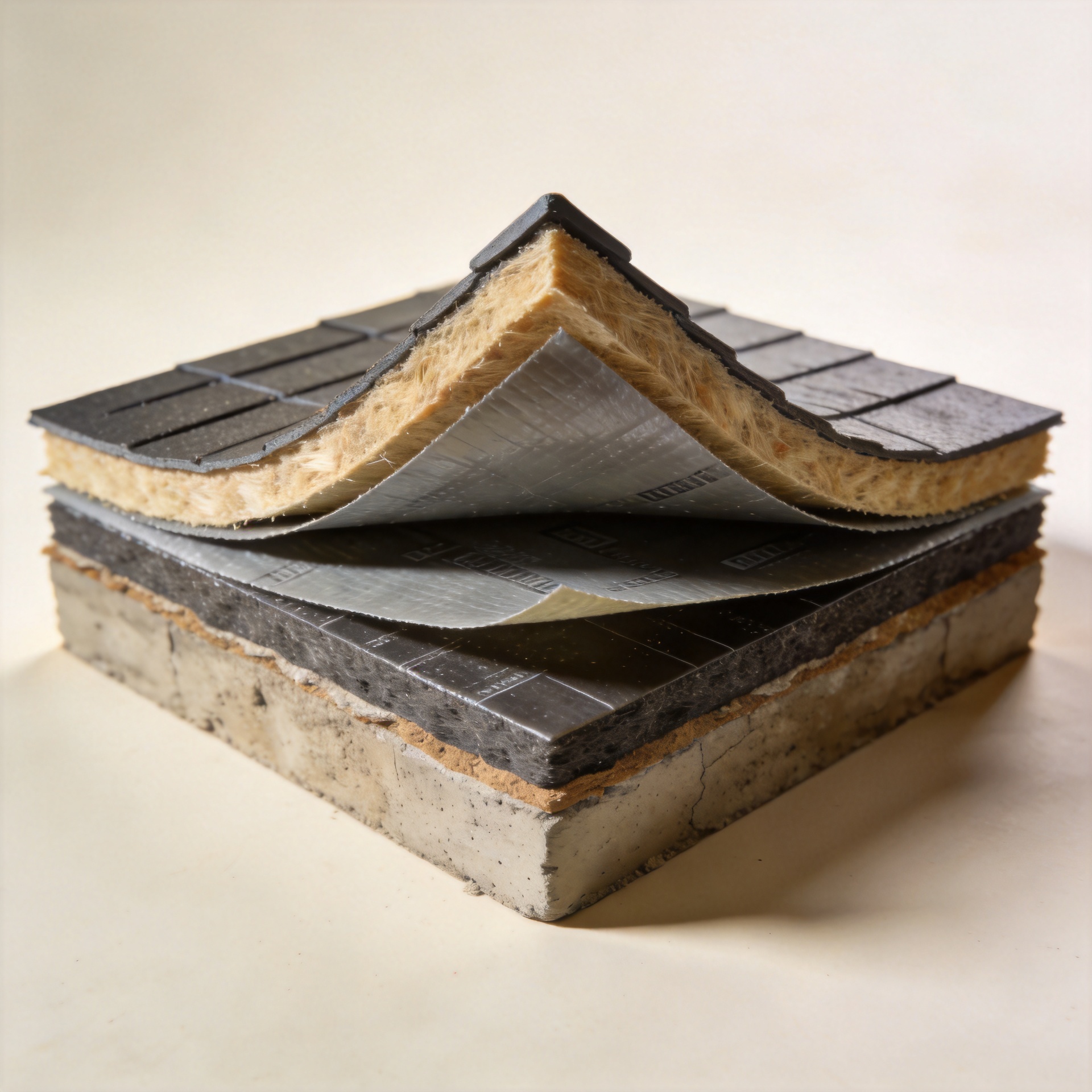
Few labels in this industry work harder than the words high performance. The phrase fronts datasheets, tenders and trade-show banners across every product category, yet names no measurable property. A buyer who accepts it at face value pays premium prices for an undefined benefit; a buyer who translates it into four verifiable numbers can compare any two products on evidence. This article explains what each number means, how pages report it, and which documents turn a claim into a specification line. If a supplier cannot fill in the numbers, it stays a slogan.
The first number is elongation at break — how far a sheet stretches before it fails. It is the property that decides whether a membrane bridges a moving crack or tears at it. A homogeneous PVC Type H sheet lists ≥ 250% stretch to break; a homogeneous 1.0mm EPDM grade lists ≥ 300%; a reinforced PVC Type P sheet, built for load rather than stretch, lists ≥ 15%; an SBS bituminous roll lists ≥ 40%. Note the trade-off the numbers reveal: a high performance waterproof membrane is not automatically the one with the biggest percentage. Reinforcement cuts stretch while adding load capacity, so the correct value depends on whether the project's dominant condition is movement or load. A sheet can post huge stretch figures yet fail a bend test — which is why low temperature flexibility belongs on the same line.
The second number is tensile strength — how much pulling load the sheet carries per 50mm of width. Published data separates the product families cleanly. Reinforced PVC Type P: ≥ 900 N/50mm longitudinal and ≥ 800 N/50mm transverse (EN 12311-2). SBS-modified bitumen: ≥ 800 N/50mm. APP-modified bitumen: ≥ 600 N/50mm. Self-adhesive grades: ≥ 400 N/50mm for the 1.5mm mineral sand sheet, ≥ 300 N/50mm for the 1.2mm PE film sheet. TPO Type P: ≥ 250 N/50mm. Homogeneous PVC Type H: ≥ 200 N/50mm. The spread exceeds four to one, and each figure pairs with elongation at break on the same datasheet. Tensile strength is what holds a mechanically fastened roof against wind uplift and a buried sheet against soil stress — so a high performance waterproof membrane for those conditions must publish the higher figures, with the test standard named.
The third number is low temperature flexibility — the temperature at which a bent sample still passes without cracking. Published ratings run from -5°C / -10°C on APP bitumen through -15°C on the 1.5mm self-adhesive mineral sand sheet, -20°C on the 1.2mm self-adhesive PE film sheet, -25°C on both SBS bitumen and PVC, -40°C on TPO Type P, to -45°C on homogeneous EPDM. Two cautions apply: ratings only compare within one test method. Second, flexibility says nothing about tensile strength, and nothing about an adhesive's behavior on a self-adhesive system. Read it against the project's coldest service condition, not a competitor's brochure. A high performance waterproof membrane for a cold-climate roof is simply the one whose low temperature flexibility sits below the design temperature, with margin.
Heat resistance is the fourth number: the temperature at which the sheet holds shape without flowing or blistering. Published figures: ≥ 130°C softening point for APP bitumen, 120°C for TPO Type P, 90°C for SBS and the 1.5mm self-adhesive mineral sand sheet, 70°C for PVC types H and P. The figure decides surface stability on exposed, sun-loaded roofs. It pairs with the cold rating on one line, because a membrane that excels at one test can fail the other: heat resistance says nothing about tensile strength or elongation at break, and a desert-climate roof weights it above every other column.
No single sheet tops every column, so the high performance waterproof membrane question is always a matching exercise. Consider a procurement officer pricing a cold-storage warehouse roof with 45°C summer surface temperatures and -20°C winters: APP's ≥ 130°C softening point looks attractive until its -5°C flexibility rating appears; SBS balances -25°C flexibility against 90°C heat; TPO pairs -40°C with 120°C; reinforced PVC adds tensile strength and ≤ 0.1% dimensional stability. APP wins heat and loses cold; EPDM wins cold and elongation at break; reinforced PVC wins load. Performance is a profile, not a trophy, and the winning profile is written by the site, where heat and cold carry equal weight.
Four published numbers settle nothing unless documents back them. Require a TDS that states each value with its test method; a CE declaration or the relevant product standard — EN 13956, EN 13707, GB 12952 or GB 18242 depending on the family; and a batch Certificate of Analysis proving the shipped lot matches the datasheet on elongation at break, low temperature flexibility and heat resistance. Cross-check the COA against the published figures — a ≥ 800 N/50mm claim means little if the batch certificate reports 620. The high performance waterproof membrane definition, in procurement terms, is simply this: numbers, methods and batch records that survive verification.
No. The four numbers trade against each other — reinforcement raises tensile strength while cutting elongation at break — so match the profile to the dominant site condition, not the largest figure on a page.
Low temperature flexibility, confirmed on the datasheet and by batch COA; a membrane that cracks at the design winter temperature fails regardless of its other ratings.
Ask for the published heat resistance value, the test method behind it, and a batch certificate — then treat any high performance waterproof membrane claim without these documents as unpriced risk.

2026/11/20
How an APP waterproof membrane handles heat: 130°C softening point, torch application windows, overheating signs, summer storage, and thermal aging checks.

2026/11/20
The science of a breathable waterproof membrane: water vapor diffusion, Sd values, three grammage grades, water column resistance, and wrong-use cases.

2026/11/20
Single-ply or two-ply, every flat roof is a stack. See how a self adhesive waterproof membrane for roof systems handles base, cap, insulation and drains.

2026/11/20
How the polyester scrim sets tensile strength and dimensional stability of reinforced TPO membrane rolls, with welding, roll sizes and selection tips.

2026/11/20
How an aluminum foil coated bitumen waterproof membrane reflects solar radiation, lowers surface temperature, and what maintenance keeps savings alive.

2026/11/20
SBS modified bitumen waterproof membrane property groups: tensile strength, low-temperature flexibility, heat resistance, surface finishes, applications.
Links to the corresponding full news page.

The eight questions overseas buyers ask most — factory ownership, capacity, batch consistency and lead times, answered straight.

SBS membranes, polymer sheets, coatings and geomembranes — six product lines are operating simultaneously.

Pre-sales specification, on-site technical support and post-delivery maintenance across 100+ export markets.

Waterproofing performance is decided in the specification and the detailing, not just the material. Our technical team helps you select the right system, resolve site questions as they arise, and stay reachable long after the container lands.
