
 EN
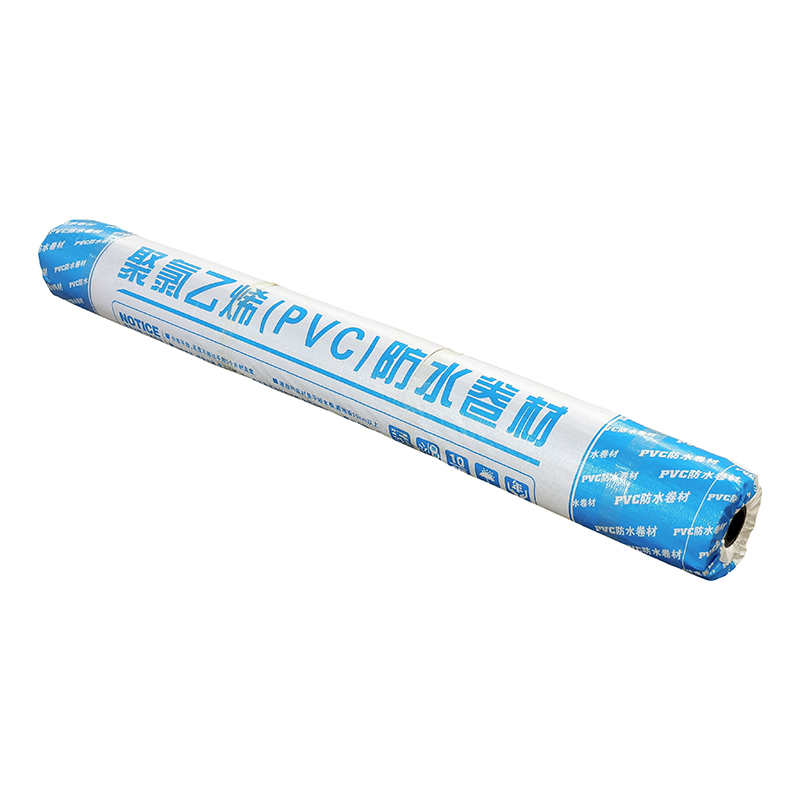
A roof or tunnel lining is only as good as its joints, and joints are made on site. Quality begins with a pvc membrane welding temperature verified on site, runs through a pvc membrane seam probed before it is covered, and ends in a pvc membrane weld inspection record.
Why the Weld Zone Decides Performance
Hot air softens two PVC surfaces and presses them together while the compound is fluid, so the result is a fusion bond, not an adhesive one. Done incorrectly, the joint looks closed and fails months later as a hairline leak. A pvc membrane seam matters more than the sheet in the roll. Behind a tunnel lining, a hot air welded PVC waterproof membrane cannot be revisited, so a pvc membrane weld inspection at installation is the only check it receives.
The Parameter Window: Temperature, Speed and Air Volume
Three settings govern the weld. Air temperature must bring the compound to a fusible state without scorching it, speed must let heat reach the interface, and air volume must hold nozzle temperature steady as the gun travels. No single pvc membrane welding temperature fits every job: a 1.2mm sheet heats through faster than a 2.0mm sheet, so a setting that welds the thin grade can leave the thick grade under-fused. Thickness, not the dial on the gun, decides how much heat reaches the bond line between the sheets.
By trial weld at the start of each shift, establish the pvc membrane welding temperature, and re-qualify a hot air welded PVC waterproof membrane after any change of sheet, nozzle or weather. A pvc membrane seam welded at an unverified setting is a guess, and no pvc membrane weld inspection can rescue it.
40mm Overlap and Effective Weld Width
Every PVC thickness requires a minimum 40mm overlap; the overlap is not the weld but the material to make one. A lap with a fused zone and a visible bead is sound; a narrow fused strip is a defect however neat it looks. A pvc membrane seam that is too narrow fails at the edge first, where peel concentrates. A hot air welded PVC waterproof membrane on a full lap gives the roller room to work and the pvc membrane weld inspection something measurable to pass. Speed is where overlap is lost: the pvc membrane welding temperature stays as set while the gun moves faster, and the fused zone thins.
Type H and Type P: Two Welding Behaviours
Homogeneous Type H is unreinforced: ≥250% elongation, ≥200 N/50mm tensile strength, dimensional stability within 2.0%, 60 kPa water tightness to EN 1928, −25°C flexibility and 70°C heat resistance under EN 13956 and GB 12952. That uniformity is why a hot air welded PVC waterproof membrane of Type H welds identically from either face. Type P carries a polyester scrim: tensile strength rises to ≥900 N/50mm longitudinal and ≥800 N/50mm transverse, and stability tightens to 0.1%, but the fabric does not fuse, so the weld must form above and below it. Type P is rated at seam shear ≥900 N/50mm, a useful target for any pvc membrane seam on a mechanically fastened roof.
A pvc membrane welding temperature that suits a homogeneous sheet under-fuses a reinforced one, so a pvc membrane weld inspection on Type P includes a peel sample from the first run of each shift.
Inspecting the Weld: Three Checks That Work
Visual inspection comes first: a correct weld on a hot air welded PVC waterproof membrane leaves a continuous, rounded bead with a fine line of squeezed compound. A blunt probe run along that edge should meet uniform resistance; any point where it slips under the lap marks an open zone in the pvc membrane seam, and probing is the first pass of any pvc membrane weld inspection.
Peel testing is destructive and uses sample seams: a sound weld fails in the membrane body, leaving compound on both faces; a clean, glossy separation means the joint never fused. None of these checks says much about the pvc membrane welding temperature, so the trial weld is documented beside them.
Defects, Weather and Substrate Moisture
Cold welds come from too little heat, too much speed or a dirty lap; over-welds leave a brittle thinned zone; burn-through appears where the nozzle stalled; trapped dust creates a pvc membrane seam that looks sound and fails early. Weather drives all four: cold stiffens the sheet, wind cools the nozzle, rain disqualifies the work, because a pvc membrane weld inspection that passed in the morning means little if the lap was wet.
Water in a slab turns to vapour under the hot-air stream and lifts the weld from below: a hot air welded PVC waterproof membrane can fail without any weld error. On one municipal utility tunnel project in Southeast Asia, seams welded in the afternoon over a sun-warmed invert held while adjacent seams welded the next morning failed the probe. The remedy was a moisture check and a delayed start, not a different pvc membrane welding temperature.
Frequently Asked Questions
Can a hot air welded PVC waterproof membrane be installed in light rain?
No. Water on the lap turns to vapour as the sheet heats and voids the fused zone, so the area has to be dried first.
How can I tell whether a seam failed at the weld or in the membrane?
Peel a sample. If compound remains on both faces and the sheet tears, the weld exceeds body strength, which is what pvc membrane seam figures guarantee and why a pvc membrane weld inspection is worth recording.
Does thicker PVC need a different welding setup?
Yes. A 2.0mm sheet needs more interfacial heat than a 1.2mm sheet, so speed and air volume change together; a pvc membrane welding temperature proven on thin gauge is only a start.










