 EN
APP Waterproof Membrane: High-Temperature Stability Guide
2026/11/20
How an APP waterproof membrane handles heat: 130°C softening point, torch application windows, overheating signs, summer storage, and thermal aging checks.

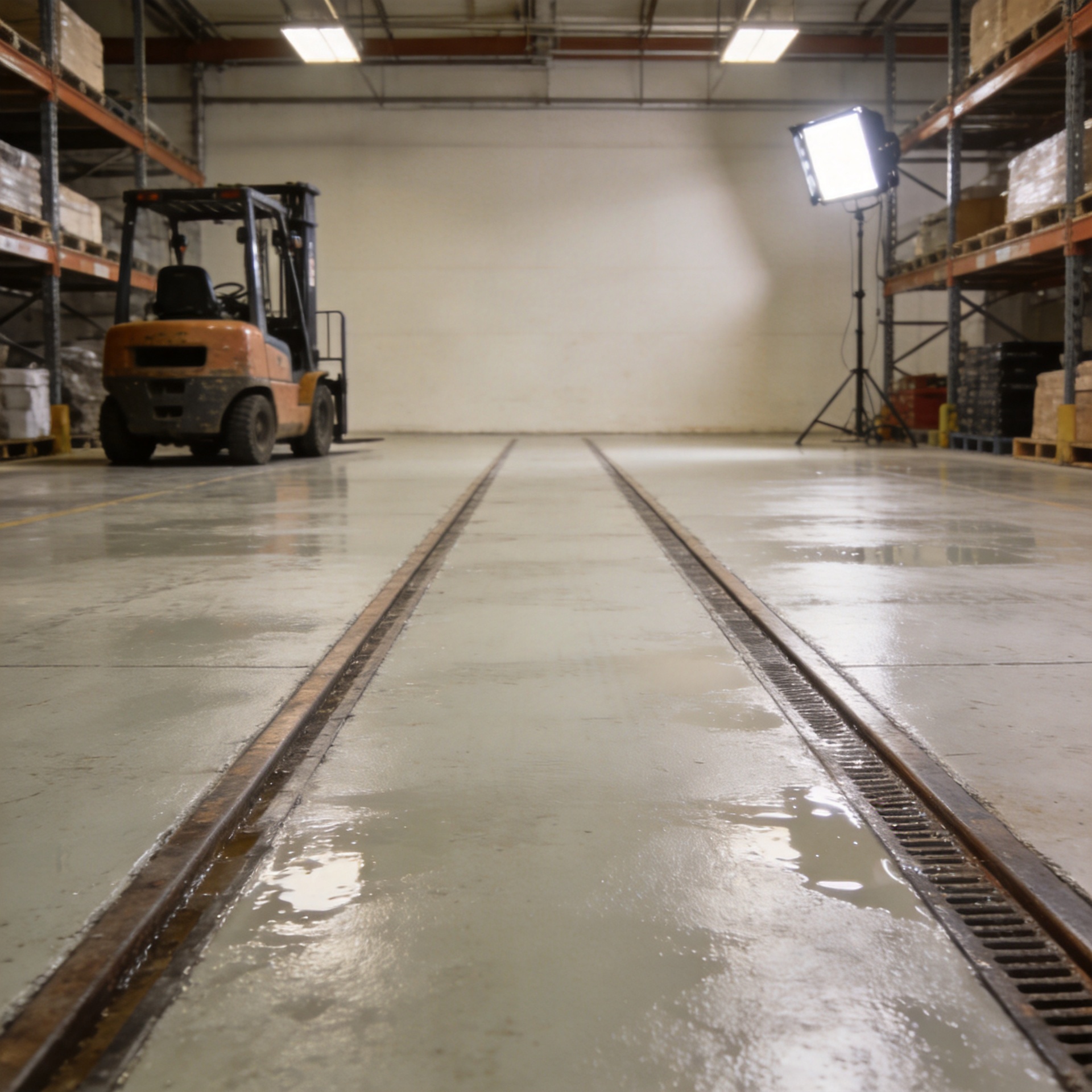
Walk through any aging logistics center, automotive repair workshop, or food processing plant, and the destructive combination of moisture intrusion and relentless mechanical wear becomes immediately obvious. In our hands-on experience inspecting deteriorated concrete slabs across industrial facilities, untreated floors rarely fail from foot traffic alone; instead, they break down when water seeps into microscopic concrete pores while heavy forklifts, pallet jacks, and steel-wheeled carts grind across the surface. Once washdown water, groundwater vapor, or oil spills penetrate an unprotected slab, internal hydrostatic pressure weakens the concrete matrix and corrodes embedded steel reinforcement. Applying a purpose-engineered Industrial Floor Waterproofing Coating stops this degradation cycle at the surface by locking out liquid intrusion while absorbing continuous rolling and impact loads. Rather than treating waterproofing and floor durability as two separate maintenance tasks, facility engineers rely on an integrated Industrial Floor Waterproofing Coating to keep busy production zones dry, structurally sound, and safe for daily operations.
Selecting the right polymer chemistry is the decisive factor in determining whether a floor coating will survive years of heavy industrial traffic or peel away within months. From a materials engineering standpoint, polyurethane liquid waterproof coatings offer an exceptional balance of elastomeric flexibility, tensile strength, and surface toughness for demanding horizontal substrates. When cured on a properly prepared concrete slab, a polyurethane-based Industrial Floor Waterproofing Coating forms a seamless, rubber-like monolithic membrane that stretches and recovers as the underlying concrete expands, contracts, or vibrates under heavy machinery. Rigid floor paints often shatter or delaminate when subjected to point loads from loaded forklifts or dropped metal tools, which immediately opens pathways for water seepage. By contrast, a high-performance polyurethane Industrial Floor Waterproofing Coating distributes mechanical stress evenly across the slab, bridging hairline shrinkage cracks and maintaining an unbroken watertight seal even in twenty-four-hour logistics corridors and multi-story parking decks.
Complex industrial environments rarely rely on a single thin film; instead, experienced waterproofing specialists design multi-layer coating architectures tailored to specific substrate conditions. When a concrete floor is located on grade or in a damp below-grade basement where rising moisture vapor is present, applying a polymer-modified cementitious waterproof coating as a base layer creates a breathable yet watertight bond directly with the damp masonry substrate. Once this inorganic-organic composite base is cured, applicators can overcoat the surface with a tough polyurethane or acrylic Industrial Floor Waterproofing Coating to handle direct surface abrasion and UV exposure near loading dock doors. In light-industrial assembly zones, commercial walkways, or mezzanines where rapid drying, low odor, and color-coded safety lanes are needed, a heavy-duty acrylic liquid coating or a specialized transparent waterproof sealer provides a clean, dust-free, and water-repellent finish. Matching the specific Industrial Floor Waterproofing Coating build to the exact traffic intensity ensures optimal budget allocation without sacrificing moisture protection.
Authoritative industrial safety and building maintenance standards evaluate high-traffic floor waterproofing not only by water impermeability, but also by wet slip resistance, chemical tolerance, and thermal stability. In wet manufacturing zones, commercial kitchens, and vehicle wash bays, a smooth wet floor creates severe slip-and-fall hazards for workers. To solve this challenge, our technical team advises broadcasting graded silica sand or anti-slip mineral aggregates into the intermediate layer of the Industrial Floor Waterproofing Coating before sealing it with a final wear-resistant topcoat. This textured profile generates reliable traction for both rubber-soled work boots and forklift tires even during active hose-down cleaning. Furthermore, a professional-grade Industrial Floor Waterproofing Coating resists degradation from common industrial fluids, including mild acids, alkalis, detergents, hydraulic oils, and deicing salts. By preventing these aggressive liquids from soaking into the concrete slab, the seamless membrane preserves structural hygiene and prevents costly environmental contamination beneath the facility.
Practical field evidence proves that most premature coating failures stem from inadequate concrete preparation rather than material defects. Concrete slabs frequently harbor laitance, curing compounds, tire rubber marks, and absorbed grease that block liquid coatings from anchoring into the substrate pores. Before applying any Industrial Floor Waterproofing Coating, contractors must mechanically prepare the slab using diamond grinding or shot blasting to achieve a clean, open-pored surface profile, followed by thorough industrial vacuuming. Expansion joints, control saw-cuts, and wall-to-floor coves represent the highest-risk leak zones under heavy traffic vibration. These vulnerable transitions should be routed out, filled with flexible sealant, and reinforced with a strip of nonwoven polyester fabric embedded into a liquid base coat. After priming the prepared concrete to seal out trapped air and avoid pinholes, the main layers of the Industrial Floor Waterproofing Coating are applied by notched squeegee and back-rolled in perpendicular passes to achieve uniform film thickness across the entire traffic lane.
Maximizing the return on investment for an industrial flooring upgrade requires proactive lifecycle planning and direct technical coordination with your waterproofing manufacturer. Unlike sheet membranes that often require complete tear-out when damaged by sharp machinery, a liquid-applied Industrial Floor Waterproofing Coating allows facility maintenance crews to clean, lightly abrade, and recoat localized high-wear turning zones during scheduled weekend shutdowns. When sourcing materials for large-scale warehouse builds, parking structures, or plant renovations, working directly with our factory enables project managers to customize viscosity, curing speed, surface color, and packaging formats to fit on-site application equipment. We provide pre-shipment sample verification, clear substrate preparation manuals, and batch-by-batch quality inspection records so contractors can install every pail with complete confidence. With the right system specification and routine inspection, your coated industrial floor will remain dry, safe, and resilient under years of demanding operational traffic.
New concrete slabs generally need to cure for at least twenty-eight days so excess mixing water can evaporate and the slab can reach its designed compressive strength. Before applying a liquid waterproof coating, contractors should verify that the concrete surface is dry and free of rising moisture vapor to prevent blistering or delamination.
Yes, provided the polyurethane waterproof coating is installed as a heavy-duty traffic system with proper substrate priming, sufficient film build, and a wear-resistant topcoat. For areas with constant forklift turning and braking, embedding quartz sand into the intermediate coat significantly increases abrasion and puncture resistance.
Localized gouges caused by dropped heavy equipment can be repaired without replacing the entire floor. Maintenance staff simply clean and lightly sand the damaged perimeter, wipe away dust with a clean cloth, and apply a fresh patch of compatible liquid waterproof coating that bonds seamlessly into the surrounding film.

2026/11/20
How an APP waterproof membrane handles heat: 130°C softening point, torch application windows, overheating signs, summer storage, and thermal aging checks.

2026/11/20
The science of a breathable waterproof membrane: water vapor diffusion, Sd values, three grammage grades, water column resistance, and wrong-use cases.

2026/11/20
Single-ply or two-ply, every flat roof is a stack. See how a self adhesive waterproof membrane for roof systems handles base, cap, insulation and drains.

2026/11/20
How the polyester scrim sets tensile strength and dimensional stability of reinforced TPO membrane rolls, with welding, roll sizes and selection tips.

2026/11/20
How an aluminum foil coated bitumen waterproof membrane reflects solar radiation, lowers surface temperature, and what maintenance keeps savings alive.

2026/11/20
SBS modified bitumen waterproof membrane property groups: tensile strength, low-temperature flexibility, heat resistance, surface finishes, applications.
Links to the corresponding full news page.

The eight questions overseas buyers ask most — factory ownership, capacity, batch consistency and lead times, answered straight.

SBS membranes, polymer sheets, coatings and geomembranes — six product lines are operating simultaneously.

Pre-sales specification, on-site technical support and post-delivery maintenance across 100+ export markets.

Waterproofing performance is decided in the specification and the detailing, not just the material. Our technical team helps you select the right system, resolve site questions as they arise, and stay reachable long after the container lands.
