 EN
APP Waterproof Membrane: High-Temperature Stability Guide
2026/11/20
How an APP waterproof membrane handles heat: 130°C softening point, torch application windows, overheating signs, summer storage, and thermal aging checks.

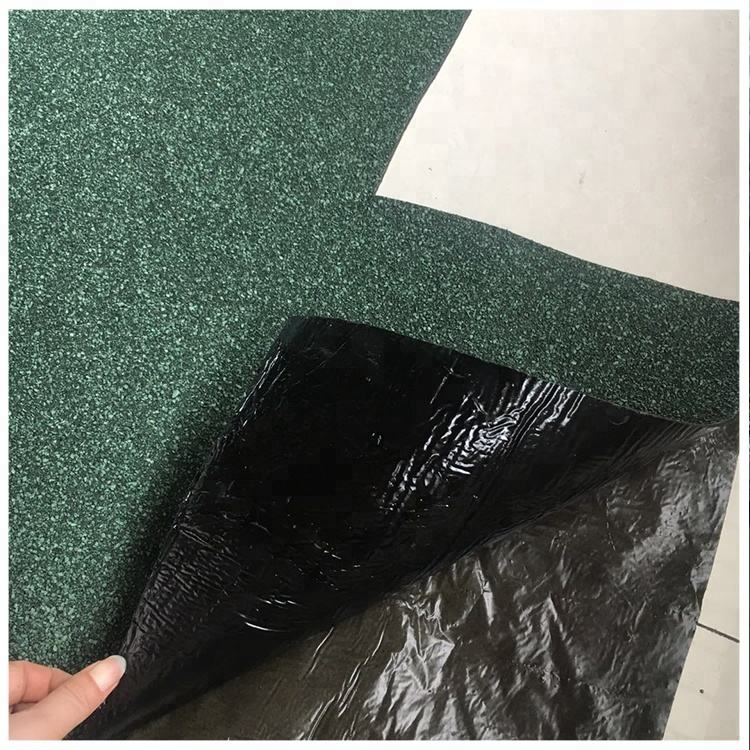
On an exposed roof, sunlight ages the bitumen long before water finds a weakness. Such a membrane answers that attack at the factory, facing the asphalt with bonded stone granules. This guide explains how the mineral granule surface blocks ultraviolet radiation, how a self adhesive bitumen membrane with a stone finish compares with other facings, and what the mechanical data means for exposed roofing.
Ultraviolet radiation and oxygen attack bitumen by photo-oxidation. The binder loses light oils, chalks and hardens, then micro-cracks; water enters and ageing accelerates from above downward. A membrane buried under ballast or soil never sees this load — hence the facing matters outdoors. Chemistry helps deeper down: an SBS modified sheet stays flexible at −25°C with elongation of at least 40% under GB 18242 or EN 13707, but no polymer stops UV attacking the outer bitumen. UV protection therefore has to be built into the surface itself, either as a reflective foil or a stone facing.
A mineral surface bitumen waterproof membrane carries its shield on the outside. The slate mineral surface is locked in as a stone armour when slate granules are pressed into the hot bitumen as the roll is made. Because the granules absorb and reflect ultraviolet light, the radiation reaching the binder drops sharply, and the stone layer weathers instead of the bitumen. The same layer cushions hail, grit and light traffic, so the waterproofing body stays intact longer. The finish is the first line of UV protection for the whole assembly. Granule adhesion matters: if the stone flakes off early, bare bitumen appears and the ageing clock restarts — hence the declared peel adhesion.
Colour changes how much solar energy the roof absorbs. Dark grey and black finishes absorb more radiation and run hotter, while lighter mixed-stone shades reflect more and stay cooler. A cooler deck means a smaller thermal cycle, less lap movement and slower ageing under the uv protection layer. Residential roofs often choose the slate mineral surface for its stone texture too. Whatever the tone, the mineral granule surface keeps working without repainting, because the colour is the stone itself.
Not every facing suits an exposed deck. SBS rolls come with PE film, mineral granule or aluminium foil, each with a place. A PE film face is an economical covering for concealed work; exposed for years, film degrades and offers little UV protection — the wrong pick for a cap sheet. A foil facing differs: with aluminium at 0.08–0.12 mm and reflectivity of at least 80%, it bounces back most incident radiation and suits heat-exposed details. The third option is designed to live outdoors: for a heavy-duty exposed roof, a self adhesive bitumen membrane in 3 mm with slate granules combines cold application with a finish needing no separate uv protection layer.
The exposed-roof grade is a 3 mm mineral surface bitumen waterproof membrane, polyester-mat reinforced, finished with slate granules. The datasheet declares tensile of at least 700 N/50mm and elongation of at least 30%, which carries the sheet over substrate movement; peel adhesion of at least 1.5 N/mm keeps granules and laps bonded. Flexibility is rated at −20°C and heat resistance at 90°C, and impact resistance is tested to EN 12691, the product standard for a self adhesive bitumen membrane in exposed service.
Against a torch-applied SBS grade — tensile of at least 800 N/50mm, elongation of at least 40%, flexibility to −25°C in 3, 4 or 5 mm — the slate mineral surface grade trades a little cold flexibility for flame-free installation, which matters on refurbishment roofs where torches are restricted. Cold application also shields the mineral granule surface from scorch heat.
Rolls come 1 m × 10 m, and on a self adhesive bitumen membrane the side and end laps of 80–100 mm do the sealing work. Granule-faced cap sheets carry a plain selvedge so laps bond bitumen to bitumen; granules inside a lap zone must be warmed and pressed in, or the stone blocks the bond. The mineral granule surface at the lap edge is prepared before the next roll goes down.
Underfoot, the stone finish shrugs off scuffing that tears a film face, though ladder feet and point loads need pads. A facilities team in a coastal logistics park re-covered an exposed warehouse deck with a mineral surface bitumen waterproof membrane finished as a slate mineral surface, and walks it twice yearly: loss of the mineral granule surface is logged, lap edges are re-checked after storms, and punctures are patched with a self adhesive bitumen membrane cut from offcuts. Keeping that rhythm preserves the uv protection layer, which is what this kind of finish exists to do.
No. The slate mineral surface is itself the shield, so no recoating schedule applies. Reflective foils suit projects chasing lower surface temperature, but the stone finish handles ultraviolet exposure alone and simply needs inspection.
Manufacturers leave a plain selvedge, so laps bond bitumen to bitumen across the standard 80–100 mm width. On a self adhesive bitumen membrane the rule is the same; warming granules out of the lap zone prevents hollow seams.
An intact mineral granule surface ages by gradual stone loss, not cracking. Inspect annually and after severe weather: heavy shedding, raised laps or bare bitumen patches signal that the slate mineral surface, and the UV protection with it, is thinning and needs local repair.

2026/11/20
How an APP waterproof membrane handles heat: 130°C softening point, torch application windows, overheating signs, summer storage, and thermal aging checks.

2026/11/20
The science of a breathable waterproof membrane: water vapor diffusion, Sd values, three grammage grades, water column resistance, and wrong-use cases.

2026/11/20
Single-ply or two-ply, every flat roof is a stack. See how a self adhesive waterproof membrane for roof systems handles base, cap, insulation and drains.

2026/11/20
How the polyester scrim sets tensile strength and dimensional stability of reinforced TPO membrane rolls, with welding, roll sizes and selection tips.

2026/11/20
How an aluminum foil coated bitumen waterproof membrane reflects solar radiation, lowers surface temperature, and what maintenance keeps savings alive.

2026/11/20
SBS modified bitumen waterproof membrane property groups: tensile strength, low-temperature flexibility, heat resistance, surface finishes, applications.
Links to the corresponding full news page.

The eight questions overseas buyers ask most — factory ownership, capacity, batch consistency and lead times, answered straight.

SBS membranes, polymer sheets, coatings and geomembranes — six product lines are operating simultaneously.

Pre-sales specification, on-site technical support and post-delivery maintenance across 100+ export markets.

Waterproofing performance is decided in the specification and the detailing, not just the material. Our technical team helps you select the right system, resolve site questions as they arise, and stay reachable long after the container lands.
