
 EN
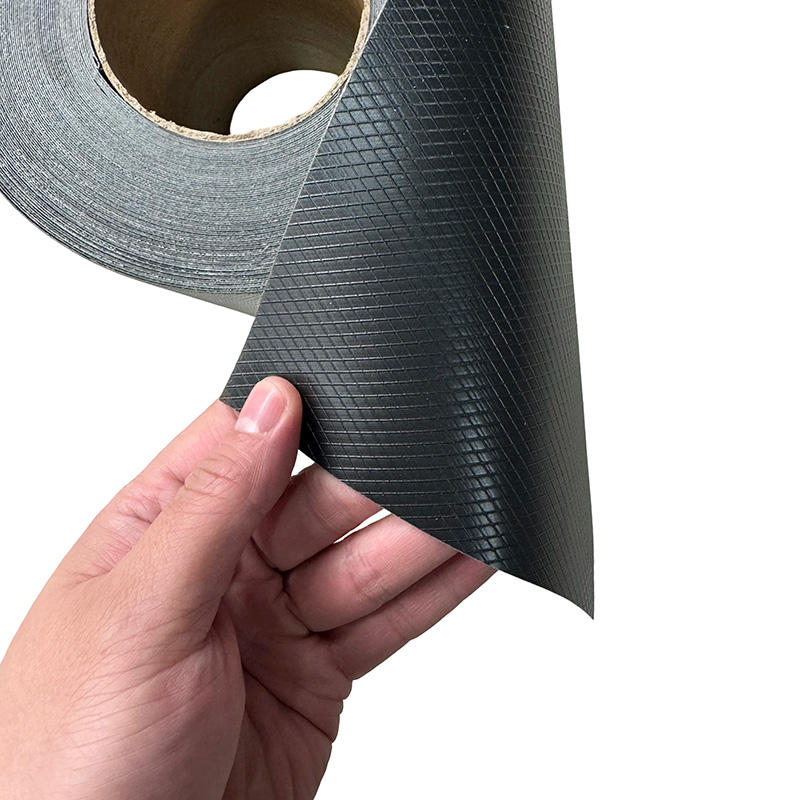
A damp proof course looks like the simplest product on a masonry site, yet installation quality decides whether a wall stays dry for the life of the building. Where a smooth face can drift inside fresh mortar, a textured surface keys into the bed and holds position. That grip is what a non slip textured damp proof course membrane adds: not a different barrier, but a sheet that stays exactly where the bricklayer left it — the first defense against rising damp. This article explains why the mortar bed behaves this way, what texture changes on site, and when a textured dpc membrane is worth specifying.
What a Damp Proof Course Has to Survive
From unrolling to the completion of the wall above, the sheet faces mechanical abuse rather than water. It is laid into a wet joint, then loaded by successive courses of brick and block, while sharp sand particles and rough block edges press into it. Rising damp only needs a single defect — a tear, a slip out of position, a bridged joint — to find its path upward, so the installation phase is where most damp proof course failures are actually created.
Why Smooth Sheet Can Move in Fresh Mortar
Fresh mortar is a plastic, slightly lubricating medium. A smooth-faced sheet laid into a mortar bed can slide sideways while the bricklayer levels the course, and it can creep out of position under trowel pressure. The movement is a slow drift that shortens laps or folds the sheet. Because the next course conceals the sheet immediately, the drift is invisible at the time and expensive to diagnose later. Rising damp through a displaced dpc membrane often appears far from the cause, months afterward. Texture attacks exactly this failure class, because friction between sheet and mortar is what a smooth face cannot provide.
What the Textured Surface Changes
The texture works by mechanical interlock. The patterned face keys into the surrounding mortar bed the way a ribbed fastener keys into timber: once the mortar stiffens around the profile, the sheet is anchored rather than merely sandwiched. First, a non slip textured damp proof course membrane holds its line while the course above is set out, keeping laps at their designed width. Second, foot traffic and trowel pressure are less likely to displace it during the working day. Third, mortar grips the profiled face instead of shearing along a slick plane, keeping the bond between courses continuous. The result is a dpc membrane that behaves as part of the wall, locked into the mortar bed, rather than as a separate sliding layer within it.
Textured and Smooth Sheet: Choosing for the Wall
Both surface types have a place, and the choice follows the wall detail rather than habit. Smooth sheet — manufacturers such as Shandong Dingtai Waterproof list smooth damp proof course grades in LDPE, HDPE, and polypropylene-reinforced constructions — remains sound in lightly loaded domestic walls and cavity closings where the course is not disturbed. A non slip textured damp proof course membrane earns its premium where movement is likely: long runs of brickwork laid in a day, exposed sites where wind shakes scaffolding, heavily loaded base courses, and retrofits where the mortar bed cannot be prepared to a fine finish. Where drift risk is low, texture adds cost without value; where drift dominates, rising damp prevention starts with removing the movement that causes it.
Laying a Textured DPC Membrane Correctly
Texture improves stability, but it does not replace sound practice. Lay the non slip textured damp proof course membrane on a level, debris-free mortar bed so the profile seats fully instead of resting on points. Keep laps running with the fall of water where the course is stepped, and run the sheet through the full wall width. Bed the dpc membrane into an even layer of fresh mortar, not onto dry joints, and lay the courses above in the same session so the textured surface locks before site traffic returns. At corners and junctions, form the sheet with purpose-cut shapes rather than forced folds, which concentrate stress where the wall will move.
Failure Modes the Texture Helps Avoid
Most damp complaints traced back to the damp proof course originate in a short list of installation faults. Laps that narrowed after the sheet drifted inside the mortar bed. A course that slid on a smooth face while being leveled, pulling the sheet out of plane. A sheet that wrinkled under foot traffic and left a channel beneath the wall above. Rising damp through each of these defects surfaces months later, far from the cause, which is why diagnosis is so costly. Specifying a non slip textured damp proof course membrane in the vulnerable details does not change the barrier — the texture adds grip, not waterproofing — but it removes the movement that turns a correct sheet into a failed installation.
Frequently Asked Questions
Does a textured surface change the waterproofing function?
No. The barrier is the sheet body itself, and texture does not alter it. A textured dpc membrane adds grip in the bed, so it protects the installation rather than the material performance of the sheet.
Where is texture most worth specifying?
Long straight runs, heavily loaded base courses, and exposed or retrofit walls where the bed cannot be finished finely. In those conditions a non slip textured damp proof course membrane prevents the drift that lets rising damp find a path — exactly what a textured surface is for.
How should laps be treated with a textured sheet?
Design laps to the same width you would use for smooth sheet, bed the dpc membrane fully into the mortar bed, and verify continuity before concealment. A non slip textured damp proof course membrane rewards that discipline anywhere in the wall. Damp exploits an unmade lap regardless of how well the textured surface grips elsewhere.










