
 EN
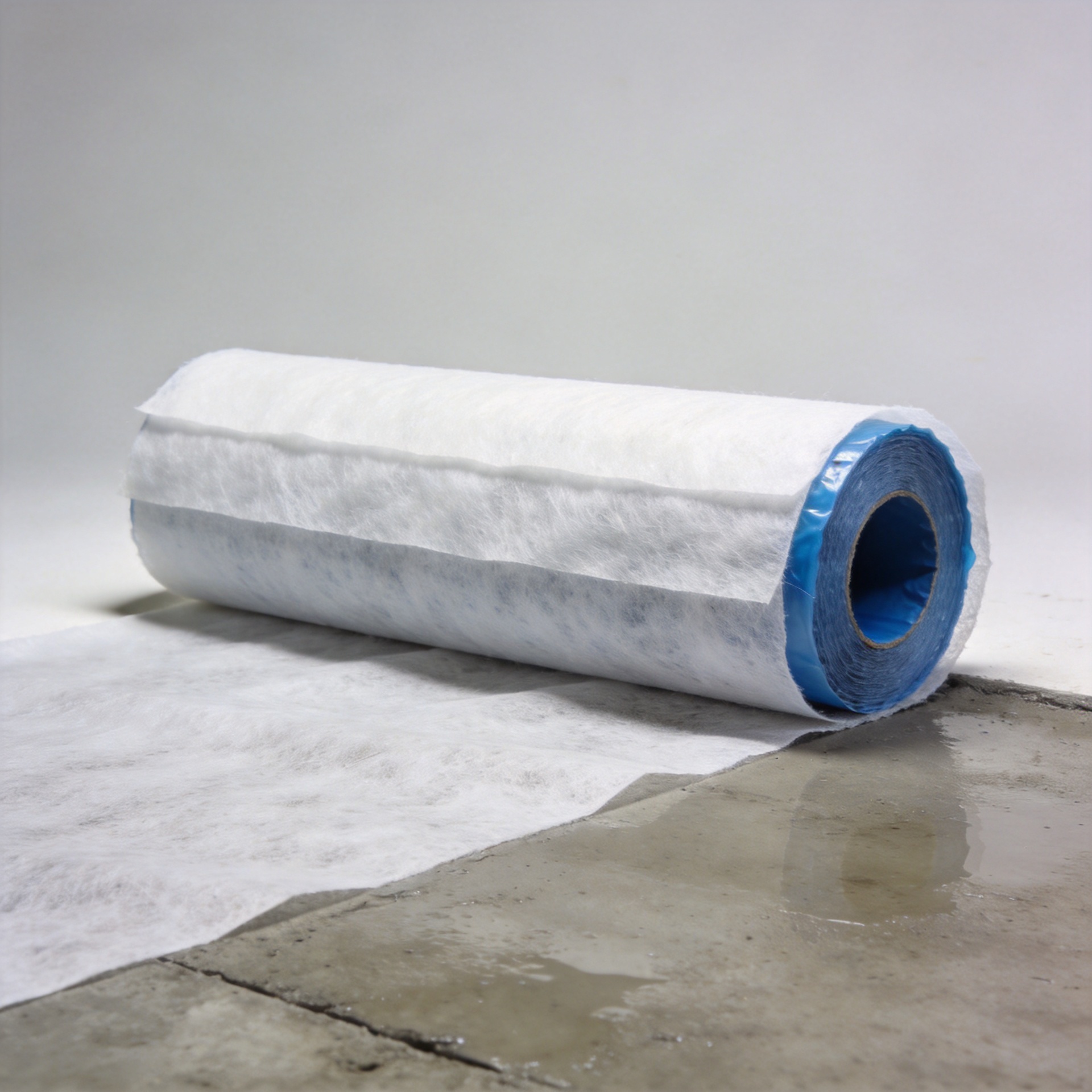
In cross-section, a non woven fabric PE PP waterproof membrane reads like a sandwich: a polymer film core between non-woven fabric faces. That composite structure gives the product grip, tear tolerance, and a waterproof center. This guide explains each layer's role, how grammage maps to GB/T 17643 data, and where layered builds separate.
Two Products, One Fabric Family
Sourcing platforms list two fabric-composite products side by side. The first is a PE PP membrane built to stop liquid water: a PE film core between non-woven polypropylene faces, specified under GB/T 17643 for wet areas. The second is a breathable three-layer wrap - PP non-woven, PE film, PP non-woven - whose job is the opposite: hold out rain, release vapor. Both can be described as a non woven fabric PE PP waterproof membrane on a trade site, yet their composite structure serves different physics. Decide first which problem you are solving - water kept out, or vapor let out - and the specification follows.
What the Non-Woven Layer Does
The film provides the water barrier; the fabric provides everything else. Non-woven polypropylene faces raise tensile strength, add dimensional stability through temperature swings, and create a fiber surface that mortar, adhesive, or reinforcement mesh can key into. They also cushion the film against puncture during handling and everyday site transport. Non woven grammage - weight per square meter - decides how much protection a roll carries. Light fabric laminates quickly and keeps rolls flexible but contributes less tensile strength per square meter; heavy fabric adds strength and stiffness, trading off conformability. When one price covers several grammages on offer, ask which face fabric is included; the film alone never explains the mechanical gap between grades of a PE PP membrane.
Grammage and the Three Mechanical Grades
Published data for GB/T 17643 products splits into three non woven grammage bands, each with its own profile. The 100-200 g/m² class reaches tensile strength of 60 N/50 mm with elongation near 200% and holds 0.3 MPa water pressure. The 300-400 g/m² class lifts the value to 100 N/50 mm, settles elongation around 150%, and raises watertightness to 0.4 MPa. The heaviest PE PP membrane class, 500-600 g/m², delivers 150 N/50 mm, elongation close to 100%, and 0.6 MPa. The pattern: as non woven grammage climbs, strength and impermeability rise while elongation falls, because the stiffer fabric restrains the film within the layered build. For a non woven fabric PE PP waterproof membrane, choose the band by the forces in your detail: movement favors lighter grades, pressure heavier ones.
How the Layers Are Bonded
A composite structure is created by extrusion lamination or thermal bonding: molten PE is cast onto the fabric, pressed, and chilled, locking film and fabric into a single continuous web. Bond quality depends on line temperature, nip pressure, and surface cleanliness; dust or residual moisture at the interface becomes a future delamination line. A well-bonded PE PP membrane separates fabric from film only with visible fiber tear, never cleanly. Ask for peel or bond-strength data from the line, and reject rolls where face fabric lifts at the edges. The same logic governs the breathable version: its three-layer build relies on even bonding so the assembly stays coherent yet open to vapor.
When Composite Layers Separate
Delamination shows as bubbling, edge lift, or a face fabric that peels under a fingernail. Common causes: lamination at low line temperature, contaminated film surfaces, filler-heavy fabric, and bonding over a damp substrate. Each path attacks the composite structure at its weakest interface and cuts the tensile strength the assembly can carry. On site, cut a crosshatch through the fabric and lift: fibers should tear before the interface opens. A PE PP membrane that fails this check will fail in service, because the same weak bond peels under site stress. Record the roll number, quarantine the batch, and send samples for peel testing before deciding usability.
Comparing Builds Before You Buy
Line the two builds up before ordering. A non woven fabric PE PP waterproof membrane for liquid-water work is judged on impermeability, tensile strength retention, and bond quality; a breathable wrap on vapor permeability, water holdout, and UV exposure time. Confirm non woven grammage in writing for each face, since suppliers may quote an average rather than a minimum. For the breathable build, confirm which layer carries which function and verify layer order. One buyer for a Southeast Asian resort standardized on the 300-400 g/m² grade of PE PP membrane after a lighter roll tore on a windy podium deck; the heavier fabric cost more per roll and less per repaired area. Match the composite structure to the risk, not the lowest quotation, and put the grammage and test values into the contract.
Frequently Asked Questions
Can one grammage serve every wet-area application?
No. A light 100-200 g/m² roll of a non woven fabric PE PP waterproof membrane conforms well around corners but offers limited tensile strength, so it suits low-stress details; the 500-600 g/m² class resists pressure and rough handling. Define the expected stress on each separate detail first, and then let the required non woven grammage follow from that stated design stress.
How is this different from the breathable three-layer wrap used on envelopes?
A non woven fabric PE PP waterproof membrane blocks liquid water by design; the breathable three-layer assembly of PP non-woven, PE film, and PP non-woven passes vapor while shedding rain. Their composite structure looks similar, but the film, bonding, and standards differ.
What document should accompany a composite membrane order?
Require a mill certificate listing non woven grammage per face, tensile strength values, elongation, watertightness, and the GB/T 17643 class. Ask that the certificate reference the batch number on each PE PP membrane roll, so site checks trace back to production records.










