 EN
APP Waterproof Membrane: High-Temperature Stability Guide
2026/11/20
How an APP waterproof membrane handles heat: 130°C softening point, torch application windows, overheating signs, summer storage, and thermal aging checks.

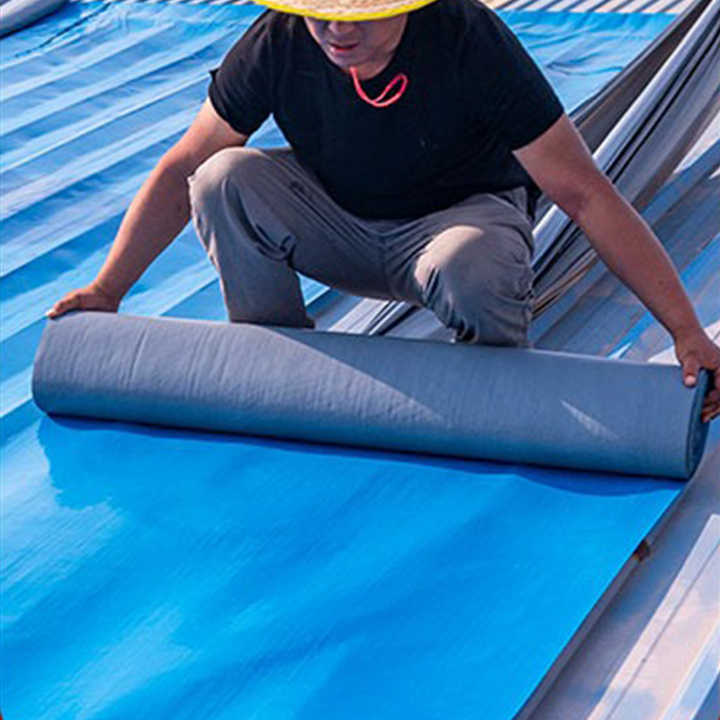
On roofs where dead load, open-flame restrictions, and fast schedules collide, a polyethylene propylene membrane roof waterproofing system offers a different balance from torch-applied bitumen. The sheet combines a polyethylene core with non-woven polypropylene fiber layers on both faces: the core supplies water tightness, while the fiber faces give cement products something to grip. As a lightweight waterproof membrane it adds almost nothing to the structure, and as a polyethylene propylene waterproof membrane it is tested to GB/T 17643 in three grades. This article explains the grades and how to plan a supply.
The PE core is a continuous polymer film forming the waterproof barrier, stable from −20°C to 70°C. The PP non-woven layers are structural, not decorative: they key into a wet cementitious slurry so the sheet bonds into the building fabric rather than sitting against it, and they allow limited vapor transmission during curing, reducing trapped-moisture blistering over damp substrates. These faces make a polyethylene propylene waterproof membrane bondable. Declared strength starts at 60 N/50mm for the lightest grade, with parameters certified CE and ISO 14001 per GB/T 17643 rather than estimated.
The light grade, at 100–200 g/m² and 0.3–0.5mm thick, is the defining lightweight waterproof membrane of the range. It passes water tightness at 0.3 MPa for 30 minutes, and its tensile strength reaches at least 60 N/50mm with elongation at break of 200% or more. That combination suits roof overlays and balcony transitions where build-up height and dead load are constrained: the sheet forms a continuous layer beneath screeds and tile beds — the typical polyethylene propylene membrane roof waterproofing position. For renovation of older structures with limited reserve capacity, a polyethylene propylene waterproof membrane in this grade is often chosen for the load figure alone — and the same lightweight waterproof membrane logic carries through the range, always over a cementitious slurry bond coat.
Where the roof carries plant, traffic routes, or podium landscaping, the medium and heavy grades step in. The medium grade, 300–400 g/m² and 0.6–0.8mm, raises strength to at least 100 N/50mm with 150% elongation and passes water tightness at 0.4 MPa. The heavy grade, 500–600 g/m² and 1.0mm, reaches at least 150 N/50mm and 0.6 MPa, with elongation at 100% — the top of the polyethylene propylene waterproof membrane range. Note the trade: higher tensile strength comes with lower elongation, balancing load resistance against the ability to bridge movement. A polyethylene propylene membrane roof waterproofing plan often mixes grades — a lightweight waterproof membrane across general areas, heavier sheet at loading points.
Installation is the strongest argument on occupied or restricted sites. The sheet is bonded into a wet cementitious slurry on the prepared substrate — no torch, no open flame, no primer-dependent adhesives. The PP fiber faces interlock with the slurry as it cures, producing a continuous bond across the full sheet area, so the assembly benefits from the sheet's tensile strength rather than adhesive alone — one reason a lightweight waterproof membrane forms a robust assembly; the method also removes hot-work failure modes such as under-fused laps. Rolls come in widths of 1.0m, 1.5m, and 2.0m with lengths up to 100m, so joint counts on large decks stay low. A contractor re-laying balconies on an occupied block switched to a polyethylene propylene waterproof membrane for this reason — residents stayed while the cementitious slurry method proceeded, without flame permits or fumes.
The declared −20°C to 70°C window covers most climates a roof encounters, and the PE/PP core stays flexible across it, accommodating deck movement without losing tensile strength. One point deserves emphasis: a polyethylene propylene membrane roof waterproofing layer sits within the build-up — under screed, tile beds, or protection layers — not as a permanently exposed finishing surface. Planning the cover as part of the system protects the polyethylene propylene waterproof membrane from weathering and mechanical damage — standard practice for this class.
For procurement, plan around three variables. Grade: the lightweight waterproof membrane for overlays and height-critical builds, medium for general areas, heavy for high-load zones. Roll format: the 2.0m width with long rolls minimizes laps on large decks. Documentation: request the GB/T 17643 reports and CE declaration with the offer, and confirm MOQ before pricing — production for the light grade commonly starts around 500 m². Shandong Dingtai Waterproof publishes full grade datasheets with these parameters, which makes a polyethylene propylene membrane roof waterproofing comparison straightforward: align grade, thickness, and tensile strength first, then compare rates once the cementitious slurry method is confirmed against site rules.
It is specified as a bonded layer within the build-up, under wet slurry and cover layers, not as an exposed finish. Plan screed or protection over any polyethylene propylene membrane roof waterproofing installation as part of the system.
For ordinary roof areas the medium grade, with tensile strength of at least 100 N/50mm, is common, while the lightweight waterproof membrane suits balcony overlays where load and height are constrained.
Any polyethylene propylene waterproof membrane is bedded into a wet cementitious slurry, with the PP fiber faces interlocking as the slurry cures — the same whether the light or the heavy grade is installed — and the declared tensile strength carries into the bonded assembly. No torch or flame is involved, which suits polyethylene propylene membrane roof waterproofing on occupied and restricted sites.

2026/11/20
How an APP waterproof membrane handles heat: 130°C softening point, torch application windows, overheating signs, summer storage, and thermal aging checks.

2026/11/20
The science of a breathable waterproof membrane: water vapor diffusion, Sd values, three grammage grades, water column resistance, and wrong-use cases.

2026/11/20
Single-ply or two-ply, every flat roof is a stack. See how a self adhesive waterproof membrane for roof systems handles base, cap, insulation and drains.

2026/11/20
How the polyester scrim sets tensile strength and dimensional stability of reinforced TPO membrane rolls, with welding, roll sizes and selection tips.

2026/11/20
How an aluminum foil coated bitumen waterproof membrane reflects solar radiation, lowers surface temperature, and what maintenance keeps savings alive.

2026/11/20
SBS modified bitumen waterproof membrane property groups: tensile strength, low-temperature flexibility, heat resistance, surface finishes, applications.
Links to the corresponding full news page.

The eight questions overseas buyers ask most — factory ownership, capacity, batch consistency and lead times, answered straight.

SBS membranes, polymer sheets, coatings and geomembranes — six product lines are operating simultaneously.

Pre-sales specification, on-site technical support and post-delivery maintenance across 100+ export markets.

Waterproofing performance is decided in the specification and the detailing, not just the material. Our technical team helps you select the right system, resolve site questions as they arise, and stay reachable long after the container lands.
