 EN
APP Waterproof Membrane: High-Temperature Stability Guide
2026/11/20
How an APP waterproof membrane handles heat: 130°C softening point, torch application windows, overheating signs, summer storage, and thermal aging checks.

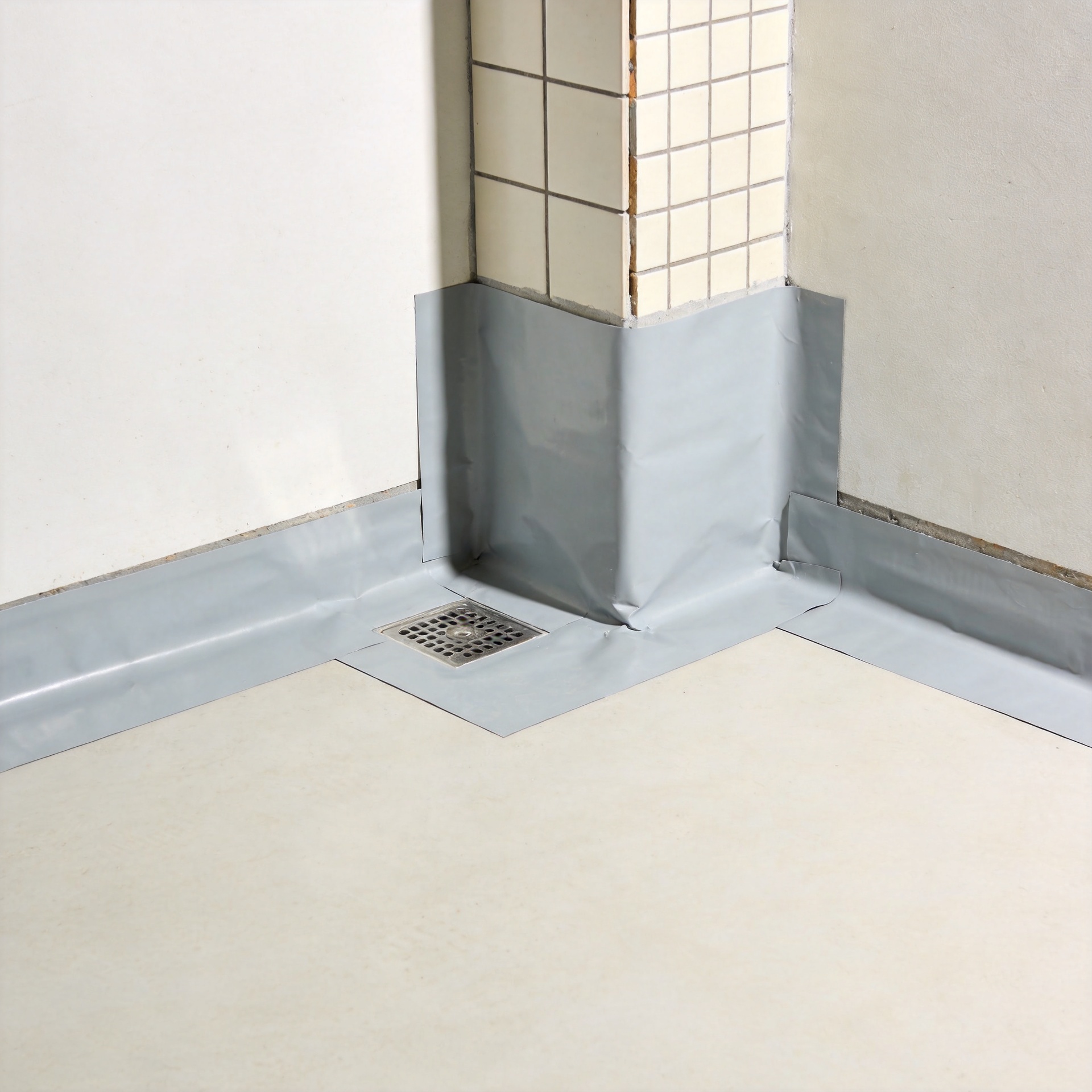
A pe pp waterproof membrane for bathroom tiling is not judged by how well it sheds water on its own; it is judged by what the tile above it does two years later. The sheet sits inside a bonded sandwich of cementitious slurry, polymer-modified tile adhesive and ceramic tile. Lose contact at any interface and water finds the gap, the tile sounds hollow, and the whole build-up has to be opened up to be repaired.
A tiled wet area imposes three requirements that a bare concrete tank does not. The waterproofing membrane under tiles must carry continuous support, because a void under the sheet becomes a void under the tile. It must accept a cement-based tile adhesive without a chemistry clash. And it must absorb the small movements that a heated floor or a timber subfloor transmits. Bond continuity decides everything else, and tile hollowing is the visible signature when continuity is lost. Support and bond are separate questions, and both must be answered. A pe pp waterproof membrane for bathroom tiling is chosen for that continuity, not for its thickness.
The sheet is a three-part composite: a polyethylene core film that blocks water, faced on both sides with non-woven polypropylene. The fibre faces are why the system works. They drink the cementitious slurry, so bond develops as mechanical interlock across the whole sheet rather than as adhesion to a smooth film. The core stays inert, which is why the same family serves below grade and in wet rooms. That structure also fixes the method: a pe pp waterproof membrane for bathroom tiling is embedded into wet slurry, not glued to a dry slab. A waterproofing membrane under tiles fixed any other way is a repair waiting to happen.
Published values for a sheet bonded with cementitious slurry run to tensile strength of ≥60 N/50 mm for the 100–200 g/m² grade at 0.3–0.5 mm, ≥100 N/50 mm for 300–400 g/m² at 0.6–0.8 mm, and ≥150 N/50 mm for 500–600 g/m² at 1.0 mm, with elongation of ≥200%, ≥150% and ≥100% and water tightness of 0.3, 0.4 and 0.6 MPa to GB/T 17643. No numeric bond strength is published for this waterproofing membrane under tiles, so none is quoted here: that figure belongs to a project pull-off test, not to a catalogue. Shandong Dingtai Waterproof publishes the three grades with the batch COA. Specify a pe pp waterproof membrane for bathroom tiling that way, and have the tile adhesive supplier confirm compatibility in writing. Tile hollowing usually begins with a bond that nobody measured.
The order is fixed: sound, clean, primed substrate; first coat of cementitious slurry; membrane laid while the slurry is wet, PP face down; second slurry coat over the sheet; cured protection layer; then adhesive and tiles. Each step closes the one before it, and the protection layer stops the next trade from walking the sheet flat. Skip the second slurry coat and the waterproofing membrane under tiles keeps an unfilled top face, so the tile adhesive bonds to loose fibre instead of a loaded surface. On a pe pp waterproof membrane for bathroom tiling, that single omission accounts for most of the failures found at handover.
Tile hollowing has a short list of causes, and most start below the tile. Trapped air under the membrane, cementitious slurry mixed too stiff to wet the fibre, dust left on the substrate, and a tile adhesive trowel notch too coarse for the tile format all leave voids. Large-format porcelain makes it worse, because the tile cannot conform to a dip in the bed. A pe pp waterproof membrane for bathroom tiling reduces the risk only when it is fully embedded; a sheet laid over ridges is worse than no sheet, because it hides the defect, and tile hollowing appears only after grouting.
The last chance to find a defect is the standing-water test, and it must happen before tiling. Bund the floor at the doorway, fill above the highest point, mark the level, and inspect from the room below where access exists. A falling level, a damp patch at a wall junction or a stain on the ceiling below means the waterproofing membrane under tiles has failed at a detail rather than in the field. Record the test, because the tile finish will hide the evidence from every later inspection. On an unnamed serviced-apartment refurbishment, the only failed area was a doorway bund that had been tiled before the test.
Yes, provided the pe pp waterproof membrane for bathroom tiling is embedded in cementitious slurry and the second coat has cured. The tile adhesive must be polymer-modified and compatible with that slurry; dry-set adhesive on an unfilled fibre face will not develop reliable bond.
No. Build-up height, substrate condition and embedment matter more than thickness. For a pe pp waterproof membrane for bathroom tiling, the 100–200 g/m² grade at 0.3–0.5 mm suits many domestic floors; 300–400 g/m² is specified where loading or movement is higher.
Work in small areas, embed the sheet fully in cementitious slurry while it is wet, and tap-check for voids before the tile adhesive goes down. Correct any hollow area at the membrane stage, not after grouting.

2026/11/20
How an APP waterproof membrane handles heat: 130°C softening point, torch application windows, overheating signs, summer storage, and thermal aging checks.

2026/11/20
The science of a breathable waterproof membrane: water vapor diffusion, Sd values, three grammage grades, water column resistance, and wrong-use cases.

2026/11/20
Single-ply or two-ply, every flat roof is a stack. See how a self adhesive waterproof membrane for roof systems handles base, cap, insulation and drains.

2026/11/20
How the polyester scrim sets tensile strength and dimensional stability of reinforced TPO membrane rolls, with welding, roll sizes and selection tips.

2026/11/20
How an aluminum foil coated bitumen waterproof membrane reflects solar radiation, lowers surface temperature, and what maintenance keeps savings alive.

2026/11/20
SBS modified bitumen waterproof membrane property groups: tensile strength, low-temperature flexibility, heat resistance, surface finishes, applications.
Links to the corresponding full news page.

The eight questions overseas buyers ask most — factory ownership, capacity, batch consistency and lead times, answered straight.

SBS membranes, polymer sheets, coatings and geomembranes — six product lines are operating simultaneously.

Pre-sales specification, on-site technical support and post-delivery maintenance across 100+ export markets.

Waterproofing performance is decided in the specification and the detailing, not just the material. Our technical team helps you select the right system, resolve site questions as they arise, and stay reachable long after the container lands.
