 EN
APP Waterproof Membrane: High-Temperature Stability Guide
2026/11/20
How an APP waterproof membrane handles heat: 130°C softening point, torch application windows, overheating signs, summer storage, and thermal aging checks.

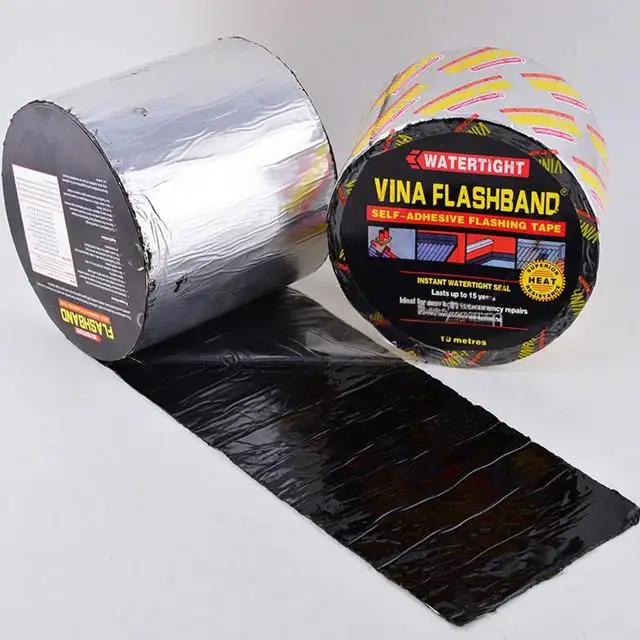
Metal roofs, membrane laps, and insulation boards share one weakness: the joint. A peel-and-press roll answers it, bonding on contact and flexing through temperature swings. This article explains the structure and published specifications of the pe film bitumen tape family, why the polyethylene surface matters, and how it compares with the foil faced grade.
The product is a self adhesive waterproof tape of SBS modified bitumen, faced on one side with a polyethylene film and protected by a silicone-coated release liner. Published data lists the working values: thickness 1.2 mm, width 50 to 300 mm with custom widths up to 1000 mm, roll length 7.5 to 20 m, peel adhesion of at least 1.2 N/mm, tensile strength of at least 300 N/50mm, low-temperature flexibility at -20°C, and water tightness passing at 0.3 MPa, with CE and ISO 9001/14001 certification. In practice, a polyethylene film bitumen waterproof tape of this build presses onto clean substrates and seals immediately — a self adhesive waterproof tape with no heating equipment, no curing wait, and a bond that holds through thermal cycling.
The tape's film face does two jobs. First, it shields the bitumen from direct UV and abrasion, extending service life on exposed details. Second, its low-friction surface lets the tape slide during positioning, so installers align a pe film bitumen tape over a seam, press from the centre outward, and correct placement before final bonding. That sliding behaviour matters for roof flashing waterproofing on long lap lines, where one installer holds alignment while another advances the roll. It also helps on curved profiles where a rigid tape would bridge, and keeps seam-sealing work fast because alignment corrections leave the pressed bond intact.
Metal roof seam sealing is where a polyethylene film bitumen waterproof tape earns most of its work, across three recurring details. Lap joints between steel or aluminium sheets take a centred band, pressed along the full seam, turning a stitched lap into a sealed one. Ridge caps, parapet cover flashings, and gutter edges take the tape as a secondary line — standard roof flashing waterproofing practice. Penetrations such as vents and pipe collars take overlapping wraps that conform without cutting sheet material. In each detail the tape bonds to steel, aluminium, and painted surfaces without primer on clean, dry substrates. For a self adhesive waterproof tape, these are the highest-value metal roof seam sealing positions: concealed laps, secondary seals, and mixed-substrate transitions — exactly where a pe film bitumen tape beats cut sheet patches.
The same line includes a 1.5 mm aluminium foil version; the published figures frame the trade-off. The foil grade lists peel adhesion of at least 1.5 N/mm, tensile strength of at least 400 N/50mm, width 100 to 600 mm, the same -20°C flexibility and 0.3 MPa water tightness. The pe film bitumen tape counters with a wider custom range up to 1000 mm — a thinner self adhesive waterproof tape body that follows profiles. For metal roof seam sealing under full sun, foil wins on surface durability. For concealed laps and irregular edges, the PE faced polyethylene film bitumen waterproof tape is the more flexible seal, because the 1.2 mm body follows profiles with less bridging than a stiff foil laminate — and it usually costs less per metre.
A contractor maintaining a logistics warehouse traced recurring leaks to the stitched laps of an older roof, concentrated at overlap edges. The crew ran a self adhesive waterproof tape of this type at 100 mm width centred over each seam after cleaning and drying, pressing from the centre outward with a roller. The sliding film face let the pe film bitumen tape align fast along long lap runs, and the next rainy season showed no recurrence at the treated seams — a typical roof flashing waterproofing result when the grade matches the exposure. The sun-exposed ridge caps were scheduled for the foil faced grade, reserving this grade for covered lap work.
Four points decide success for a polyethylene film bitumen waterproof tape: First, substrate preparation: it bonds to clean, dry, dust-free surfaces; oil or loose coating ruins peel values. Second, pressure: firm roller work from the centre outward activates the adhesion behind the published 1.2 N/mm figure. Third, geometry: width should exceed the lap coverage needed; the pe film bitumen tape custom range up to 1000 mm covers wide roof flashing waterproofing jobs at parapets. Fourth, exposure: the PE faced grade for concealed details, the foil faced grade for sun-exposed metal roof seam sealing. With those settled, this format is a fast, flameless, flexible answer across metal and membrane assemblies.
The published flexibility rating is -20°C, so handling stays possible in cold conditions, but adhesion improves when the substrate is dry and above frost — a point that matters for roof flashing waterproofing in winter. In near-freezing work, condition the rolls indoors and press firmly.
Centre the tape over the seam so it covers the lap edge with margin on both sides — the standard rule for metal roof seam sealing. The published range runs 50 to 300 mm with custom widths up to 1000 mm, so a polyethylene film bitumen waterproof tape covers standard laps without cutting.
No tape in this class replaces fusion welding. Welded or clipped joints remain the primary system on new standing-seam roofs; the tape adds a secondary seal and handles repairs, metal roof seam sealing, and roof flashing waterproofing details efficiently.

2026/11/20
How an APP waterproof membrane handles heat: 130°C softening point, torch application windows, overheating signs, summer storage, and thermal aging checks.

2026/11/20
The science of a breathable waterproof membrane: water vapor diffusion, Sd values, three grammage grades, water column resistance, and wrong-use cases.

2026/11/20
Single-ply or two-ply, every flat roof is a stack. See how a self adhesive waterproof membrane for roof systems handles base, cap, insulation and drains.

2026/11/20
How the polyester scrim sets tensile strength and dimensional stability of reinforced TPO membrane rolls, with welding, roll sizes and selection tips.

2026/11/20
How an aluminum foil coated bitumen waterproof membrane reflects solar radiation, lowers surface temperature, and what maintenance keeps savings alive.

2026/11/20
SBS modified bitumen waterproof membrane property groups: tensile strength, low-temperature flexibility, heat resistance, surface finishes, applications.
Links to the corresponding full news page.

The eight questions overseas buyers ask most — factory ownership, capacity, batch consistency and lead times, answered straight.

SBS membranes, polymer sheets, coatings and geomembranes — six product lines are operating simultaneously.

Pre-sales specification, on-site technical support and post-delivery maintenance across 100+ export markets.

Waterproofing performance is decided in the specification and the detailing, not just the material. Our technical team helps you select the right system, resolve site questions as they arise, and stay reachable long after the container lands.
