 EN
APP Waterproof Membrane: High-Temperature Stability Guide
2026/11/20
How an APP waterproof membrane handles heat: 130°C softening point, torch application windows, overheating signs, summer storage, and thermal aging checks.

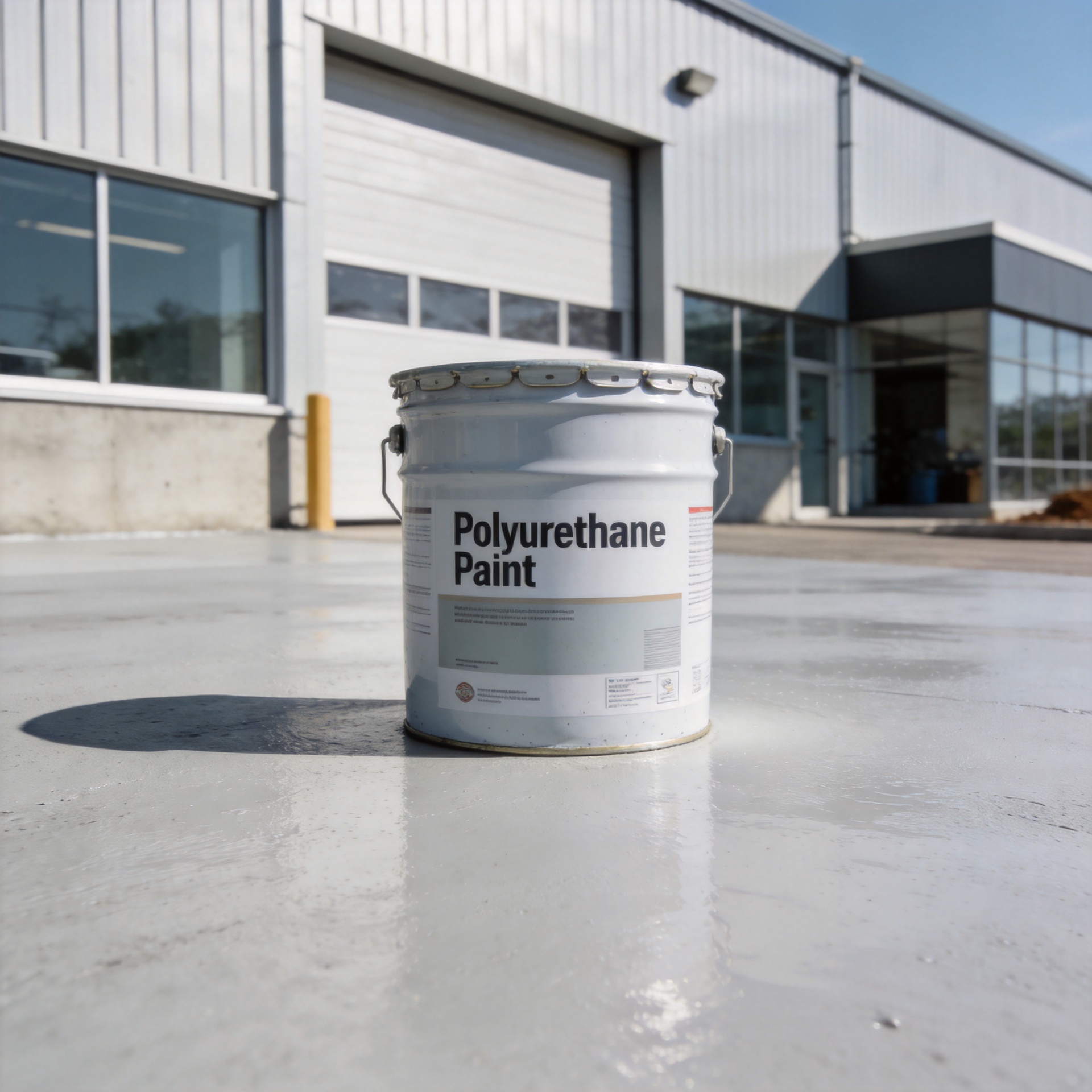
Polyurethane floor paint exterior application is among the most requested — and most misunderstood — specifications distributors handle. Buyers keep asking whether a polyurethane floor coating really survives sunshine, rain, and frost. Here are the facts, drawn from category behaviour rather than advertising.
An exterior floor coating lives a harder life than an indoor one. Ultraviolet radiation chalks many polymer chemistries. Daily thermal cycling works the slab back and forth. Rain, freeze-thaw, and ponding water attack both film and substrate, while feet, trolleys, and vehicles grind the surface. A polyurethane floor coating specified outdoors must therefore behave as a UV resistant coating, tolerate movement, and repel water at the same time. This is why aliphatic chemistry, not aromatic grades, dominates outdoor specifications: aromatic films yellow in sunlight, aliphatic films keep their colour. And because the substrate beneath is nearly always a slab, every exterior decision is ultimately a concrete floor coating decision — the film and the slab succeed or fail together in any polyurethane floor paint exterior application.
Three properties build the reputation. Weathering: a well-formulated exterior floor coating on aliphatic polyurethane holds gloss and colour through years of UV exposure where many epoxies chalk within seasons. Elasticity: the film stays flexible when cold and firm when hot, absorbing the small seasonal movements a concrete floor coating must accommodate. Abrasion: polyurethane is among the tougher wearing surfaces available, which is why the same chemistry often serves as a topcoat over other systems. A UV resistant coating built on this chemistry protects itself and, as a seal coat, the layer beneath. These are category-level traits documented across the industry, valid for any properly formulated product rather than a promise tied to one datasheet.
Polyurethane floor paint exterior application earns its keep on terraces, podium decks, balcony walkways, external ramps, and rooftop service areas — surfaces exposed to weather plus traffic. Consider a procurement officer for a hotel group refurbishing an open-air terrace restaurant above a car park: the surface takes sun all day, rain washing, furniture dragged nightly, and cleaning chemicals. An interior-grade concrete floor coating fails within a year; a polyurethane floor coating chosen for exterior duty is the defensible line in that specification. Ramps deserve a special note: a UV resistant coating with elastic behaviour bridges fine movement while a broadcast texture supplies grip, and multi-storey car park decks — the classic exterior floor coating scenario — stack every one of these stresses in one place.
When elasticity is the priority, buyers weigh polyurethane against other film-forming systems, and reference values make the comparison concrete. The same supplier's PU liquid membrane page specifies elongation at break of at least 450%, tensile strength of at least 1.5 MPa, crack bridging up to 5 mm, an application rate of 1.5–2.5 kg/m², and a 1-ton minimum order. Its high-elasticity silicone coating page lists at least 350% elongation, crack bridging up to 2 mm, and 0.4–0.6 kg/m² per coat. Both describe liquid-applied waterproofing membranes rather than any exterior floor coating grade — yet they show which numbers matter for an elastomeric film, and any serious polyurethane floor paint exterior application specification should demand equivalent published figures for the floor grade quoted. No datasheet, no order: that single rule protects a concrete floor coating budget better than any sample.
Exterior surfaces are renewed, not rebuilt. Overcoating weathered but intact film is standard practice for exterior polyurethane floor projects: wash, mechanically abrade, repair local damage, then recoat, because a polyurethane floor coating bonds well to a cleaned, abraded, sound substrate. That logic is a commercial advantage — an exterior floor coating that accepts renewal extends asset life without demolition. Maintenance is modest: routine cleaning, prompt repair of impacts, and regular drainage inspection, because ponding water is the fastest route to failure on any UV resistant coating. Inspect before and after each winter; frost plus trapped moisture damages more than summer sun. A maintenance calendar turns durability into a predictable cost line for any concrete floor coating.
For B2B buyers, verification beats persuasion. Before committing to any polyurethane floor paint exterior application project, confirm the grade is a genuine UV resistant coating (aliphatic, not aromatic), check elongation and tensile figures, the recoat window, and packaging with minimum order quantities. Then trial the polyurethane floor coating on the actual slab — the actual climate decides how any concrete floor coating behaves. Distributors comparing suppliers should weigh documentation — CE certificates, test reports, batch traceability — because exterior failures are costly to remediate and word travels fast. Shandong Dingtai Waterproof supplies film-forming waterproofing systems with documentation for export buyers. Treat every exterior floor coating purchase as a system: substrate preparation, primer, film, and topcoat from one coherent specification, not four quotations.
Aromatic grades yellow; aliphatic grades are formulated as a UV resistant coating and hold colour far longer. Confirm which chemistry the datasheet describes before approving colours for any outdoor floor project.
Yes — a practical strength of the chemistry. Clean, abrade, and repair the existing film, then apply new coats within the recoat window; a sound polyurethane floor coating accepts renewal for years. Full removal of an exterior floor coating is needed only where adhesion has already failed.
A smooth film can be. On ramps and walkways, specify a textured or broadcast finish or an anti-slip additive so grip survives wet weather. Texture is a design decision for any concrete floor coating, not an afterthought.

2026/11/20
How an APP waterproof membrane handles heat: 130°C softening point, torch application windows, overheating signs, summer storage, and thermal aging checks.

2026/11/20
The science of a breathable waterproof membrane: water vapor diffusion, Sd values, three grammage grades, water column resistance, and wrong-use cases.

2026/11/20
Single-ply or two-ply, every flat roof is a stack. See how a self adhesive waterproof membrane for roof systems handles base, cap, insulation and drains.

2026/11/20
How the polyester scrim sets tensile strength and dimensional stability of reinforced TPO membrane rolls, with welding, roll sizes and selection tips.

2026/11/20
How an aluminum foil coated bitumen waterproof membrane reflects solar radiation, lowers surface temperature, and what maintenance keeps savings alive.

2026/11/20
SBS modified bitumen waterproof membrane property groups: tensile strength, low-temperature flexibility, heat resistance, surface finishes, applications.
Links to the corresponding full news page.

The eight questions overseas buyers ask most — factory ownership, capacity, batch consistency and lead times, answered straight.

SBS membranes, polymer sheets, coatings and geomembranes — six product lines are operating simultaneously.

Pre-sales specification, on-site technical support and post-delivery maintenance across 100+ export markets.

Waterproofing performance is decided in the specification and the detailing, not just the material. Our technical team helps you select the right system, resolve site questions as they arise, and stay reachable long after the container lands.
