 EN
APP Waterproof Membrane: High-Temperature Stability Guide
2026/11/20
How an APP waterproof membrane handles heat: 130°C softening point, torch application windows, overheating signs, summer storage, and thermal aging checks.

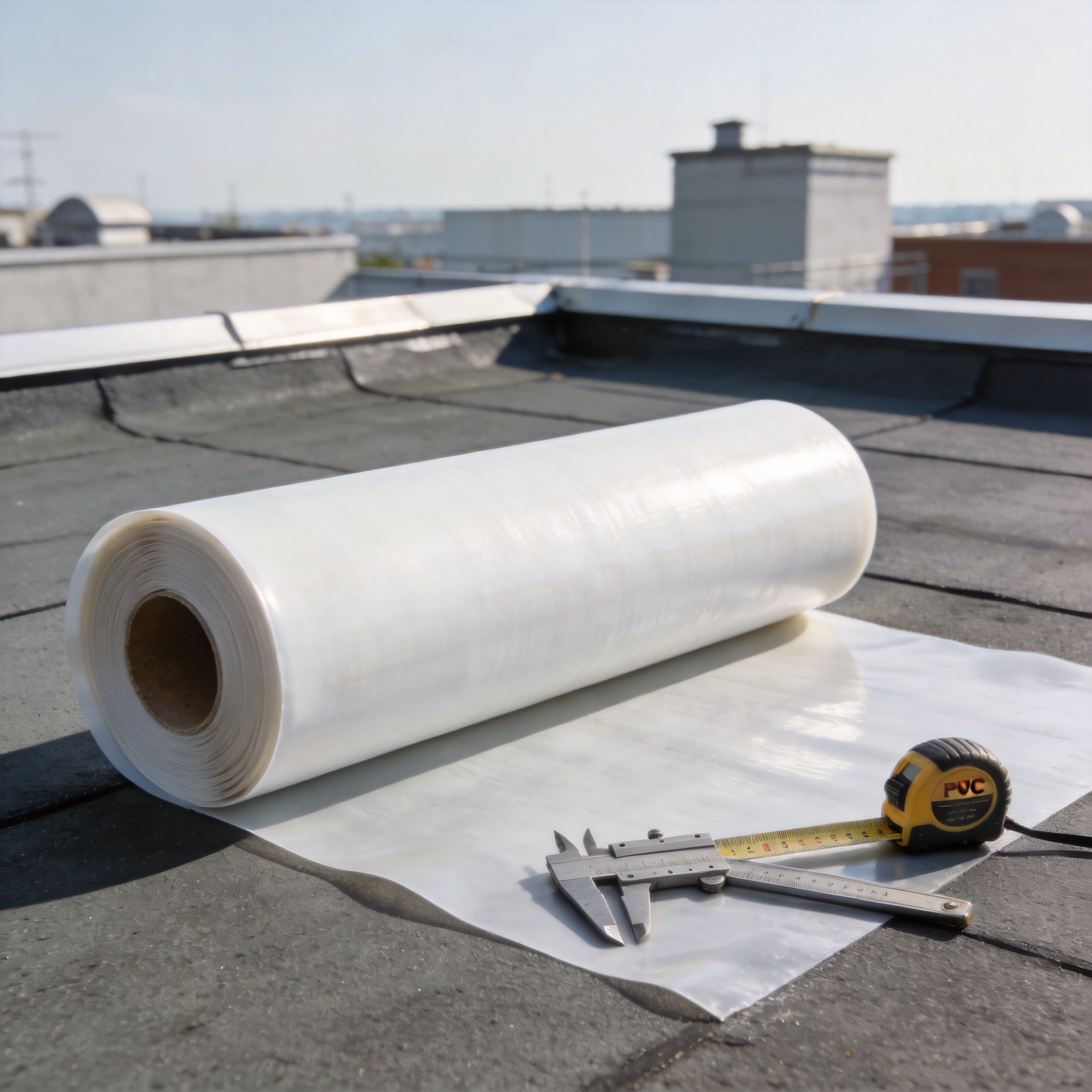
Two quotations for the same nominal thickness can differ by a wide margin, and the price each document quotes reflects real differences in construction, formulation, and documentation. Any pvc waterproof membrane — homogeneous, reinforced, or fleece-backed — costs differently to produce and behaves differently once installed. A homogeneous pvc membrane trades strength for flexibility, while filler content in the compound quietly moves the pvc membrane cost as well as the service life. This guide explains which parameters drive the spread, which low-price signals deserve caution, and how to judge value over the whole service life.
Sheet construction comes first. A homogeneous pvc membrane is one compound through the full cross-section, so it welds and heat-forms from either face. A reinforced pvc membrane carries an internal polyester layer that raises strength and lowers elongation. Compound formulation comes second: the share of high-molecular PVC resin relative to fillers changes both durability and pvc membrane cost. Certification comes third: rolls shipped with EN 13956 or GB 12952 test reports, a certificate of analysis, and batch traceability simply cost more to produce than rolls supported by a brochure.
PVC sheet is produced at 1.2mm, 1.5mm, 1.8mm, and 2.0mm, and thickness is the most visible driver of the pvc sheet waterproofing membrane price you are quoted. What thickness must achieve depends on the system. A mechanically fastened roof relies on the dimensional stability of reinforced pvc membrane — datasheets list tensile strength around 900 N/50mm and dimensional stability near 0.1%, which allow wider fastener spacing and faster installation. Paying for thickness the system does not need wastes budget, while buying below what wind uplift and traffic require converts a small saving in pvc membrane cost into a large repair.
A homogeneous pvc membrane stretches at least 250% at break, tolerates substrate movement, and forms around complex geometry, which is why it is specified for tunnels, containment linings, and intricate detailing. A reinforced pvc membrane trades elongation for strength and is the standard choice on large mechanically fastened flat roofs, where wind load passes through fasteners into the deck. A fleece-backed sheet bonds full-face with PU adhesive over rigid insulation. When comparing one pvc waterproof membrane against another, compare the properties the application needs rather than a single headline figure — the pvc membrane cost per square meter only means something inside a matched system.
A low price is not automatically a defect, but several signals deserve a pause. The offer states thickness without naming the construction, so a homogeneous pvc membrane can be substituted where a reinforced pvc membrane is actually required. No EN 13956 or GB 12952 compliance is declared, or reports are promised and never attached. Welding rules — minimum overlap, seam testing — are missing from the installation proposal. Water tightness under pressure is not stated, although a properly made pvc waterproof membrane should pass testing at 60 kPa. If a pvc sheet waterproofing membrane price looks unusually low, ask what was removed to create the discount.
Judging a PVC quote on the invoice alone ignores costs that arrive later. Welding quality: consistent hot-air seams with a specified minimum overlap reduce rework during installation and after handover. Repair and extension: a homogeneous pvc membrane can be patched and heat-formed from either face years later, which keeps future pvc membrane cost predictable. Documentation: when a building is sold or certified, a pvc waterproof membrane backed by traceable EN reports passes review without retesting. Experienced buyers therefore read the pvc sheet waterproofing membrane price together with the warranty — replacing failed reinforced pvc membrane on an occupied roof costs far more than any unit-price gap.
Align the variables: construction type, thickness, reinforcement, width and roll length, tensile figures, declared standards, and the documents that ship with the goods; then price the installed system, not the roll. An importer sourcing for a distribution center roof once found that the cheaper quotation proposed a homogeneous pvc membrane where wind calculations required reinforced pvc membrane — correcting the specification before ordering cost nothing. Confirm both quotes assume similar order sizes near 2,000 m², so the pvc membrane cost per square meter is compared on equal terms before any pvc waterproof membrane supplier is chosen, and read each pvc sheet waterproofing membrane price against the same document set.
Thickness is one variable among many. Construction type, polymer formulation, filler content, and certification all move the price you are finally offered, so request the datasheet and the declared standard with every quotation.
No. The right thickness follows from the installation method and the loads the roof sees. For a reinforced pvc membrane, fastener layout matters as much as gauge, and a matched system keeps total pvc membrane cost lower.
Ask for the EN 13956 or GB 12952 declaration, reports for tensile strength, elongation, dimensional stability, and water tightness, plus a batch certificate of analysis. Reliable suppliers of homogeneous pvc membrane back every pvc waterproof membrane with this pack, so the pvc sheet waterproofing membrane price can be verified line by line.

2026/11/20
How an APP waterproof membrane handles heat: 130°C softening point, torch application windows, overheating signs, summer storage, and thermal aging checks.

2026/11/20
The science of a breathable waterproof membrane: water vapor diffusion, Sd values, three grammage grades, water column resistance, and wrong-use cases.

2026/11/20
Single-ply or two-ply, every flat roof is a stack. See how a self adhesive waterproof membrane for roof systems handles base, cap, insulation and drains.

2026/11/20
How the polyester scrim sets tensile strength and dimensional stability of reinforced TPO membrane rolls, with welding, roll sizes and selection tips.

2026/11/20
How an aluminum foil coated bitumen waterproof membrane reflects solar radiation, lowers surface temperature, and what maintenance keeps savings alive.

2026/11/20
SBS modified bitumen waterproof membrane property groups: tensile strength, low-temperature flexibility, heat resistance, surface finishes, applications.
Links to the corresponding full news page.

The eight questions overseas buyers ask most — factory ownership, capacity, batch consistency and lead times, answered straight.

SBS membranes, polymer sheets, coatings and geomembranes — six product lines are operating simultaneously.

Pre-sales specification, on-site technical support and post-delivery maintenance across 100+ export markets.

Waterproofing performance is decided in the specification and the detailing, not just the material. Our technical team helps you select the right system, resolve site questions as they arise, and stay reachable long after the container lands.
