 EN
APP Waterproof Membrane: High-Temperature Stability Guide
2026/11/20
How an APP waterproof membrane handles heat: 130°C softening point, torch application windows, overheating signs, summer storage, and thermal aging checks.

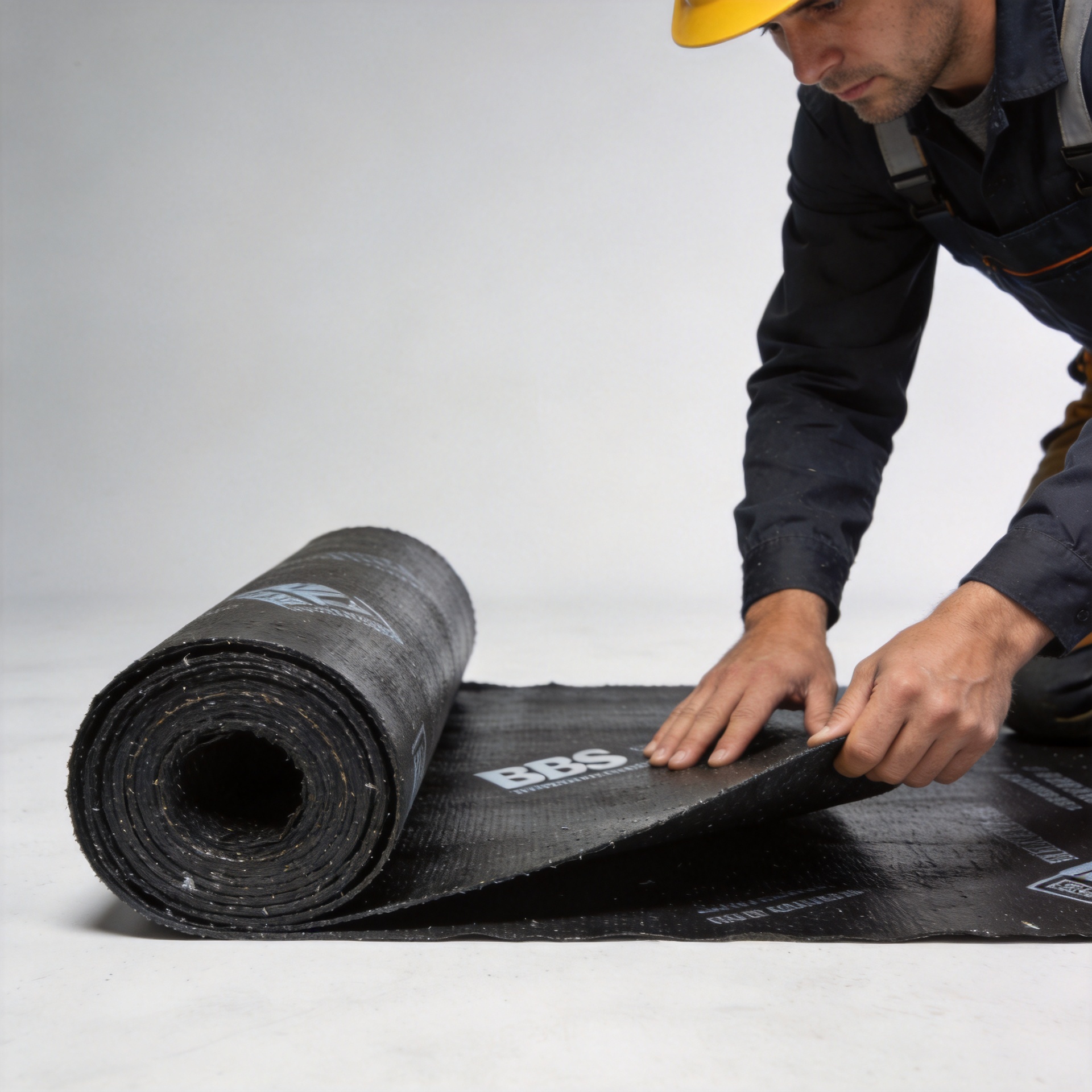
Winter is the most expensive season for a waterproofing failure: ice-dammed edges, split laps, cracks that widen while nobody can work on the roof. This membrane family is engineered for precisely that season. This article stays inside the winter question — what freezing does to a sheet, which certified numbers answer it, and how a cold-region project should pick its grade, its finish, and its installation window.
Two mechanisms do the damage. The first is freeze-thaw cycling: water that has entered a crack, lap, or pore expands as it freezes, wedging the opening wider, then thaws and lets more water in — each cycle multiplies the defect. The second is thermal contraction: the deck shrinks when temperatures drop tens of degrees overnight, and a stiff sheet that cannot stretch absorbs that contraction as stress until it tears at laps and details. Unmodified bitumen is the classic casualty: brittle near freezing, cracked along contraction lines. This is the failure mode that an elastomeric network was designed against, and why cold climate specification starts with flexibility data rather than price.
The number that answers winter is low temperature flexibility — the temperature at which the sheet bends around a mandrel without cracking. The manufacturer's SBS waterproof membrane is rated at -25°C, under GB 18242 and EN 13707, the Chinese and European standards for reinforced bitumen sheets. Two cautions belong beside that figure. First, flexibility at low temperature varies across SBS grades, because polymer dosage differs between formulations — a -25°C claim must belong to the exact thickness grade being purchased. Second, the rating is a floor, not a comfort zone: a sheet certified at -25°C stays pliable through cycles that crack stiffer products well before the rating is reached. Certificates should match the grade on the purchase order, and batch documents should echo the same figure — a buyer's first freeze-thaw defense is paperwork, and a modified bitumen datasheet that survives it is worth shortlisting.
Low temperature flexibility describes how the sheet bends; elongation describes how it survives being pulled. When the deck contracts, the membrane stretches between fixed points, and a polyester-mat SBS waterproof membrane answers with elongation at break of at least 40% and elastic recovery — it stretches, then returns instead of wrinkling or splitting. Tensile strength of at least 800 N/50mm comes from the polyester reinforcement: it carries load while the elastomeric binder deforms. Heat resistance of 90°C bounds the warm end, so the same sheet tolerates a dark roof surface in summer. Freeze-thaw resistance is the sum of these properties: a crack that stays closed because the sheet moves with the substrate gives meltwater no entry to widen — the case for an elastomeric modified bitumen in any cold region.
Thickness grades of 3mm, 4mm, and 5mm divide the work. The 4mm polyester-mat grade suits commercial flat roofs under normal maintenance; 5mm takes heavier traffic and longer service expectations; 3mm serves auxiliary layers and less demanding positions. Fiberglass reinforcement appears where dimensional stability beats stretch, but for cold climate contraction the polyester mat is the default: the ≥ 40% elongation figure and the freeze-thaw duty both belong to it. An SBS waterproof membrane selected this way — polyester mat, verified -25°C rating, thickness matched to traffic — is sized by mechanism rather than habit, and the datasheet's low temperature flexibility then describes the installed system.
The finish decides where the sheet can sit. PE film suits base layers and concealed positions. Mineral granule surfaces suit exposed cap sheets, shielding the compound from sun between visits. In cold climate service, the cap sheet — often an SBS waterproof membrane with a granule finish — carries the freeze-thaw front line: its surface sheds meltwater before it sits in laps; the base layer handles deformation. Aluminum foil serves where reflectivity helps. Finish by position, thickness by load — one modified bitumen system then covers the whole assembly without asking any layer to do two jobs.
Cold climate compresses the installation season, so the program should respect it. Primer and substrate must be dry and above the temperature rules the datasheet states; rolls should be stored indoors and conditioned before unrolling — a stiff cold roll is hard to lay flat. Torch-applied bonding remains practical in cold air — the flame heats the sheet, not the sky — one reason modified bitumen crews still dominate winter work. On a distribution-centre roof in a northern province, the original stiffer sheet split at laps through two winters of freeze-thaw cycling; re-specification to an SBS waterproof membrane matched the certified -25°C low temperature flexibility to the site's design winter, and the splits stopped. The lesson: in cold climate projects, the installation window is planned around rated flexibility, not optimism about the forecast.
Not everywhere. Match the rating to the design winter temperature of the site and the exposure of the layer, and to the datasheet's low temperature flexibility line; colder regions and exposed cap sheets justify the full -25°C grade, milder zones may specify warmer ratings.
Flexibility lets the sheet bend; elongation lets it stretch between fixing points as the deck contracts. An SBS waterproof membrane with ≥ 40% elongation and recovery absorbs contraction stress instead of tearing at laps — and stops freeze-thaw damage before it starts.
Yes, within the datasheet's substrate and primer temperature rules, with rolls conditioned before use. The flame fuses the sheet itself, so cold air is less limiting for torch-applied modified bitumen than for cold-applied systems.

2026/11/20
How an APP waterproof membrane handles heat: 130°C softening point, torch application windows, overheating signs, summer storage, and thermal aging checks.

2026/11/20
The science of a breathable waterproof membrane: water vapor diffusion, Sd values, three grammage grades, water column resistance, and wrong-use cases.

2026/11/20
Single-ply or two-ply, every flat roof is a stack. See how a self adhesive waterproof membrane for roof systems handles base, cap, insulation and drains.

2026/11/20
How the polyester scrim sets tensile strength and dimensional stability of reinforced TPO membrane rolls, with welding, roll sizes and selection tips.

2026/11/20
How an aluminum foil coated bitumen waterproof membrane reflects solar radiation, lowers surface temperature, and what maintenance keeps savings alive.

2026/11/20
SBS modified bitumen waterproof membrane property groups: tensile strength, low-temperature flexibility, heat resistance, surface finishes, applications.
Links to the corresponding full news page.

The eight questions overseas buyers ask most — factory ownership, capacity, batch consistency and lead times, answered straight.

SBS membranes, polymer sheets, coatings and geomembranes — six product lines are operating simultaneously.

Pre-sales specification, on-site technical support and post-delivery maintenance across 100+ export markets.

Waterproofing performance is decided in the specification and the detailing, not just the material. Our technical team helps you select the right system, resolve site questions as they arise, and stay reachable long after the container lands.
