 EN
APP Waterproof Membrane: High-Temperature Stability Guide
2026/11/20
How an APP waterproof membrane handles heat: 130°C softening point, torch application windows, overheating signs, summer storage, and thermal aging checks.

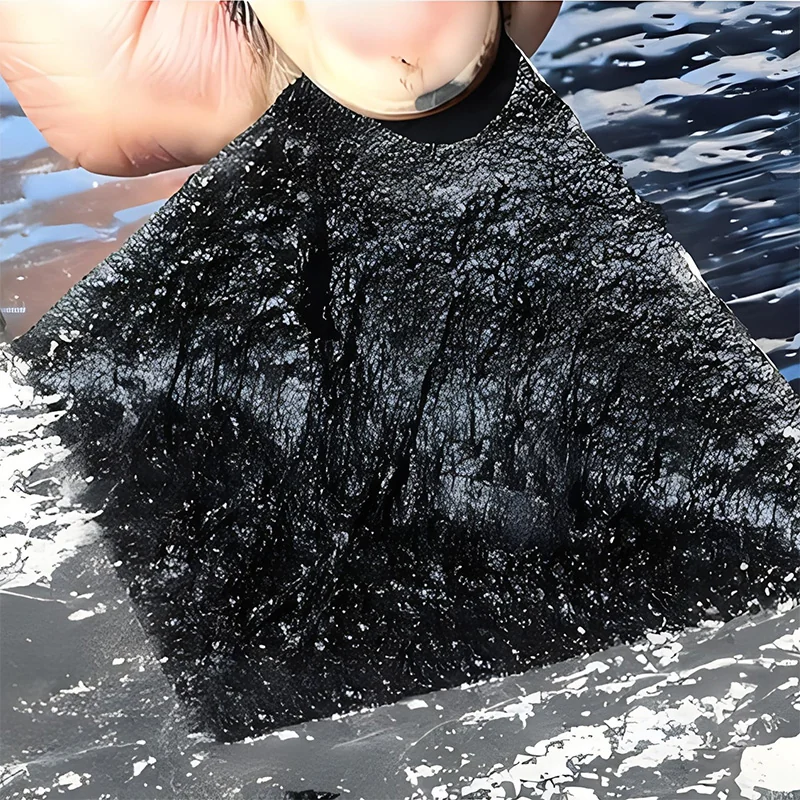
Few materials owe their performance to chemistry as directly as SBS modified bitumen. The polymer behind its elasticity can be traced from molecular structure to a datasheet line: low temperature flexibility at -25°C. This article follows that chain — mechanism, measurement, application — so a specification for cold climates rests on numbers, not adjectives.
SBS stands for styrene-butadiene-styrene, a block copolymer: rigid styrene end blocks joined by a soft, rubbery butadiene middle. Blended into hot bitumen and cast onto polyester mat or fiberglass reinforcement, the polymer forms a continuous elastomeric network in the finished sheet. The styrene blocks act as crosslinks; the butadiene segments stretch and recover. That network is what an SBS waterproof membrane inherits. Unmodified bitumen hardens toward glass in cold climates and flows in heat: it cracks under winter contraction and creeps under summer load. With SBS modified bitumen, the network holds the binder across the whole range: the sheet bends instead of cracking when cold and resists flow in heat. The same structure explains fatigue resistance: daily thermal stretching is absorbed by the network instead of accumulating as cracks.
The network shows up in four published figures. Low temperature flexibility at -25°C means the sheet stays pliable through contraction cycles that would crack unmodified products — the first property to confirm in any SBS waterproof membrane datasheet. Elongation at break ≥ 40% with elastic recovery means the sheet stretches under movement and returns to shape instead of tearing at seams. Tensile strength ≥ 800 N/50mm comes primarily from the polyester mat reinforcement, which carries load while the elastomeric binder accommodates deformation. Heat resistance of 90°C bounds the warm end of the range. Read together, the four figures describe one mechanism: a polymer network that keeps bitumen elastic where unmodified binder fails in cold climates and flows in heat. A datasheet quoting flexibility without elongation and recovery data deserves suspicion — elasticity is a system property.
Public parameters can be checked in three steps. First, ask which standard governs the tests: GB 18242 in China, EN 13707 in Europe — compliance should be stated explicitly. Second, confirm the certificates match the thickness grade on your purchase order — 3mm, 4mm, and 5mm grades are tested separately, and low temperature flexibility in particular varies across SBS grades, so a -25°C claim must belong to the grade you are buying. Third, require a batch Certificate of Analysis with delivery and compare it against the published figures for the SBS waterproof membrane you ordered: tensile ≥ 800 N/50mm, elongation ≥ 40%, flexibility at -25°C, matching the SBS modified bitumen formulation on the product page.
The clearest use case is temperature. Where design winters reach -20°C or below, an SBS waterproof membrane keeps its flexibility through contraction cycles that crack stiffer sheets — which is why the certified low temperature flexibility grade, not price, decides the choice for northern Europe, Canada, and high-altitude sites. On pitched roofs it works as the under-roof barrier at tile laps; on flat roofs the 4mm polyester mat grade suits standard maintenance and the 5mm grade takes heavier traffic. Underground structures — basements, tunnels, parking decks — use the PE film finish, where ≥ 40% elongation absorbs ground settlement over decades. One contractor re-specified to SBS modified bitumen after two seasons of seam cracking in cold climates, choosing the grade by its certified -25°C rating. APP-modified bitumen, optimized for heat resistance rather than cold flexibility, is the counterpart for hot climates.
Installation method belongs to the material logic. Torch applied heat-fusion melts a thin bitumen layer so the sheet bonds to substrate and laps without voids — and a void-free bond matters more for an elastomeric sheet, because lateral water travel under a debonded area defeats the flexibility advantage. The polyester mat reinforcement withstands torching without tearing, and the SBS modified bitumen compound recovers after the heat cycle instead of embrittling. The fit matters: torch applied bonding suits the multi-ply roof build-ups where an SBS waterproof membrane serves as cap sheet or base layer, and the same network tolerates controlled flame at the lap.
Thickness grades of 3mm, 4mm, and 5mm cover most needs, with roll sizes of 1m × 10m or 1m × 7.5m and surface finishes of PE film, fine sand, or aluminum foil matched to the layer position. Minimum order quantity starts at 500 m², with export to 40+ countries and COA, TDS, and MSDS supplied with orders. For cold climates, put the low temperature flexibility grade in writing on the purchase order rather than relying on the product family name, since SBS modified bitumen formulations differ in polymer dosage and therefore in rated flexibility. The polyester mat reinforcement should be stated as well, because tensile strength ≥ 800 N/50mm belongs to that configuration. Confirm the -25°C rating, the standard, and the finish together, and the SBS waterproof membrane that arrives will match the one you specified.
It builds an elastomeric network inside the binder: styrene end blocks act as physical crosslinks and butadiene segments stretch and recover, so the sheet stays flexible at -25°C and resists flow at 90°C.
Yes — it works as the under-roof barrier at tile and cladding laps, and the -25°C rating plus ≥ 40% elongation absorbs thermal movement that stiffer sheets cannot.
The thickness grade — 3mm, 4mm, or 5mm — the polyester mat reinforcement, the certified low temperature flexibility grade, EN 13707 or GB 18242 compliance, and a batch COA: the documents behind any conforming SBS waterproof membrane shipment.

2026/11/20
How an APP waterproof membrane handles heat: 130°C softening point, torch application windows, overheating signs, summer storage, and thermal aging checks.

2026/11/20
The science of a breathable waterproof membrane: water vapor diffusion, Sd values, three grammage grades, water column resistance, and wrong-use cases.

2026/11/20
Single-ply or two-ply, every flat roof is a stack. See how a self adhesive waterproof membrane for roof systems handles base, cap, insulation and drains.

2026/11/20
How the polyester scrim sets tensile strength and dimensional stability of reinforced TPO membrane rolls, with welding, roll sizes and selection tips.

2026/11/20
How an aluminum foil coated bitumen waterproof membrane reflects solar radiation, lowers surface temperature, and what maintenance keeps savings alive.

2026/11/20
SBS modified bitumen waterproof membrane property groups: tensile strength, low-temperature flexibility, heat resistance, surface finishes, applications.
Links to the corresponding full news page.

The eight questions overseas buyers ask most — factory ownership, capacity, batch consistency and lead times, answered straight.

SBS membranes, polymer sheets, coatings and geomembranes — six product lines are operating simultaneously.

Pre-sales specification, on-site technical support and post-delivery maintenance across 100+ export markets.

Waterproofing performance is decided in the specification and the detailing, not just the material. Our technical team helps you select the right system, resolve site questions as they arise, and stay reachable long after the container lands.
