 EN
APP Waterproof Membrane: High-Temperature Stability Guide
2026/11/20
How an APP waterproof membrane handles heat: 130°C softening point, torch application windows, overheating signs, summer storage, and thermal aging checks.

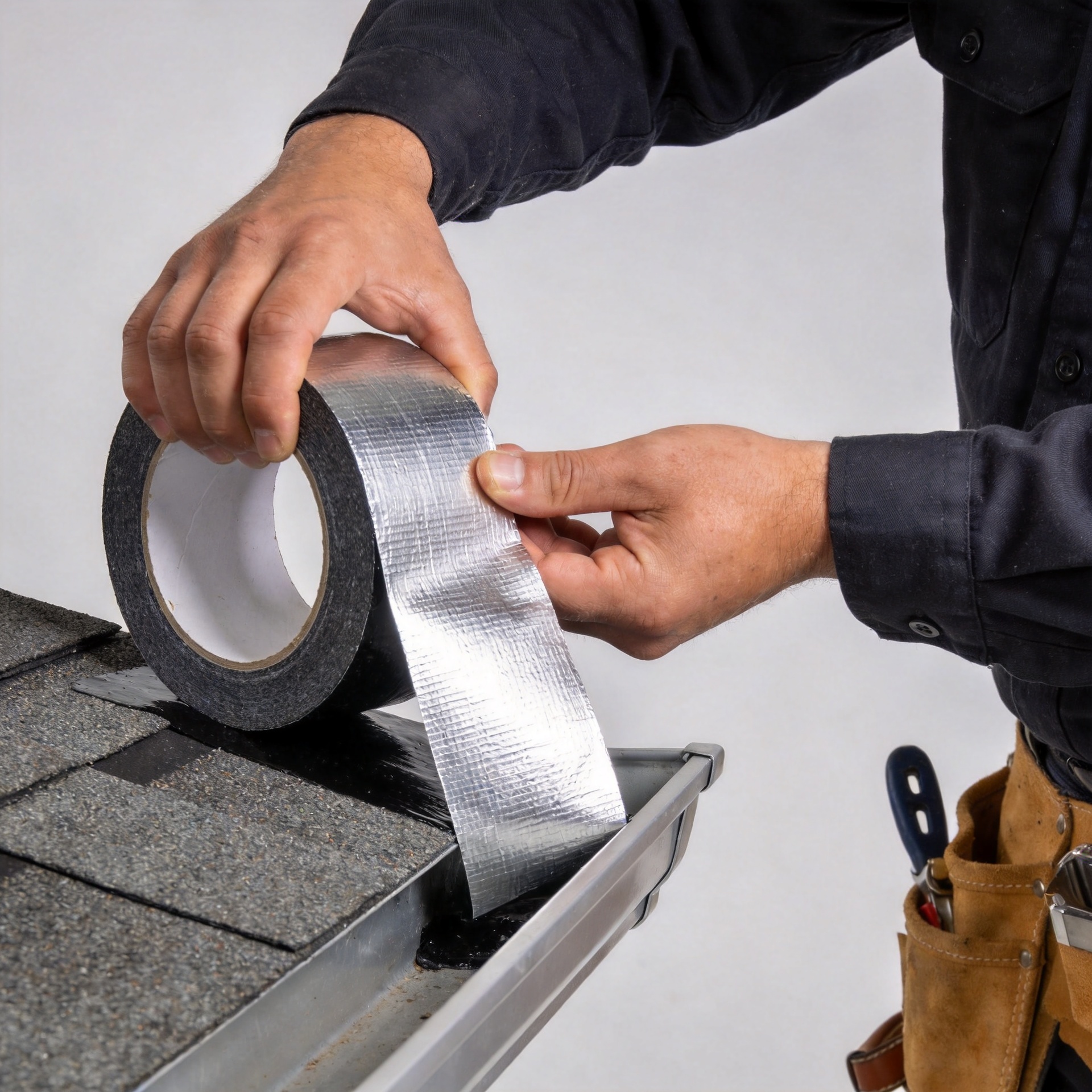
Some buildings cannot take a torch. Occupied flats, gas metering rooms, tunnels and anything under a fire watch need a joint that bonds without ignition. A self adhesive bitumen tape meets that constraint, but only inside a defined envelope of temperature, dryness and substrate condition. Outside it, the tape is not a safer torch; it is a joint that will open. This article sets out where cold work holds, where it fails, and how to inspect the result before covering.
A no flame installation is usually a procedural decision, not a technical one. A hospital wing in service, a fuel depot, a confined shaft and a site under a fire ban all remove the torch from the method statement, and insurers can do the same. There a self adhesive bitumen tape becomes the default detail at laps and penetrations. A cold applied tape needs no hot work permit and no fire watch, so the joint can proceed while the building stays occupied. Where the joint sits below grade, a butyl waterproof tape carries movement better than a thin foil face. Pressure and preparation replace heat, and tape adhesion becomes the only evidence of quality. That is why the method statement, not the product label, decides whether the detail is allowed.
A self adhesive bitumen tape is a carrier faced with modified bitumen or butyl compound, protected by a release liner. A no flame installation still has to seal laps, pipe collars and transitions between membrane and metal, but it does not replace a structural movement joint. Nor does it bridge a gap wider than its compound can span. The 1.5 mm foil-faced grade reaches at least 1.5 N/mm peel and 400 N/50mm tensile; a 2.0 mm butyl grade reaches 2.0 N/mm and holds 0.4 MPa. Tape adhesion is measured on a prepared surface, not the dusty one usually found on site. A thicker compound suits a wide joint, but no flame installation still needs a dry substrate.
A cold applied tape relies on wetting, and wetting depends on temperature and cleanliness. Bituminous grades rated to -20°C stiffen below that point, and pressure alone will not drive them into a profile. Butyl grades stay workable from -40°C to +70°C, and the heavy 2.0 mm butyl waterproof tape to +80°C, which extends the winter window. A self adhesive bitumen tape laid on a damp slab will look bonded and act as a bridge for water. Dust and release agent do the same. Rough concrete needs more pressure, not more tape, and a primed surface usually decides whether tape adhesion holds.
The work needs few tools: a hard rubber roller, a seam roller, a knife, a chalk line and a primer brush. Start at the lowest point and work upward so water cannot run into an open lap. Press from the centre outward to push air ahead of the bond, then run the roller twice along the full length. On a wide joint, a butyl waterproof tape tolerates slight movement that a thin foil face would crack over. On a cold applied tape, pressure is the activation step, and the roller track is the visible proof that tape adhesion was achieved. A self adhesive bitumen tape applied without a roller is an untested joint.
A no flame installation removes ignition, not preparation risk. Four failures recur: adhesion to a surface that looked dry but was not, an edge pressed by hand and not rolled, a lap over a contaminated layer, and a termination that relies on adhesive where mechanical fixing is required. A butyl waterproof tape will bond to a damp film just well enough to survive until handover. A contractor in a coastal city sealed 60 pipe collars with a self adhesive bitumen tape during a shutdown; every failure found later sat where the substrate had been wiped but not primed. A cold applied tape on a primed patch tells you more than a clean-looking surface, and tape adhesion measured there predicts the rest.
The joint is checked the same day, before traffic or covering. Confirm that the tape is centred, that no air pocket runs under the edge, and that the roller has left a visible track. For a no flame installation, the file should carry the permit exemption and the batch certificate. Probe the edge with a blunt tool, because a lifted edge is rework rather than a cosmetic issue. A self adhesive bitumen tape at a below-grade joint needs the same record, since the joint disappears once backfill starts. A butyl waterproof tape in that position also needs a protection board, and a cold applied tape needs a primed, dry surface before either goes down.
No. The tape will not wet a wet surface, and the edge lifts within days.
Enough to leave a continuous track, applied twice at walking pace. Tape adhesion depends on pressure, not heat, and a short roller with a narrow head reaches behind a pipe collar where a full-width roller cannot.
Many do, provided the statement names the tape, the primer, the moisture limit and the inspection record. A cold applied tape with a batch certificate is easier to approve, and a butyl waterproof tape with test data answers the technical question. A self adhesive bitumen tape named in the method statement removes the ambiguity. The no flame installation note should sit beside the permit, not in a separate file.

2026/11/20
How an APP waterproof membrane handles heat: 130°C softening point, torch application windows, overheating signs, summer storage, and thermal aging checks.

2026/11/20
The science of a breathable waterproof membrane: water vapor diffusion, Sd values, three grammage grades, water column resistance, and wrong-use cases.

2026/11/20
Single-ply or two-ply, every flat roof is a stack. See how a self adhesive waterproof membrane for roof systems handles base, cap, insulation and drains.

2026/11/20
How the polyester scrim sets tensile strength and dimensional stability of reinforced TPO membrane rolls, with welding, roll sizes and selection tips.

2026/11/20
How an aluminum foil coated bitumen waterproof membrane reflects solar radiation, lowers surface temperature, and what maintenance keeps savings alive.

2026/11/20
SBS modified bitumen waterproof membrane property groups: tensile strength, low-temperature flexibility, heat resistance, surface finishes, applications.
Links to the corresponding full news page.

The eight questions overseas buyers ask most — factory ownership, capacity, batch consistency and lead times, answered straight.

SBS membranes, polymer sheets, coatings and geomembranes — six product lines are operating simultaneously.

Pre-sales specification, on-site technical support and post-delivery maintenance across 100+ export markets.

Waterproofing performance is decided in the specification and the detailing, not just the material. Our technical team helps you select the right system, resolve site questions as they arise, and stay reachable long after the container lands.
