 EN
APP Waterproof Membrane: High-Temperature Stability Guide
2026/11/20
How an APP waterproof membrane handles heat: 130°C softening point, torch application windows, overheating signs, summer storage, and thermal aging checks.

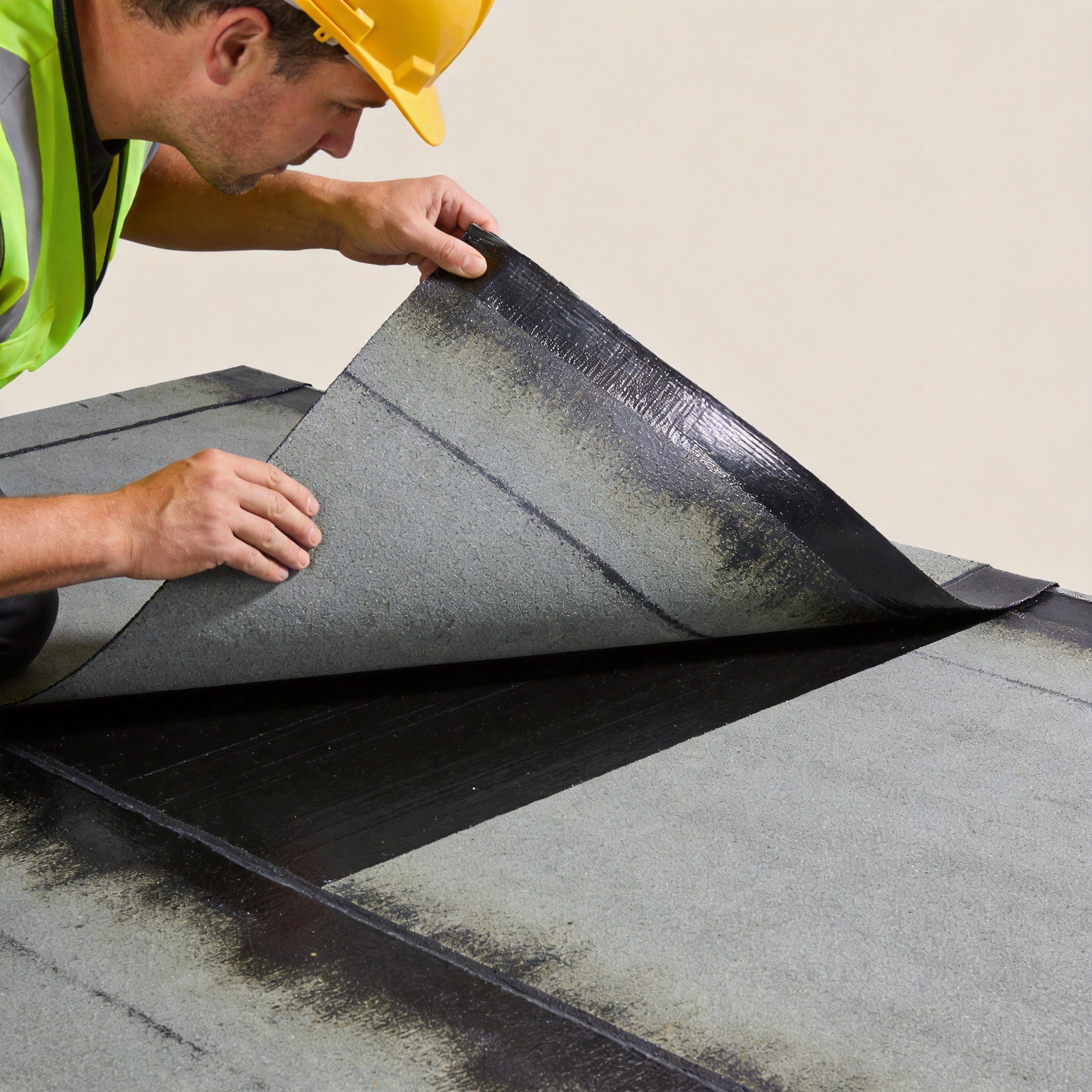
A self adhesive bitumen waterproof membrane is judged after the roll is closed by one question: does it stay attached? No-flame bonding removes the heat variable that a torch brings and replaces it with surface preparation, contact pressure and temperature control. That trade moves risk from flame to substrate. Peel strength is therefore a site outcome, not a factory promise. The figures below come from the 1.2 mm PE-faced page and the 1.5 mm coloured mineral page, and each is attributed where it appears.
Four conditions decide whether no-flame bonding holds: contact, pressure, cleanliness and temperature. Contact means the adhesive reaches the substrate everywhere, which depends on primer and laying technique rather than hand pressure. Pressure means a roller and lap compression applied in two directions, because hand smoothing leaves air paths that later become blisters. Cleanliness means no dust, oil, release agent or curing compound. Temperature means both substrate and air, since a cold sheet is stiff and a cold substrate pulls heat from the adhesive. A self adhesive bitumen waterproof membrane can pass a laboratory test and still fail on a dusty deck, and membrane delamination on such a deck is rarely a material fault.
Three failure modes account for many callbacks on a cold-applied sheet, and each leaves a different signature. Blistering shows as soft, drum-like areas where air or moisture was trapped and solar heating expanded it; it is common where sheets went down in one pass without a roller. Membrane delamination shows as the sheet lifting cleanly from the primer, leaving a glossy face, and points to contamination, missed primer or adhesive starvation in the cold. Edge lift shows at laps and upstands, where water wicks into a lap with poor lap compression and cyclic movement opens it further. A facilities team investigating a leaking plant-room roof found all three on one section: blisters in the field, delamination along a wall and lifted laps at a drain. No-flame bonding had been sold as risk-free on this self adhesive bitumen waterproof membrane; the records showed no primer and no roller.
Roller pressure and primer are the levers a crew controls. A roller expels air ahead of the contact line and forces adhesive into the surface profile. Two passes, one along the sheet and one across it, with a weighted roller, cover much of the benefit; edges and laps need a hand roller. Primer seals a porous substrate and gives the adhesive a consistent surface. Peel strength on the 1.2 mm page is declared at not less than 1.5 N/mm to concrete, and the 1.5 mm coloured sand page declares the same figure for its part, given its heavier reinforcement. Both are minimum values for a reinforced sheet. Both figures assume primed concrete, a clean surface and full lap compression, so the declared peel strength describes a system rather than a roll. For a self adhesive bitumen waterproof membrane, that distinction is the whole argument, and no-flame bonding quality follows from it.
Low temperature changes the sheet and the bond. The 1.2 mm page declares flexibility at -20°C and the 1.5 mm coloured sand page declares -15°C, and those are the figures to compare when a programme runs into winter. Neither is a minimum application temperature, and the distinction matters: a sheet can stay flexible at -20°C and still bond poorly at 0°C, because the adhesive needs to flow. No-flame bonding below the declared range, where lap compression cannot be confirmed, should be answered by a trial area, not a datasheet. Where a self adhesive bitumen waterproof membrane goes down in cold weather, peel strength develops slowly and membrane delamination risk rises with each early rain event on an open roof before the bond matures.
Verification of no-flame bonding on any live site should ideally be planned rather than improvised on the day. A tap test along the field identifies blisters; a blunt probe at lap edges finds unbonded lengths; a peel coupon cut from a sacrificial area gives a number to compare with the declared 1.5 N/mm. Membrane delamination is easiest to catch at the primer interface, so cut coupons to the substrate rather than peeling the top skin. Records matter as much as tests: substrate moisture, primer batch, roller type, air temperature and time of day, photographed against the sheet. A self adhesive bitumen waterproof membrane that passes a tap test but fails a coupon has not bonded, and lap compression is usually where the story starts.
Specification language should make the bond measurable. State the substrate moisture limit, primer product and coverage, roller type and number of passes, the air and substrate temperature window, the sampling rate for peel coupons and the repair method for failed areas. Require daily records. No-flame bonding is a set of conditions held together, and a specification naming only the membrane leaves those conditions to chance. A self adhesive bitumen waterproof membrane with a peel strength requirement, a primer requirement and a roller requirement is a system. Without a lap compression clause, membrane delamination remains a matter of luck rather than a defect to be rejected.
After full compaction and primer cure. Early testing on a cold day reads low and gives a misleading peel strength for the finished bond.
Only with a trial area and written approval. A self adhesive bitumen waterproof membrane can remain flexible and still bond poorly.
Under-rolled laps, contamination and water sitting at the edge. Membrane delamination at an upstand usually starts with a lap that was not compressed.

2026/11/20
How an APP waterproof membrane handles heat: 130°C softening point, torch application windows, overheating signs, summer storage, and thermal aging checks.

2026/11/20
The science of a breathable waterproof membrane: water vapor diffusion, Sd values, three grammage grades, water column resistance, and wrong-use cases.

2026/11/20
Single-ply or two-ply, every flat roof is a stack. See how a self adhesive waterproof membrane for roof systems handles base, cap, insulation and drains.

2026/11/20
How the polyester scrim sets tensile strength and dimensional stability of reinforced TPO membrane rolls, with welding, roll sizes and selection tips.

2026/11/20
How an aluminum foil coated bitumen waterproof membrane reflects solar radiation, lowers surface temperature, and what maintenance keeps savings alive.

2026/11/20
SBS modified bitumen waterproof membrane property groups: tensile strength, low-temperature flexibility, heat resistance, surface finishes, applications.
Links to the corresponding full news page.

The eight questions overseas buyers ask most — factory ownership, capacity, batch consistency and lead times, answered straight.

SBS membranes, polymer sheets, coatings and geomembranes — six product lines are operating simultaneously.

Pre-sales specification, on-site technical support and post-delivery maintenance across 100+ export markets.

Waterproofing performance is decided in the specification and the detailing, not just the material. Our technical team helps you select the right system, resolve site questions as they arise, and stay reachable long after the container lands.
