
 EN
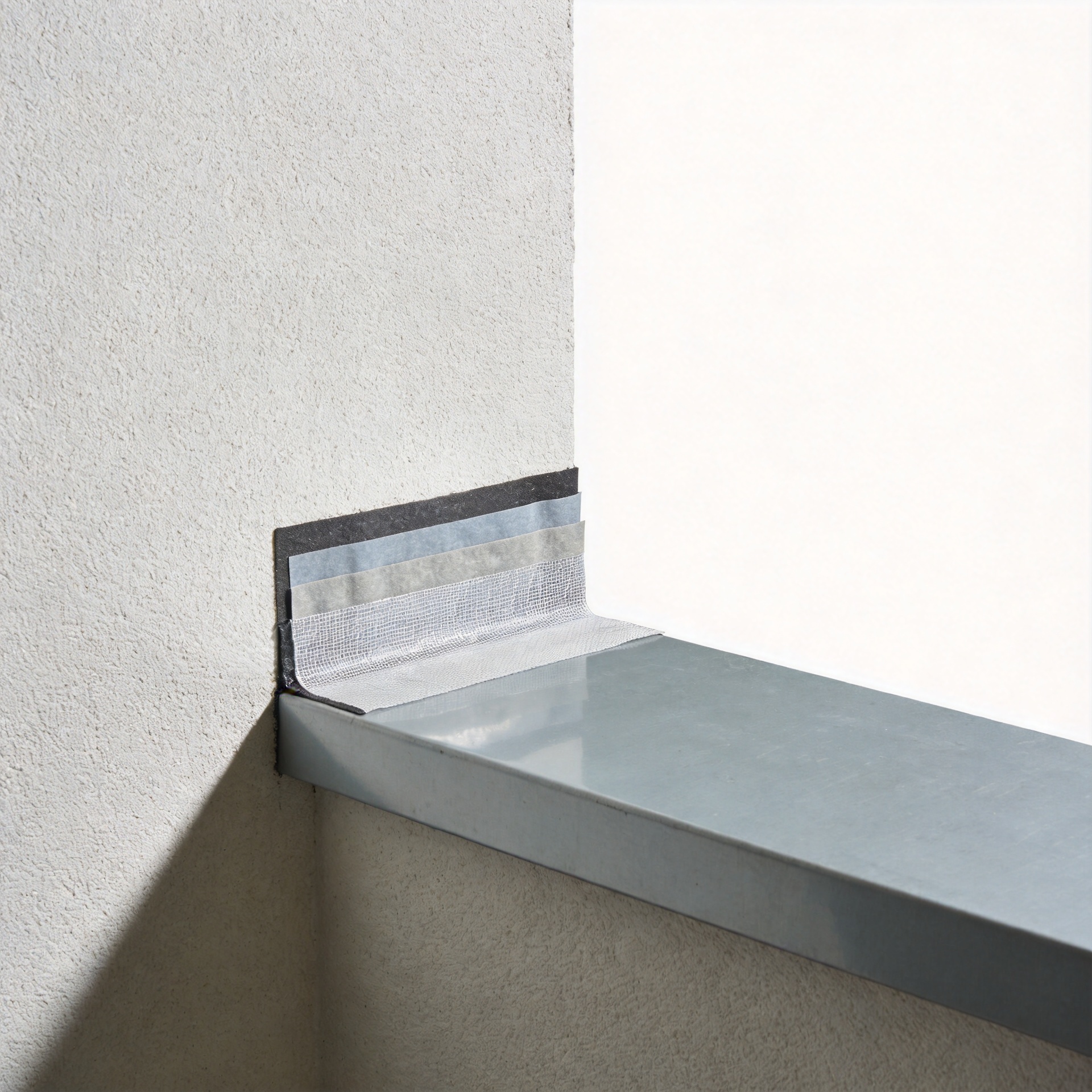
The Adhesive Belongs to the Tape, Not the Roll
Order a self adhesive breathable waterproof membrane wall system and the crate arrives without a peel-and-stick sheet. The breathable membrane for walls is a three-layer composite of PP non-woven, a PE film and PP non-woven, held by mechanical fixings driven into studs or purlins. The only adhesive in the assembly is the lap tape joining sheet edges. Read that tape as a structural bond and the schedule comes out too light, joints open in the first gale, and the vapor permeability you paid for serves a wall that leaks air. Settle this before the purchase order; it moves labour, inspection and fixing design together, and it is cheaper to correct on paper than on a scaffold.
Grade Choice Decides What Fasteners Can Carry
Grade sets what mechanical fixings may be asked to do. Lightweight at 70-100 g/m² gives a 1,000 mm water column, 80 N/50mm tensile and 3 months of UV; medium at 130-180 g/m² gives 1,500 mm, 150 N/50mm and 4 months; heavy at 220-300 g/m² gives 2,000 mm, 250 N/50mm and 6 months, all at 1.5 m width. For a self adhesive breathable waterproof membrane wall build-up on open ground, the 250 N/50mm figure is what holds a breathable membrane for walls until cladding lands. Vapor permeability comes from an Sd value of 0.02 m or lower, unchanged across grades, so a heavier roll never costs drying capacity, and the lap tape is the only joint component in the system.
Fastener Layout Follows Uplift, Not Habit
Spacing cannot be copied from another job, but its logic travels. Corners, parapets and strips beside openings take the highest suction, so mechanical fixings tighten there and relax mid-field. Each fastener passes through the sheet into framing, never into sheathing alone, and carries a washer wide enough to spread load without punching the non-woven. On a school extension with a rendered block wall, the crew chalked stud lines first, keeping every fixing on timber. That habit serves a breathable membrane for walls better than a spacing table, and it is the part of a self adhesive breathable waterproof membrane wall specification inspectors photograph. Vapor permeability survives a poor fixing pattern only until wind arrives, and no tape can hold a sheet that has pulled off its washers.
Laps, Tape and the Air Barrier Line
A lap is only as good as the surface under it. Sheets run shingle fashion, upper over lower, so water running down the face never meets an open edge. Vertical laps land over framing, giving the lap tape something solid to press against. Tape goes onto dry, dust-free material and is rolled rather than thumbed down; butyl tape rated from -40 to +70 °C keeps grip through a facade's temperature swing, though mechanical fixings driven through the lap break that seal. A taped lap is an air barrier as much as a water barrier, so a break at a T-joint pushes moist air into insulation and the defect vanishes under cladding. In a self adhesive breathable waterproof membrane wall assembly that tape line is the whole of the adhesion, and a breathable membrane for walls has no second barrier behind it.
Corners, Openings and the Order of Work
Sequence decides quality. Start at the lowest corner, work upward, and keep laps shedding downward. Cut openings after the sheet is fixed, add diagonal relief cuts, fold the flaps and tape them; a rectangle cut before fixing leaves a gap no lap tape can close. Internal and external corners take their own piece rather than a stretched fold, because a fold under tension creases and cracks. A breathable membrane for walls dressed over a window head sheds water clear of the opening; one cut short sends it behind the frame. Vapor permeability through a wet reveal helps little when mechanical fixings there pass through a gap.
Two Substrates: Solid Masonry and Insulated Facade
In a self adhesive breathable waterproof membrane wall over blockwork the sheet goes against a flat, dust-free face, over battens where a drainage gap is specified, and must not bridge mortar snots or recessed joints, which tear under wind. Where the same sheet is carried outside external insulation, every mechanical fixing passes through the full insulation thickness into the substrate, so washer size and anchor length follow that build-up, and each penetration is sealed as it is made. Lap tape alone will not carry a sheet across a hollow joint. A breathable membrane for walls that stops below a parapet coping leaves the wall head open, and vapor permeability dries a wall only when the inner face stays more vapor-tight than the outer layer.
Frequently Asked Questions
Does a self-adhesive breathable membrane roll exist?
Not in this range. The self adhesive breathable waterproof membrane wall assembly takes adhesion from tape at laps and penetrations, while the sheet itself relies on mechanical fixings. Any peel-and-stick breathable roll is a different product, and its water column and tensile figures should be checked before substitution.
Can tape replace the fasteners?
No. The lap tape seals a joint and carries no wind load. Tensile strength of 80 to 250 N/50mm describes the sheet, and that capacity reaches the structure only through the fasteners. A breathable membrane for walls that is taped but lightly nailed fails at the washers first.
Which grade suits a rendered block wall?
Medium at 130-180 g/m² covers most rendered walls, with a 1,500 mm water column and 150 N/50mm tensile. Heavy grade on an exposed site buys 250 N/50mm and 6 months of UV, which matters when rendering follows the frame by a season. Vapor permeability is identical across grades, so confirm mechanical fixings and lap tape with the quotation.










