 EN
APP Waterproof Membrane: High-Temperature Stability Guide
2026/11/20
How an APP waterproof membrane handles heat: 130°C softening point, torch application windows, overheating signs, summer storage, and thermal aging checks.

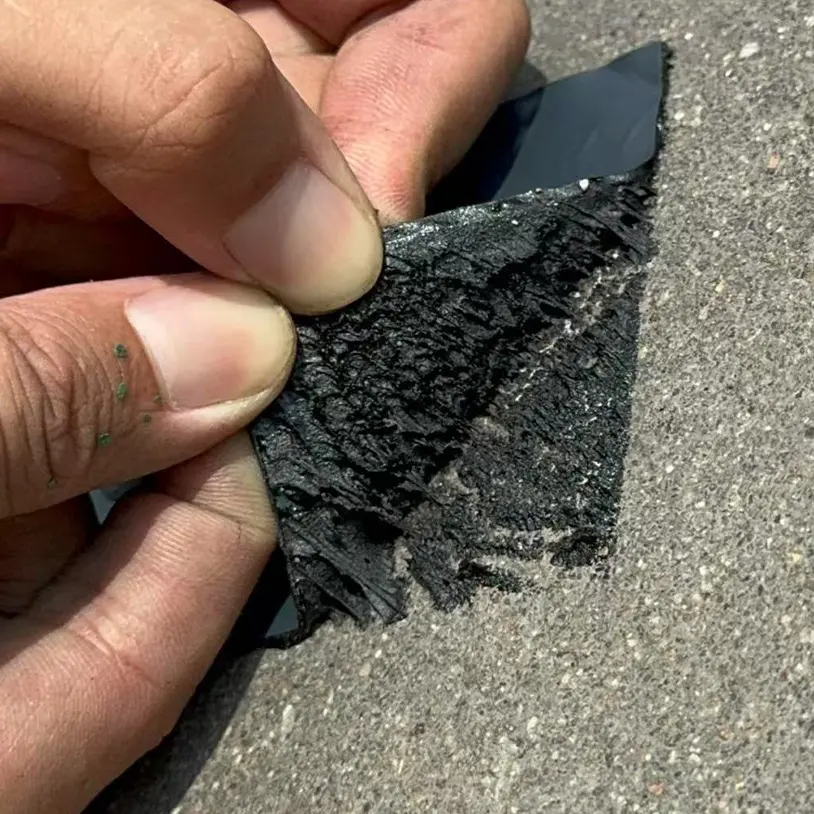
A peel-and-press asphalt sheet bonds at ambient temperature with rated peel adhesion — cold applied waterproofing for occupied buildings where torch work is barred. The rubber inside is usually SBS modified bitumen, blended into asphalt for elasticity the base binder lacks. This article explains what the rubber does inside a rubberized asphalt membrane, which numbers matter, and where the format earns its place. Used well, a self adhesive rubberized asphalt waterproofing membrane delivers all three.
Plain bitumen turns brittle near 0°C and flows near 60°C. Blending in SBS modified bitumen changes that from the inside: styrene end-blocks cluster into physical crosslinks, rubber mid-blocks swell with asphalt, and the mix forms a continuous elastic network. A rubberized asphalt membrane therefore stretches under substrate movement and recovers instead of cracking. The same network explains the hold on liner and substrate: adhesion and elasticity come from one chemistry. Cold applied waterproofing depends on that balance: the adhesive must wet the surface yet resist slump on a vertical parapet. When the balance holds, the sheet bonds without heat and stays dimensionally stable through the seasons.
Two properties separate a rubberized asphalt membrane from ordinary sealing tape. The first is high elasticity: the sheet elongates with thermal movement and returns to shape, so lap edges stay closed through daily cycles. The second is self-healing: when a nail, a footprint, or a minor puncture compresses the compound, the rubberized asphalt flows back around the intrusion and reseals. Damage that would open a plastic sheet becomes a non-event. That is why SBS modified bitumen dominates where puncture risk and movement coincide: fasteners, penetrations, settlement cracks. The same self adhesive rubberized asphalt waterproofing membrane also tolerates rough handling far better than a brittle sheet.
Access drives the choice: hospitals, fuel stations, and dense urban blocks often prohibit torch work, and a hot-work permit costs days. A peel-and-press sheet removes the flame and most of the crew-size constraint: two workers can hold output on a small roof. The trade-off is substrate discipline: peel adhesion is only as good as the surface it meets. Dust, moisture, or a loose primer film will cut the rated bond roughly in half, so a clean, dry, primed substrate is part of the specification. Where that discipline is realistic, cold applied waterproofing delivers torch-level continuity for a rubberized asphalt membrane on confined urban roofs. This is the daily job of a self adhesive rubberized asphalt waterproofing membrane. Rated output depends on SBS modified bitumen staying soft enough to wet, stable enough to hold.
Numbers replace adjectives in this category. A current 1.5mm sheet with colored mineral granule surface and polyester reinforcement declares: peel adhesion of at least 1.5 N/mm, tensile strength of at least 400 N/50mm, elongation at break of at least 30%, low-temperature flexibility of -15°C, and heat resistance of 90°C, with CE and ISO 9001 backing the file. For a self adhesive rubberized asphalt waterproofing membrane, that -15°C to 90°C window of the SBS modified bitumen compound is the headline. The matching 1.5mm aluminum-foil joint tape declares the same adhesion and tensile values, flexibility to -20°C, and watertightness pass at 0.3 MPa, widths of 100 to 600mm, and rolls of 7.5 to 20m. A data sheet without these figures is a guess. Confirm the peel adhesion basis is per millimeter of width, and that the cold application method appears beside the data.
A maintenance contractor chasing recurring lap leaks on a standing-seam metal roof over a food plant chose a rubberized asphalt membrane for three reasons: no flame near insulation, primer-free bond on clean metal, and a reflective foil face at the joint. The parapets took the granule-surfaced sheet: mineral finish, UV shielding, slip resistance in one layer. Cold applied waterproofing turned a two-week closure into a two-day one: crews worked between production shifts. Peel adhesion held through the first summer, and the SBS modified bitumen compound resealed where a ladder had dented a lap. The foil tape and granule sheet came from Shandong Dingtai Waterproof, whose TDS supplied those figures. For a membrane of this class, movement, puncture risk, and flame restrictions on one roof is exactly the brief.
Storage protects the chemistry. Modifier-grade rolls should rest shaded and upright, not stacked flat in a hot yard: heat-softened rubberized asphalt membrane telegraphs pallet marks into the bond line. The specification should carry peel adhesion, tensile strength, the temperature window, and the modifier grade, so substitutions are visible. On detail work — penetrations, upstands, seam repairs — the family's aluminum-foil tape keeps the system consistent. A self adhesive rubberized asphalt waterproofing membrane specified this way, with numbers and storage rules attached, behaves on site the way its data sheet promises.
The SBS modified bitumen network adds elastic recovery and self-healing: a rubberized asphalt membrane stretches with movement, recovers, and reseals around minor punctures instead of tearing.
Wherever flame is prohibited or permits are slow. Peel-and-press installation needs no fire watch and keeps a two-person crew productive.
Substrate condition: clean, dry, primed surfaces reach the full rated bond value; dampness cuts it sharply.

2026/11/20
How an APP waterproof membrane handles heat: 130°C softening point, torch application windows, overheating signs, summer storage, and thermal aging checks.

2026/11/20
The science of a breathable waterproof membrane: water vapor diffusion, Sd values, three grammage grades, water column resistance, and wrong-use cases.

2026/11/20
Single-ply or two-ply, every flat roof is a stack. See how a self adhesive waterproof membrane for roof systems handles base, cap, insulation and drains.

2026/11/20
How the polyester scrim sets tensile strength and dimensional stability of reinforced TPO membrane rolls, with welding, roll sizes and selection tips.

2026/11/20
How an aluminum foil coated bitumen waterproof membrane reflects solar radiation, lowers surface temperature, and what maintenance keeps savings alive.

2026/11/20
SBS modified bitumen waterproof membrane property groups: tensile strength, low-temperature flexibility, heat resistance, surface finishes, applications.
Links to the corresponding full news page.

The eight questions overseas buyers ask most — factory ownership, capacity, batch consistency and lead times, answered straight.

SBS membranes, polymer sheets, coatings and geomembranes — six product lines are operating simultaneously.

Pre-sales specification, on-site technical support and post-delivery maintenance across 100+ export markets.

Waterproofing performance is decided in the specification and the detailing, not just the material. Our technical team helps you select the right system, resolve site questions as they arise, and stay reachable long after the container lands.
