 EN
APP Waterproof Membrane: High-Temperature Stability Guide
2026/11/20
How an APP waterproof membrane handles heat: 130°C softening point, torch application windows, overheating signs, summer storage, and thermal aging checks.

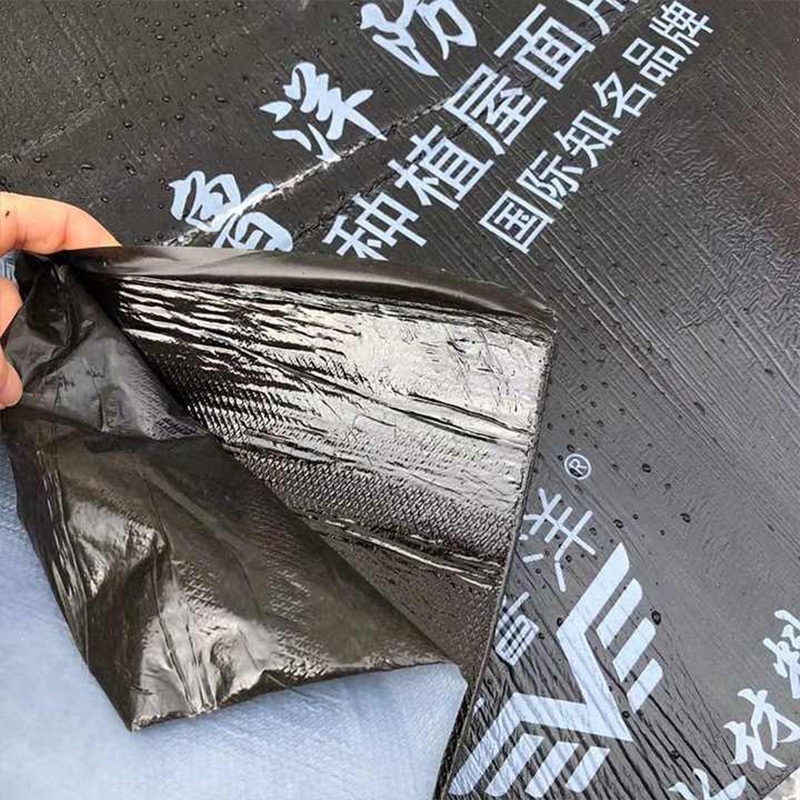
The pitch: peel the release liner, press the sheet to a primed substrate, and the adhesive bonds on contact — no flame, no torch equipment. Selection still decides success. This guide runs the choice in order — substrate first, then position, from mineral sand roofs to tiled wet rooms, then the published data, then the two application points that decide the bond for any self adhesive waterproof membrane.
Concrete is the default substrate: porous, reactive, best bonded after a primer. The published peel adhesion for the 1.2 mm grade is declared to concrete at 1.5 N/mm or better, making a primed concrete deck the reference surface for a cold applied bond. Metal is smooth and non-porous; it bonds readily but shows every defect, so cleanliness and dryness replace primer. Wood moves with humidity and temperature, so it wants a primer and attention to elongation at break, 30% for both grades. Whatever the substrate, peel adhesion is only as good as the surface it meets: dust, release agents or damp take the bond down quietly.
Location decides the surface finish and the thickness. An exposed roof wants the 1.5 mm grade with its colored mineral sand top, which shields the bitumen from UV and delivers a finished appearance in red, brown, grey or green. Interior wet rooms, balconies, under-tile systems and basement linings belong to the 1.2 mm sheet with its smooth PE film — where a self adhesive waterproof membrane earns its keep on fire-sensitive sites and a cold applied method skips the permit queue. Pipe roots and corners suit either grade, cut and pressed around penetrations. Match the grade to the exposure before the price discussion starts; the sheets cost about the same but serve different exposures.
The 1.2 mm grade: SBS-modified bitumen on polyester fiber, smooth PE film top, 1 m × 10 m or 20 m rolls, peel adhesion to concrete of at least 1.5 N/mm, tensile strength of at least 300 N/50 mm, elongation at break of 30% or more, low-temperature flexibility at −20°C, water tightness 0.3 MPa for 120 minutes. The 1.5 mm grade: SBS compound on a polyester mat, a colored mineral sand surface in four published colors, tensile strength of at least 400 N/50 mm, low-temperature flexibility at −15°C, heat resistance at 90°C, the same declared peel adhesion, CE and ISO 9001 certification. Set the two sheets of this self adhesive waterproof membrane family against the location list and one grade separates itself for most mixed projects on a typical site: mineral sand outside, PE film inside.
Two points decide the installation. First, pressure: peel the release liner steadily, press the sheet into the primed substrate, and roll firmly from the center outward so trapped air escapes and the adhesive wets the surface completely; a hand roller over every lap is cheap insurance against a hollow bond later. Second, laps: bond side laps and end laps at the declared overlap, press each seam down again, and keep every release liner off any surface the sheet must grip. The adhesive bonds on contact, leaving little room to reposition — align before you press and work in one direction.
A cold applied installation removes the fire watch, gas cylinders and hot-work permits — decisive in occupied buildings, timber structures, confined plant rooms and any site where a permit takes days. The promise is speed without heat; the release liner comes off only when a sheet is ready to press. The 1.2 mm sheet was published for exactly these interiors. On a hotel bathroom renovation in an occupied tower last year, the crew waterproofed between floors with no hot-work permit: a self adhesive waterproof membrane over the primed screed, details rolled that afternoon, tiling the next morning — no torch system could match that. Cold applied was the only route the schedule allowed.
Before ordering, confirm six things: substrate and its primer requirement; declared peel adhesion for that substrate; thickness and surface finish against the location list; low-temperature and heat figures against the climate; CE and ISO 9001 documents with a batch COA; and the commercial terms — roll sizes, MOQ from 500 m², lead time of 7–15 days after deposit, TDS and MSDS. A mineral sand surface adds published color choice for exposed roofs; confirm the color before the order. Self-adhesive does not mean preparation-free; the preparation now carries the whole bond.
Not when the substrate is prepared. The published peel adhesion of 1.5 N/mm is a bonded-joint figure, reached with primer, firm pressure and a clean, dry surface; keep the release liner on until each sheet is pressed. A torch bond fails the same way on a dusty or damp deck, so for a self adhesive waterproof membrane, preparation — not heat — is the variable.
The 1.5 mm mineral sand grade is the exposed-roof pick in this family, published with UV protection and a finished architectural color. The 1.2 mm PE-film sheet is for covered or interior positions, kept under tiles or screed as published.
Low-temperature flexibility is −20°C for the 1.2 mm grade and −15°C for the 1.5 mm grade, but those figures describe the sheet, not the adhesive. Peel adhesion at low substrate temperature is a separate question during a cold applied installation, so follow the data sheet on ambient conditions, check that the release liner peels cleanly at site temperature, and request written guidance before winter work.

2026/11/20
How an APP waterproof membrane handles heat: 130°C softening point, torch application windows, overheating signs, summer storage, and thermal aging checks.

2026/11/20
The science of a breathable waterproof membrane: water vapor diffusion, Sd values, three grammage grades, water column resistance, and wrong-use cases.

2026/11/20
Single-ply or two-ply, every flat roof is a stack. See how a self adhesive waterproof membrane for roof systems handles base, cap, insulation and drains.

2026/11/20
How the polyester scrim sets tensile strength and dimensional stability of reinforced TPO membrane rolls, with welding, roll sizes and selection tips.

2026/11/20
How an aluminum foil coated bitumen waterproof membrane reflects solar radiation, lowers surface temperature, and what maintenance keeps savings alive.

2026/11/20
SBS modified bitumen waterproof membrane property groups: tensile strength, low-temperature flexibility, heat resistance, surface finishes, applications.
Links to the corresponding full news page.

The eight questions overseas buyers ask most — factory ownership, capacity, batch consistency and lead times, answered straight.

SBS membranes, polymer sheets, coatings and geomembranes — six product lines are operating simultaneously.

Pre-sales specification, on-site technical support and post-delivery maintenance across 100+ export markets.

Waterproofing performance is decided in the specification and the detailing, not just the material. Our technical team helps you select the right system, resolve site questions as they arise, and stay reachable long after the container lands.
