 EN
APP Waterproof Membrane: High-Temperature Stability Guide
2026/11/20
How an APP waterproof membrane handles heat: 130°C softening point, torch application windows, overheating signs, summer storage, and thermal aging checks.

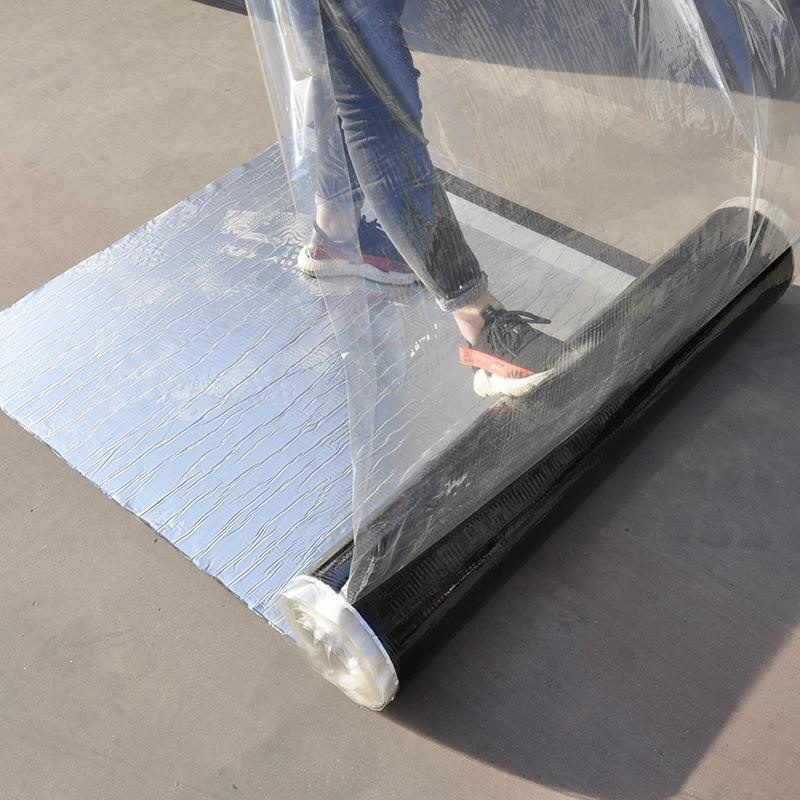
In modern underground engineering, heavy foundations, and commercial basements, traditional static sealing barriers often face severe performance limits. Over time, concrete structures inevitably develop micro-cracks due to natural drying shrinkage, thermal expansion, dynamic traffic vibrations, or subtle foundation settling. When conventional waterproofing sheets rupture under these stresses, moisture penetrates into the structural concrete, leading to steel rebar corrosion and costly long-term structural failure. To solve this recurring engineering challenge, specifying a Self-Healing Waterproofing Membrane equipped with active Crystalline Technology has become a leading strategy for civil engineers, contractors, and international procurement managers. Unlike traditional passive barriers that merely block water physically, an active Self-Healing Waterproofing Membrane chemically reacts in the presence of water, forming a dynamic, continuous barrier within the substrate itself.
The core operational principle of a Self-Healing Waterproofing Membrane lies in its specialized chemical formulation. Shandong Dingtai Waterproof Technology Co., Ltd. incorporates active catalytic compounds into its polymer-modified self-adhesive and reactive backing layers. When groundwater or moisture enters a micro-crack in the concrete, it activates these reactive crystalline compounds inside the membrane matrix. These active chemicals dissolve and migrate into the concrete capillaries, reacting directly with free calcium hydroxide Ca(OH)2 and unhydrated cement particles:
Active Chemical Catalysts + Ca(OH)2 + Water -> Insoluble Crystalline Hydrates
This chemical reaction produces insoluble, needle-like dendritic micro-crystals that grow throughout the concrete pores and micro-fissures (healing cracks up to 0.4 mm in width). As these crystal structures expand, they completely seal the capillary paths and block water flow. Once the moisture is completely sealed off, the crystalline growth pauses and remains dormant. However, if new micro-cracks appear years later due to dynamic structural settlement and water re-enters, the latent active compounds reactivate automatically to repeat the sealing process, providing continuous Self-Healing Waterproofing protection over the building's operational lifespan.
For large-scale subterranean tanking, subway tunnels, and industrial foundations, selecting a reliable Self-Healing Waterproofing Membrane from a trusted Waterproof Membrane Supplier requires strict adherence to international physical testing standards. Manufactured under ISO 9001 quality management and ISO 14001 environmental protocols by Shandong Dingtai Waterproof Technology Co., Ltd., our polymer-modified self-adhesive membranes deliver verified performance metrics designed to meet rigorous global engineering requirements.
Specifically, when tested under ASTM C1585 and EN 12390-8 standards, the active Crystalline Technology demonstrates an automatic micro-crack healing capacity of up to 0.4 mm in width, eliminating the need for costly manual structural repairs. Depending on whether the project specifies heavy-duty polymer self-adhesive sheets or high-strength thermoplastic substrates, our formulations can be tailored to meet ASTM D412 tensile requirements and high elongation capacities that absorb dynamic structural vibrations. Furthermore, under GB 23441 and ISO 19935 hydrostatic testing, our Self-Healing Waterproofing Membrane systems resist elevated hydrostatic water pressure up to 0.8 MPa, ensuring total impermeability in deep foundations. Exceptional concrete bonding prevents lateral water movement after post-cure, while low-temperature flexibility tests guarantee performance at temperatures down to -25°C, making our Self-Healing Waterproofing solutions highly adaptable to severe cold-climate applications.
A major hazard in subterranean waterproofing is lateral water migration. With traditional loose-laid membranes, if a puncture occurs at one point, water travels freely between the membrane and the concrete surface, leaking into the building several meters away from the actual damage point. Finding and repairing such leaks is extremely complex and expensive. A reactive Self-Healing Waterproofing Membrane eliminates this risk through a dual-action bonding mechanism. First, the heavy-duty polymer rubberized self-adhesive backing forms a complete physical bond across the concrete surface during curing. Second, the active Crystalline Technology migrates into the surface pores of the curing concrete, forming an integrated chemical bond. Even if the outer protective film is mechanically damaged during rebar installation, the reactive Self-Healing Waterproofing layer confines water to the exact point of damage, where crystalline growth immediately seals the micro-fissure and prevents water from traveling laterally.
A high-performance Self-Healing Waterproofing Membrane is specifically engineered for severe underground conditions, including raft foundations, basement retaining walls, cut-and-cover subway tunnels, and utility culverts. When sourcing these specialized materials for international construction projects, buyers must evaluate the manufacturer's raw material purity, thickness uniformity, and export packaging reliability. At Shandong Dingtai Waterproof Technology Co., Ltd., every production batch undergoes raw material purity checks, automated thickness control, and continuous hydrostatic testing. To ensure safe ocean transport, rolls are wrapped with UV-protective film and secured on reinforced export pallets. For comprehensive project specs across our product lines—including SBS modified bitumen membranes, TPO waterproofing sheets, and damp proof courses (DPC)—visit our main
An active crystalline Self-Healing Waterproofing Membrane is designed to automatically seal non-structural micro-cracks and concrete capillary fissures up to 0.4 mm in width through continuous crystal growth.
No. The active crystalline compounds embedded in the Self-Healing Waterproofing Membrane remain latent inside the matrix. If moisture re-enters the concrete structure years after initial installation, the chemical catalysts reactivate automatically to seal new micro-cracks.
While traditional SBS bitumen rolls provide excellent static waterproofing, a Self-Healing Waterproofing Membrane provides dual protection: a full-bond adhesive barrier that prevents lateral water migration and active Crystalline Technology that chemically seals micro-cracks in the concrete substrate over time.

2026/11/20
How an APP waterproof membrane handles heat: 130°C softening point, torch application windows, overheating signs, summer storage, and thermal aging checks.

2026/11/20
The science of a breathable waterproof membrane: water vapor diffusion, Sd values, three grammage grades, water column resistance, and wrong-use cases.

2026/11/20
Single-ply or two-ply, every flat roof is a stack. See how a self adhesive waterproof membrane for roof systems handles base, cap, insulation and drains.

2026/11/20
How the polyester scrim sets tensile strength and dimensional stability of reinforced TPO membrane rolls, with welding, roll sizes and selection tips.

2026/11/20
How an aluminum foil coated bitumen waterproof membrane reflects solar radiation, lowers surface temperature, and what maintenance keeps savings alive.

2026/11/20
SBS modified bitumen waterproof membrane property groups: tensile strength, low-temperature flexibility, heat resistance, surface finishes, applications.
Links to the corresponding full news page.

The eight questions overseas buyers ask most — factory ownership, capacity, batch consistency and lead times, answered straight.

SBS membranes, polymer sheets, coatings and geomembranes — six product lines are operating simultaneously.

Pre-sales specification, on-site technical support and post-delivery maintenance across 100+ export markets.

Waterproofing performance is decided in the specification and the detailing, not just the material. Our technical team helps you select the right system, resolve site questions as they arise, and stay reachable long after the container lands.
