 EN
APP Waterproof Membrane: High-Temperature Stability Guide
2026/11/20
How an APP waterproof membrane handles heat: 130°C softening point, torch application windows, overheating signs, summer storage, and thermal aging checks.

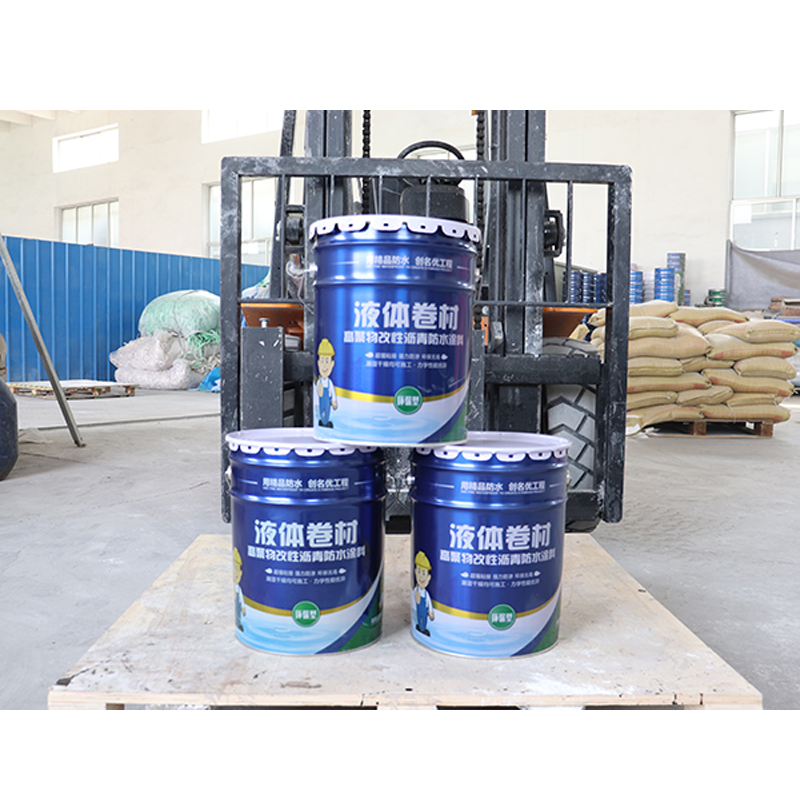
Not every waterproofing problem is a sheet problem. Pipe roots, spalled plinths and brick basements rarely offer a flat surface for a roll, which is why a solvent-based bitumen waterproof liquid membrane still appears in specifications. The material is simple: bitumen dissolved in organic solvent, brushed on, then left to release solvent and form a film. This guide covers where a bitumen liquid membrane earns its place, how liquid applied waterproofing forms a film, and why detail waterproofing is its natural territory.
The mechanism is physical rather than chemical. A solvent-based bitumen waterproof liquid membrane keeps bitumen fluid enough to wet a surface, and once the carrier evaporates the bitumen coalesces into a continuous film. Wetting matters more than thickness, because a coating that does not touch the pore cannot seal it. Two thin coats usually beat one heavy coat: the first penetrates and closes capillary paths, the second builds the layer that resists water pressure. Trap solvent under a skin and the film stays soft, so recoat timing follows the solvent. A solvent-borne bitumen coating applied this way stays flexible, and a bitumen liquid membrane used as a primer behaves the same before a liquid applied waterproofing topcoat.
Penetration is why this family survives in repair work. On porous concrete, lime mortar, brick and aged bitumen, the coating enters the surface rather than sitting on it, consolidating friable layers that would defeat an adhesive sheet. It is not a crack filler: a moving crack opens under a thin film, and wide joints need fabric. Where liquid applied waterproofing must follow a rough profile without air pockets, penetration does the work that contact pressure does in a sheet. A solvent-borne bitumen coating primes surfaces that would otherwise need mechanical removal, and a solvent-based bitumen waterproof liquid membrane can turn a chalky wall into a sound base. Detail waterproofing starts at the pore.
Details are where the material pays off. A brush reaches the back of a pipe root, the inside of a corner and the gap behind a rail base, where a torch is awkward, and a bitumen liquid membrane can be worked into the same recess by hand. The sequence is: clean, prime, coat, embed a reinforcement strip, then coat again. Form a fillet at internal corners so the film does not bridge a void. In a brick basement converted to a plant room, the crew sealed pipe roots with a solvent-based bitumen waterproof liquid membrane before the new slab went down, working around services no roll could pass. Detail waterproofing of that kind depends on access and patience, and a solvent-borne bitumen coating earns its place because it reaches where a roller cannot.
Solvent is the constraint. The evaporation that cures the film releases flammable vapour, so the work area needs forced ventilation, no ignition sources and gas monitoring where the space is confined. A basement plant room, a lift pit or a tank interior is a permit-controlled environment, and a solvent-borne bitumen coating applied there without extraction is a fire risk rather than a waterproofing job. Cure depends on air movement as much as temperature; solvent trapped in a cold corner returns later as a soft patch. For detail waterproofing inside an occupied building, that requirement often pushes the specification toward liquid applied waterproofing with a lower solvent load, even where a solvent-based bitumen waterproof liquid membrane would perform.
Water-based bitumen emulsion suits large open areas and sites where odour limits dominate; it needs drying time and tolerates a cold, damp substrate less well. Hot-applied bitumen gives high build and fast set but brings kettles, heat and a separate safety regime. A solvent-borne bitumen coating sits between them: it penetrates well and needs no heat. Elasticity is the trade-off. Our polyurethane liquid membrane page lists elongation of at least 450%, tensile strength of at least 1.5 MPa and crack bridging up to 5 mm, values a thin bitumen liquid membrane will not match; where movement is live, a polyurethane liquid applied waterproofing layer is better, with the solvent-based bitumen waterproof liquid membrane acting as the detail primer beneath it.
Compatibility decides whether the film stays on. Bitumen films generally accept fresh bitumen, but some elastomeric and acrylic coatings soften under solvent, and a test patch shows it before the whole wall does. On metal the film needs a sound substrate and a corrosion-tolerant primer. Ask for the solvent type, the flash point and the recoat window in writing, because those items decide the permit, the schedule and the ventilation plan. Shandong Dingtai Waterproof supplies TDS and MSDS with export orders, and a bitumen liquid membrane order should state the substrate and the intended topcoat. A solvent-borne bitumen coating bought without that information is a detail waterproofing risk, and a solvent-based bitumen waterproof liquid membrane specified by name still needs the substrate named beside it.
Damp, no; damp-looking, perhaps. Free water blocks penetration and traps solvent, so the surface should be dry enough for a bitumen liquid membrane to soak in. Test a patch before committing a wall.
Two is the usual minimum, one to penetrate and one to build film. The count depends on porosity and on the dry film thickness the specification requires, so detail waterproofing schedules should state it rather than leave it to the brush.
Only with ventilation and a cured film, and rarely where occupiers remain in place. A solvent-based bitumen waterproof liquid membrane is easier to defend on external basements, while liquid applied waterproofing with a lower solvent load suits sealed occupied space.

2026/11/20
How an APP waterproof membrane handles heat: 130°C softening point, torch application windows, overheating signs, summer storage, and thermal aging checks.

2026/11/20
The science of a breathable waterproof membrane: water vapor diffusion, Sd values, three grammage grades, water column resistance, and wrong-use cases.

2026/11/20
Single-ply or two-ply, every flat roof is a stack. See how a self adhesive waterproof membrane for roof systems handles base, cap, insulation and drains.

2026/11/20
How the polyester scrim sets tensile strength and dimensional stability of reinforced TPO membrane rolls, with welding, roll sizes and selection tips.

2026/11/20
How an aluminum foil coated bitumen waterproof membrane reflects solar radiation, lowers surface temperature, and what maintenance keeps savings alive.

2026/11/20
SBS modified bitumen waterproof membrane property groups: tensile strength, low-temperature flexibility, heat resistance, surface finishes, applications.
Links to the corresponding full news page.

The eight questions overseas buyers ask most — factory ownership, capacity, batch consistency and lead times, answered straight.

SBS membranes, polymer sheets, coatings and geomembranes — six product lines are operating simultaneously.

Pre-sales specification, on-site technical support and post-delivery maintenance across 100+ export markets.

Waterproofing performance is decided in the specification and the detailing, not just the material. Our technical team helps you select the right system, resolve site questions as they arise, and stay reachable long after the container lands.
