 EN
APP Waterproof Membrane: High-Temperature Stability Guide
2026/11/20
How an APP waterproof membrane handles heat: 130°C softening point, torch application windows, overheating signs, summer storage, and thermal aging checks.

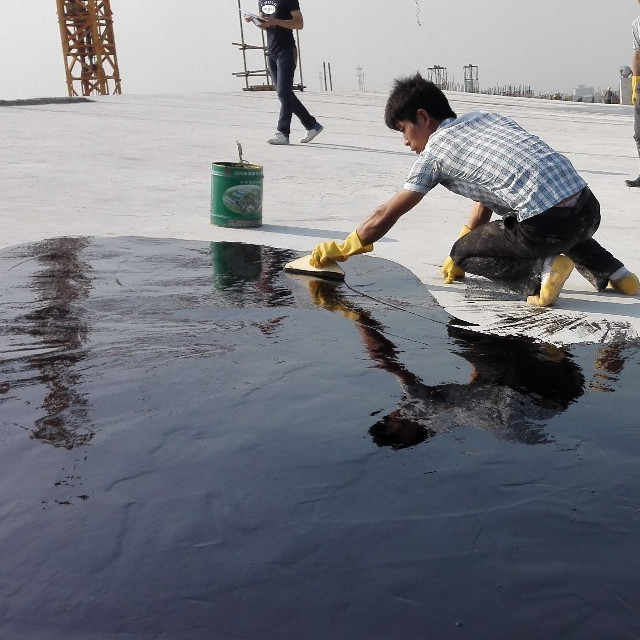
Specifying the optimal liquid barrier between water based and solvent based paints for waterproofing requires evaluating structural hydrology rather than assuming one chemical family is inherently stronger. Across commercial building envelopes, a protective liquid waterproofing coating must harmonize with concrete porosity, hydrostatic pressure gradients, jobsite ventilation capacities, and regional environmental regulations. From a waterproofing engineer’s perspective, successful material procurement follows a strict hierarchy: diagnose the structural moisture vector first, match the polymer binder chemistry second, and validate the field curing environment before issuing a purchase order.
For engineering contractors and wholesale building material distributors, comparing a water based waterproof paint against a solvent based waterproof paint centers on operational feasibility and lifecycle risk. Waterborne dispersions streamline indoor air quality compliance and simplify equipment maintenance across occupied facilities. Conversely, solvent-borne solutions deliver specialized surface wetting, rapid low-temperature flash-off, and dense chemical cross-linking on demanding industrial substrates. Neither product label guarantees leak-free performance unless the selected liquid waterproofing coating is integrated into a properly detailed structural assembly.
Understanding how water based and solvent based paints transition from wet liquids into solid waterproof barriers explains their distinct jobsite sensitivities. A water based waterproof paint suspends microscopic acrylic, rubber, or polyurethane polymer spheres inside an aqueous carrier. Once applied to a masonry wall or roof slab, the water carrier must evaporate into the atmosphere, drawing the suspended polymer spheres into tight physical contact until they deform and coalesce into a continuous membrane. Consequently, ambient relative humidity, airflow velocity, wet-film thickness, and the formulation’s minimum film-forming threshold heavily govern early rain resistance. Once fully coalesced and cured, a quality waterborne film does not redissolve in water, functioning as a durable weather barrier.
In contrast, a solvent based waterproof paint dissolves high-molecular-weight resins directly within volatile organic hydrocarbons. As the organic solvent flashes off into the air, the dissolved polymer chains entangle and chemically cross-link into a dense, non-porous matrix. This low-surface-tension solvent carrier effortlessly penetrates micro-fissures and wets out chalky or lightly contaminated substrates where aqueous droplets might bead up. However, rapid surface skinning must never be confused with complete through-cure; trapping un-evaporated solvent beneath an overly thick topcoat inevitably triggers solvent blistering under solar heat.
Regardless of how water based and solvent based paints form their protective skins, achieving monolithic film continuity remains the decisive engineering objective. Microscopic pinholes, unsealed tie-rod holes, sharp concrete aggregate projections, and moving structural expansion joints will rapidly compromise even the most expensive resin chemistry if surface preparation and fabric reinforcement are neglected.
When procurement teams evaluate water based and solvent based paints for large-scale tenders, five technical parameters dictate system suitability. First, regarding carrier physics, aqueous emulsions rely on water evaporation above ten degrees Celsius, whereas hydrocarbon solutions flash off reliably across wider thermal windows. Second, regarding enclosed workspace safety, a water based waterproof paint generates minimal odor and zero flashpoint hazards, while a solvent based waterproof paint requires mechanical explosion-proof exhaust fans, vapor respirators, and strict ignition locks.
Third, regarding substrate moisture tolerance, waterborne acrylics and cementitious-polymer hybrids generally tolerate damp green concrete and allow trapped slab vapor to breathe outward without blistering. Conversely, standard solvent-borne films trap rising vapor unless paired with a specialized moisture-mitigating primer, though moisture-cured solvent polyurethanes actively consume trace surface dampness to accelerate curing. Fourth, regarding chemical and ponding resistance, a cross-linked solvent based waterproof paint typically exhibits lower water absorption and superior resistance to petrochemical spills than standard single-component aqueous coatings. Fifth, regarding supply chain logistics, wholesalers must check shelf-life stability, freeze-thaw storage protection for waterborne drums, and hazardous cargo classifications for flammable solvent pails.
Below-grade waterproofing is governed by continuous lateral earth pressure, groundwater table fluctuations, and soil chemical acidity. Engineers should never select between water based and solvent based paints merely because one sample dries faster on an above-ground test board. On interior basement walls facing negative-side dampness, breathable waterborne cementitious-acrylic coatings prevent vapor blisters while blocking liquid seepage. On exterior positive-side foundation walls subjected to sustained hydrostatic head, a high-build solvent based waterproof paint—such as a modified polyurethane-bitumen elastomer—provides the high elongation needed to bridge settlement cracks before drainage boards and backfill are installed.
Exterior horizontal roofs endure intense ultraviolet radiation, thermal shock, wind-driven rain, and localized ponding water around drains. A reflective water based waterproof paint formulated from pure elastomeric acrylic or aliphatic polyurethane dispersion excels on sloped roofs where daytime temperatures remain warm and dry during application. Where low-slope industrial roofs face year-round standing water, chemical exhaust, or winter application schedules, contractors frequently specify a single-component moisture-cured solvent based waterproof paint to guarantee rapid rain-proof curing and permanent ponding durability.
Hospitality bathrooms, commercial kitchens, mechanical plant rooms, and healthcare refurbishments place occupant health and rapid trade sequencing at the forefront of specification. In these confined interior zones, specifying a low-odor water based waterproof paint under ceramic tile assemblies eliminates toxic solvent migration into HVAC ductwork and allows adjacent rooms to remain operational. Before ceramic tiling or protective screeds are installed, inspectors must verify with digital pinless meters that the multi-coat liquid waterproofing coating has achieved full dry-film thickness and cured completely through corners and floor-to-wall coves.
Environmental compliance is frequently the primary catalyst prompting specifiers to review water based and solvent based paints, yet regulatory thresholds vary significantly by jurisdiction and coating category. In the United States, federal architectural coating standards under the eCFR framework establish strict volatile organic compound weight limits per liter for waterproofing sealers and treatments, while regional air districts enforce even tighter local caps. Across the European Union, Directive 2004/42/EC regulates maximum solvent emissions for decorative and protective building coatings.
For international importers and wholesale distributors, marketing claims like eco-friendly or low-odor carry zero customs validity. Before finalizing bulk container orders for water based and solvent based paints, buyers must audit the manufacturer’s current Safety Data Sheet, Technical Data Sheet, certified third-party VOC laboratory test reports, and specific customs harmonized tariff codes. Furthermore, importing a solvent based waterproof paint requires verifying Dangerous Goods ocean freight classifications, UN packaging certifications, and warehouse fire-suppression ratings, whereas importing a water based waterproof paint requires insulated container liners during winter transit to prevent irreversible emulsion freezing.
To prevent costly envelope failures when deploying water based and solvent based paints, site supervisors and wholesale technical teams should enforce a six-step verification sequence. First, classify the precise hydraulic load, distinguishing between intermittent rain splash, capillary rising damp, ponding roof water, and pressurized subterranean groundwater. Second, decontaminate and profile the substrate, mechanically grinding away concrete laitance, rust scale, and curing compounds before applying a system-compatible penetrating primer.
Third, verify the climatic application window, confirming that substrate temperatures stay at least three degrees Celsius above the ambient dew point and within the minimum film-forming limits for any water based waterproof paint. Fourth, reinforce all structural vulnerabilities by embedding nonwoven polyester mesh into a wet detail coat of liquid waterproofing coating across inside corners, pipe penetrations, and shrinkage cracks. Fifth, audit wet-film and dry-film micron thickness across every coat using calibrated gauges rather than relying on visual color uniformity. Sixth, execute a mandatory adhesion pull-off test and electronic holiday pinhole scan on a cured trial area before approving full-scale project execution.

2026/11/20
How an APP waterproof membrane handles heat: 130°C softening point, torch application windows, overheating signs, summer storage, and thermal aging checks.

2026/11/20
The science of a breathable waterproof membrane: water vapor diffusion, Sd values, three grammage grades, water column resistance, and wrong-use cases.

2026/11/20
Single-ply or two-ply, every flat roof is a stack. See how a self adhesive waterproof membrane for roof systems handles base, cap, insulation and drains.

2026/11/20
How the polyester scrim sets tensile strength and dimensional stability of reinforced TPO membrane rolls, with welding, roll sizes and selection tips.

2026/11/20
How an aluminum foil coated bitumen waterproof membrane reflects solar radiation, lowers surface temperature, and what maintenance keeps savings alive.

2026/11/20
SBS modified bitumen waterproof membrane property groups: tensile strength, low-temperature flexibility, heat resistance, surface finishes, applications.
Links to the corresponding full news page.

The eight questions overseas buyers ask most — factory ownership, capacity, batch consistency and lead times, answered straight.

SBS membranes, polymer sheets, coatings and geomembranes — six product lines are operating simultaneously.

Pre-sales specification, on-site technical support and post-delivery maintenance across 100+ export markets.

Waterproofing performance is decided in the specification and the detailing, not just the material. Our technical team helps you select the right system, resolve site questions as they arise, and stay reachable long after the container lands.
