 EN
APP Waterproof Membrane: High-Temperature Stability Guide
2026/11/20
How an APP waterproof membrane handles heat: 130°C softening point, torch application windows, overheating signs, summer storage, and thermal aging checks.

In modern commercial substructure engineering, specifying a certified strong waterproof material is essential for safeguarding foundation walls and podium decks against unrelenting hydrostatic pressure. A strong waterproof material is not merely a dense plastic cover sheet; it represents a specialized viscoelastic barrier designed to isolate structural concrete from aggressive groundwater, dissolved sulfates, and lateral soil shear. When civil engineering firms design sub-grade building envelopes, selecting an inadequate barrier can lead to premature structural decay and expensive remedial injections. Applying an engineered strong waterproof material guarantees that the concrete interface remains dry and chemically protected across decades of structural service. For international construction distributors and project management networks, choosing a high-tensile strong waterproof material ensures long-term building health and prevents water tracking along cold joints.
The mechanical durability of a strong waterproof material is defined by its resistance to puncture loads, lateral water migration, and chemical degradation. In below-grade foundation tanking, a strong waterproof material must withstand the severe abrasive impact of coarse backfill aggregates and soil settlement. High-density polyethylene and SBS-modified bituminous composites represent the standard strong waterproof material because they provide excellent tensile elongation to bridge concrete shrinkage cracks. A premium strong waterproof material exhibits permanent adhesive tack to wet out substrate micro-textures under mechanical compression. Sourcing a laboratory-verified strong waterproof material ensures that the protective barrier complies with strict ASTM and European EN standards.
Selecting the proper form of strong waterproof material involves matching the structural geometry of the joint to the surrounding exposure hazards. For extensive, unoccupied cast concrete decks, a sheet-based strong waterproof material offers unbeatable installation speeds and consistent, factory-controlled film thickness. This prefabricated strong waterproof material eliminates the risk of uneven application and dry-film thin spots on the jobsite. Conversely, for congested pipe penetrations, complex expansion joints, and vertical masonry steps, a liquid-applied strong waterproof material adapts easily to irregular transitions. Combining a high-build liquid strong waterproof material with heavy-duty reinforcing mesh ensures a continuous, seamless transition barrier.
Achieving maximum performance from any strong waterproof material depends heavily on rigorous substrate preparation and proper installation temperature windows. Installers must clean concrete substrates to remove loose dust, curing oils, and sand laitance, as a strong waterproof material cannot establish a molecular bond with contaminated surfaces. Applying a strong waterproof material over surface condensation or frost creates an unbonded layer that leads to blister formation and seam delamination. Once the concrete is dry, applying a compatible polymer primer prior to unrolling the strong waterproof material consolidates residual masonry dust and enhances adhesive wetting. Technicians must consolidate every square meter of the strong waterproof material using a heavy silicone hand roller to eliminate trapped air pockets and ensure complete surface contact.
The structural continuity of a strong waterproof material relies on continuous detailing at all overlaps and boundary terminations. When splicing adjacent runs of the strong waterproof material, installers must maintain minimum lap widths of seventy-five millimeters on side joints and one hundred millimeters on end seams. Technicians must offset these overlaps to avoid creating complex joints where multiple runs of the strong waterproof material intersect. At structural inside corners, placing a preformed angle reinforcement strip of the strong waterproof material provides vital shear protection before laying the main sheet. In addition, sealing all termination points of the strong waterproof material with an approved elastomeric mastic prevents lateral water tracking behind the membrane.
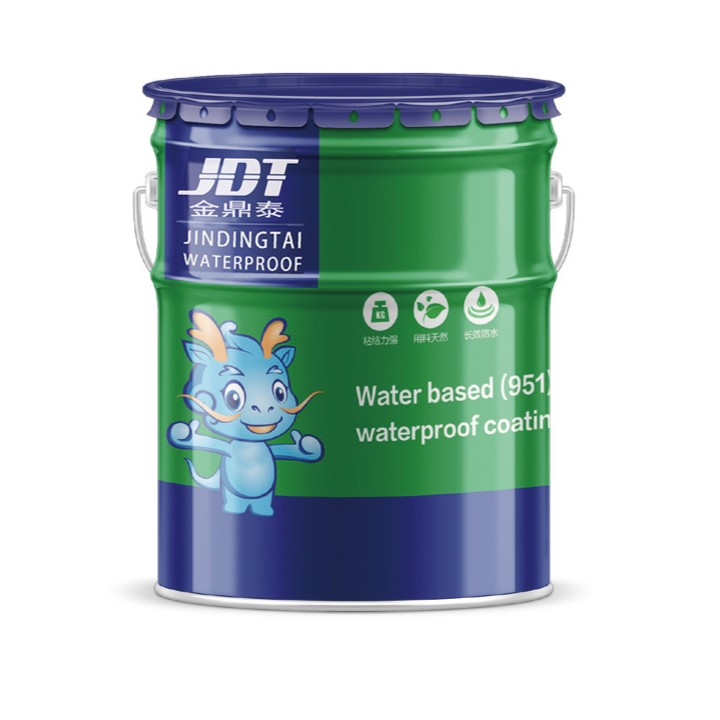
Civil engineering firms and distribution networks achieve consistent quality control by purchasing their strong waterproof material directly from certified manufacturing plants. Shandong Dingtai Waterproof Technology Co., Ltd. manufactures heavy-duty building membranes under the JinDingTai brand, offering a reliable strong waterproof material for global commercial infrastructure projects. Sourcing a factory-direct strong waterproof material ensures that the shipment maintains consistent thickness tolerances, excellent low-temperature flexibility, and predictable adhesive behavior. In addition, JinDingTai supports custom slitting widths and specialized roll lengths to match complex precast concrete and bridge deck details. Procuring a proven strong waterproof material protects building owners from costly waterproofing remediation and preserves the structural integrity of concrete foundations.
A commercial strong waterproof material price varies according to polymer compound purity, nominal thickness, roll width, and backing construction. Pure synthetic butyl rubber rolls command a higher strong waterproof material price than recycled blends but provide permanent flexibility and superior leak resistance under extreme weather conditions.
A sheet-based strong waterproof material provides a factory-controlled, uniform thickness across the entire application area, eliminating the human errors and uneven depths common with liquid systems. Additionally, a reinforced strong waterproof material offers superior tensile strength and immediate resistance to backfill abrasion without requiring curing time.
An engineered strong waterproof material utilizes highly elastic SBS-modified bitumen or elastomeric polymers that retain flexible elongation down to minus thirty degrees Celsius. This viscoelasticity allows the strong waterproof material to bridge microscopic concrete cracks and accommodate structural expansion without rupturing or losing surface adhesion.

2026/11/20
How an APP waterproof membrane handles heat: 130°C softening point, torch application windows, overheating signs, summer storage, and thermal aging checks.

2026/11/20
The science of a breathable waterproof membrane: water vapor diffusion, Sd values, three grammage grades, water column resistance, and wrong-use cases.

2026/11/20
Single-ply or two-ply, every flat roof is a stack. See how a self adhesive waterproof membrane for roof systems handles base, cap, insulation and drains.

2026/11/20
How the polyester scrim sets tensile strength and dimensional stability of reinforced TPO membrane rolls, with welding, roll sizes and selection tips.

2026/11/20
How an aluminum foil coated bitumen waterproof membrane reflects solar radiation, lowers surface temperature, and what maintenance keeps savings alive.

2026/11/20
SBS modified bitumen waterproof membrane property groups: tensile strength, low-temperature flexibility, heat resistance, surface finishes, applications.
Links to the corresponding full news page.

The eight questions overseas buyers ask most — factory ownership, capacity, batch consistency and lead times, answered straight.

SBS membranes, polymer sheets, coatings and geomembranes — six product lines are operating simultaneously.

Pre-sales specification, on-site technical support and post-delivery maintenance across 100+ export markets.

Waterproofing performance is decided in the specification and the detailing, not just the material. Our technical team helps you select the right system, resolve site questions as they arise, and stay reachable long after the container lands.
