
 EN
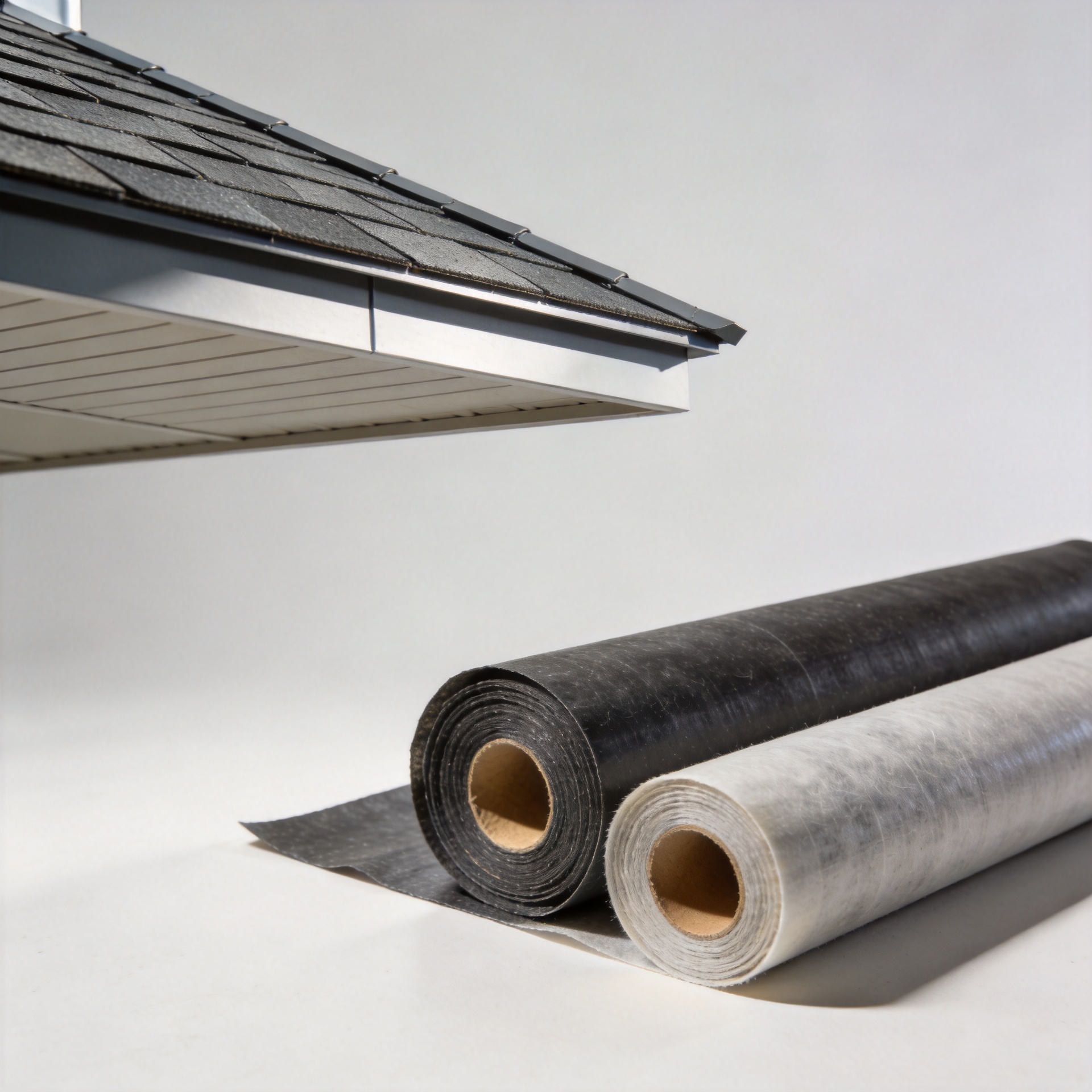
A synthetic polymer membrane building material earns its place where bitumen reaches its limits: complex geometry, chemical exposure, cool-roof reflectance, flame-free installation. Three families dominate the category — PVC waterproof membrane, TPO waterproofing membrane, and the polyethylene polypropylene membrane composite — and each solves a different problem. This guide positions the three against each other and against bitumen, using published data rather than adjectives.
How Polymer Sheets Differ from Bitumen Rolls
Bitumen sheets are binder-and-reinforcement composites; polymer sheets are plastic through and through, which changes how they join, stretch, and age. The most practical difference is seaming: bitumen needs flame or adhesive, while thermoplastic sheets fuse to themselves through hot air welding, producing seams as strong as the sheet. Second, movement: a polymer-based synthetic polymer membrane building material is specified by elongation and weldability first, tensile second — the reverse of bitumen logic. A fourth difference, for the polyethylene polypropylene membrane, is joining by cement slurry rather than heat. Third, chemistry: plastics resist aggressive ground media that attack bitumen over decades.
PVC: Elongation for Complex Geometry
A homogeneous PVC waterproof membrane carries no internal fabric: the same plasticized compound runs through the full section. A 1.2–2.0mm Type H grade declares tensile of at least 200 N/50mm, elongation of at least 250%, -25°C flexibility, water tightness pass at 60 kPa (EN 1928), and EN 13956 plus GB 12952 compliance. With no reinforcement to interrupt the weld zone, hot air welding works from any face and direction — vital in tunnels where seams form at awkward angles. It also resists dilute acids, alkalis, and sewage, extending use from roofs to containment and tunnel linings. For shotcrete or uneven concrete geometry, this family conforms instead of bridging.
TPO: Stability and Reflectance for Large Roofs
A TPO waterproofing membrane flips the priorities: internal polyester reinforcement limits dimensional change — exactly what large mechanically fastened roofs need. A 1.2–2.0mm Type P grade declares tensile of at least 250 N/50mm, dimensional stability within 0.5%, flexibility at -40°C, heat resistance to 120°C, and Solar Reflectance Index of 104 or higher (GB/T 27789, EN 13956). Seams rely on hot air welding again, forming monolithic joints stronger than the sheet body. The TPO waterproofing membrane suits warehouses, logistics halls, and renovation overlays where a light, reflective, weldable sheet must span fasteners and wind loads — and renovation teams now overlay it over sound bitumen instead of tearing off. For a cool-roof bid, a reflective synthetic polymer membrane building material simplifies the energy story. Elongation is lower than PVC by design — the scrim trades stretch for stability. For cool-roof credits, the TPO waterproofing membrane surface does the work without a separate coating.
PE-PP: A Cement-Bonded Composite for Below Grade
The polyethylene polypropylene membrane is a different animal: a PE core film between non-woven PP fiber layers, bonded into wet polymer-modified cement slurry rather than welded. A 300–400 g/m², 0.6–0.8mm grade declares tensile of at least 100 N/50mm, elongation of at least 150%, water tightness pass at 0.4 MPa for 30 minutes, -20°C flexibility (GB/T 17643), plus CE and ISO 14001. No flame, no welding machine, no primer: PP fibers interlock with the slurry, which suits the polyethylene polypropylene membrane to basement slabs, retaining walls, and civic works with rolls up to 100m cutting joint counts. Where hot air welding logistics exceed the site, the slurry bond is the answer. It is a synthetic polymer membrane building material tuned for burial, not exposed UV.
A Selection Logic by Exposure and Substrate
Choose by exposure first, geometry second. Exposed low-slope roofs with long fastener lines and cooling-cost pressure point to the TPO waterproofing membrane; tunnels, sumps, and wrinkle-prone concrete with chemical loads point to the PVC waterproof membrane; buried surfaces in contact with wet cement point to the polyethylene polypropylene membrane. Against bitumen the trade is explicit: modified bitumen carries higher tensile figures and proven torch bonding but needs flame, ages faster under UV, and offers no cool-roof reflectance. Polymer sheets need disciplined hot air welding and clean detailing but return dimensional stability, weldable seams, and chemical inertness. For chemical plants, the PVC waterproof membrane doubles as the containment liner spec. A synthetic polymer membrane building material chosen this way rarely gets value-engineered into the wrong system.
Field Note: Reroofing a Distribution Center
A distribution center reroof shows the logic: occupied racking ruled out torch work, so the spec moved to a 1.5mm TPO waterproofing membrane overlaid on the sound sheet. The contractor kept PVC waterproof membrane details — pipe boots, sump corners — prefabricated off-site, and specified a polyethylene polypropylene membrane for the new loading-dock retaining walls where slurry bonding suited wet concrete. Crews welded laps overnight with hot air welding equipment — no fire watch, no odor complaints — and the white surface cut cooling load. One polymer strategy, three materials, zero hot work — a synthetic polymer membrane building material portfolio doing what bitumen could not.
Frequently Asked Questions
What separates a PVC waterproof membrane from a TPO waterproofing membrane?
Reinforcement and duty: PVC Type H is homogeneous, with elongation of 250% or more for complex geometry and chemical contact; TPO Type P is polyester-reinforced for dimensional stability on large fastened roofs.
Where does a polyethylene polypropylene membrane outperform welded sheets?
Below grade in wet cementitious slurry: it bonds mechanically to mortar with no flame or welding equipment — ideal for basements and civil structures.
Is a synthetic polymer membrane building material harder to install than bitumen?
Different, not harder: hot air welding replaces flame skill, seam testing replaces torch inspection — the discipline shifts from bonding to seam quality.










