 EN
APP Waterproof Membrane: High-Temperature Stability Guide
2026/11/20
How an APP waterproof membrane handles heat: 130°C softening point, torch application windows, overheating signs, summer storage, and thermal aging checks.

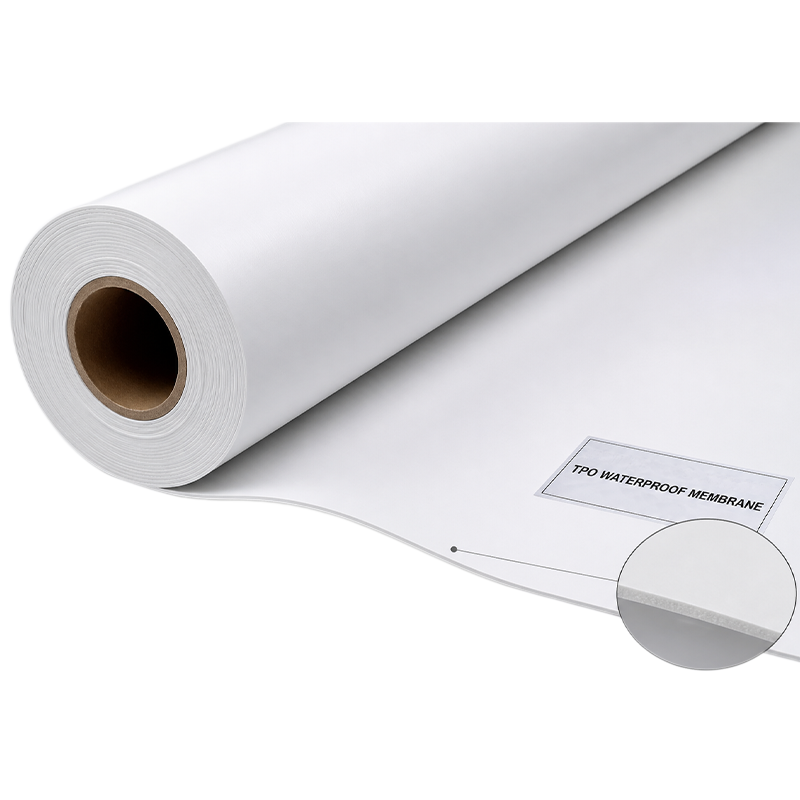
On commercial low-slope industrial facilities, installing an engineered tpo roofing roll provides a lightweight, solar-reflective envelope that resists persistent weather exposure. A tpo roofing roll represents a specialized thermoplastic polyolefin single-ply membrane formulated to deliver exceptional seam strength through automated hot-air fusion. Rather than relying on temporary adhesives that degrade under standing rainwater, a quality tpo roofing roll fuses adjoining sheets into a monolithic waterproofing shield. However, evaluating a tpo roofing roll involves analyzing structural wind uplift requirements, membrane thickness, and joint detailing rather than comparing roll costs alone. Commercial roofing contractors who understand the installation mechanics of a premium tpo roofing roll can prevent membrane failure and guarantee building weather tightness across decades of service.
The superior performance of an industrial tpo roofing roll stems from its advanced polymer chemistry and internal structural reinforcement. A typical tpo roofing roll combines ethylene propylene rubber for flexibility with polypropylene matrices for high-temperature stability. Furthermore, an encapsulated polyester scrim within each tpo roofing roll provides dimensional stability and resists tearing around mechanical fasteners during severe wind storms. The white reflective surface of a tpo roofing roll reflects intense solar radiation away from the roof substrate, lowering facility cooling expenses. In addition, an industrial tpo roofing roll contains zero plasticizers, preventing the shrinkage and embrittlement that often compromise flexible PVC sheets over time. Sourcing a certified tpo roofing roll ensures that the membrane complies with international standards such as ASTM D6878.
Achieving an impermeable barrier across a tpo roofing roll installation requires disciplined hot-air welding rather than chemical gluing. Technicians use robotic automated welders to heat overlapping runs of the tpo roofing roll, applying targeted pressure to fuse the thermoplastic sheets at the molecular level. A properly executed seam on a tpo roofing roll achieves peel bond strength that exceeds the cohesive strength of the membrane itself. Installers must calibrate welder speed, airflow, and nozzle temperature at the start of each work shift, as changing ambient winds influence the welding zone of the tpo roofing roll. After cooling, technicians must probe every centimeter of the tpo roofing roll seam with a dull cotter-pin tool to detect cold welds. Completing detail flashings at roof drains, parapets, and equipment curbs with a hand-held hot-air welder ensures uninterrupted water tightness.
Choosing the correct gauge for a tpo roofing roll takeoff depends on roof foot traffic, warranty duration, and exposure severity. A 1.2 mm tpo roofing roll suits budget-sensitive commercial projects with minimal roof equipment maintenance and moderate climatic conditions. Conversely, specifying a 1.5 mm tpo roofing roll provides added mechanical puncture resistance, making it the most common choice for logistics warehouses and retail complexes. For industrial facilities featuring intensive rooftop mechanical equipment or solar photovoltaic arrays, deploying a heavy-duty 2.0 mm tpo roofing roll ensures maximum defense against physical wear. Investing in a thicker tpo roofing roll increases initial material investment slightly but substantially extends roof life and reduces long-term maintenance costs.
Calculating material requirements for a tpo roofing roll installation demands measuring net coverage rather than ordering gross floor area. Estimators must deduct fifteen to twenty centimeters from each tpo roofing roll run to account for side laps and end laps required by automated welders. In addition, purchasing a tpo roofing roll package must include allowances for vertical parapet wall flashing, curb base wraps, and roof drain terminations. Sourcing prefabricated pipe boots and molded corner accessories alongside each tpo roofing roll speeds up production and reduces tedious manual field fabrication. Commercial contractors who map out sheet roll directions carefully can minimize cross-seams and reduce material scrap on complex industrial roof layouts.
While both systems utilize hot-air welded seams, a tpo roofing roll differs substantially from a PVC sheet in chemical resistance and environmental behavior. A tpo roofing roll provides superior resistance to thermal degradation, ozone cracking, and fungal growth without emitting toxic plasticizer gases. In contrast, PVC membranes are preferred on restaurant roofs where rooftop exhaust fans discharge animal fats and hydrocarbon grease, which can swell a standard tpo roofing roll. For typical logistics warehouses, distribution centers, and office buildings, selecting a tpo roofing roll provides a more cost-effective, environmentally friendly, and solar-reflective solution. Comparing environmental exposure conditions before ordering materials guarantees that the installed membrane matches the facility operating environment.
Commercial procurement managers and roofing contractors should source each tpo roofing roll directly from established manufacturing plants. Shandong Dingtai Waterproof Technology Co., Ltd. manufactures certified tpo roofing roll products under the JinDingTai brand, enforcing strict quality standards for polymer mass, tensile strength, and low-temperature flexibility. Sourcing a factory-direct tpo roofing roll guarantees consistent sheet thickness, uniform reinforcement placement, and reliable weldability across extreme temperature ranges. In addition, purchasing standardized wholesale quantities of tpo roofing roll systems streamlines inventory management for large-scale industrial roofing contracts. Investing in a proven tpo roofing roll protects property owners from expensive roof leaks and ensures enduring building envelope integrity.
Yes, a tpo roofing roll can be installed over existing asphalt roofs, provided a compatible separation fleece or high-density cover board is placed between them. Direct contact between a tpo roofing roll and rough bituminous surfaces can cause mechanical abrasion and chemical contamination, compromising long-term seam performance.
Seam leaks in a tpo roofing roll installation typically result from improper welder speed or dirty membrane overlaps, which cause cold welds that pull apart under stress. Ensuring that overlapping edges of the tpo roofing roll are thoroughly cleaned with approved solvent and tested with a seam probe prevents moisture ingress.
A bright white tpo roofing roll features a high solar reflectance index that reflects up to eighty percent of solar radiant energy back into the atmosphere. By keeping the roof surface significantly cooler than dark membranes, a tpo roofing roll reduces heat transfer into the building, lowering summer air-conditioning electricity costs.

2026/11/20
How an APP waterproof membrane handles heat: 130°C softening point, torch application windows, overheating signs, summer storage, and thermal aging checks.

2026/11/20
The science of a breathable waterproof membrane: water vapor diffusion, Sd values, three grammage grades, water column resistance, and wrong-use cases.

2026/11/20
Single-ply or two-ply, every flat roof is a stack. See how a self adhesive waterproof membrane for roof systems handles base, cap, insulation and drains.

2026/11/20
How the polyester scrim sets tensile strength and dimensional stability of reinforced TPO membrane rolls, with welding, roll sizes and selection tips.

2026/11/20
How an aluminum foil coated bitumen waterproof membrane reflects solar radiation, lowers surface temperature, and what maintenance keeps savings alive.

2026/11/20
SBS modified bitumen waterproof membrane property groups: tensile strength, low-temperature flexibility, heat resistance, surface finishes, applications.
Links to the corresponding full news page.

The eight questions overseas buyers ask most — factory ownership, capacity, batch consistency and lead times, answered straight.

SBS membranes, polymer sheets, coatings and geomembranes — six product lines are operating simultaneously.

Pre-sales specification, on-site technical support and post-delivery maintenance across 100+ export markets.

Waterproofing performance is decided in the specification and the detailing, not just the material. Our technical team helps you select the right system, resolve site questions as they arise, and stay reachable long after the container lands.
