 EN
APP Waterproof Membrane: High-Temperature Stability Guide
2026/11/20
How an APP waterproof membrane handles heat: 130°C softening point, torch application windows, overheating signs, summer storage, and thermal aging checks.

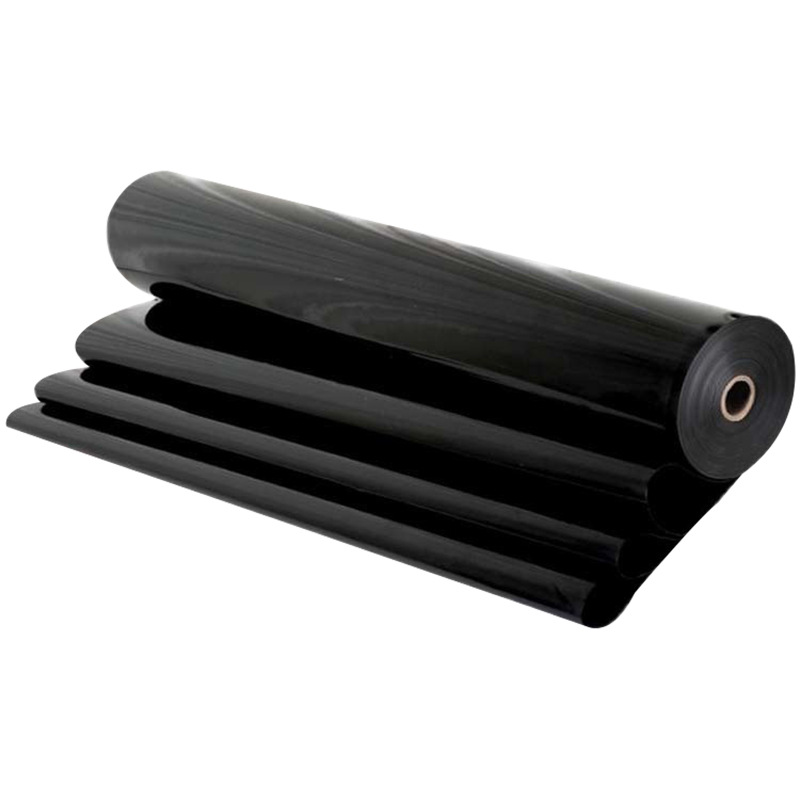
A commercial roof is judged at its edges and seams, not in a clean field. Specifying a tpo waterproof membrane for commercial roof service means deciding three things: how the sheet is attached, how the heat-welded seams are closed, and how the details handle movement. Miss one and the first storm finds it.
Two constructions share the TPO family. Type H is homogeneous: tensile strength of at least 100 N/50mm, elongation above 300 percent, dimensional change held to 2.0 percent or less, and thickness tolerance within ±0.05 mm. That elongation absorbs deck movement without splitting. Type P is the engineering grade: at least 250 N/50mm tensile, elongation of 15 percent or more, and shrinkage capped at 0.5 percent. Its outdoor figures: solar reflectance index of at least 104, flexibility at minus 40 degrees Celsius, heat resistance at 120 degrees, and impermeability at 60 kPa. Rolls come in 1.0, 1.5 and 2.0 metre widths at 15 or 20 metres long, so a TPO roofing membrane can be laid out to match bay spacing and keep the seam count down.
A mechanically fastened system anchors the sheet edge with plates and screws, the next roll overlaps and covers that line, and the method is quick on almost any deck. The cost is concentration: rows throw wind uplift onto narrow lines, so density steps up at perimeters and corners. Full adhesion bonds the whole underside, spreading load and following irregular decks, but needs a dry, primed, compatible surface and more time. A mechanically fastened field usually wins on long straight bays; adhesion wins where geometry is odd. Whichever route is chosen for a tpo waterproof membrane for commercial roof spans, it must match the deck and its wind uplift zone.
A TPO roofing membrane is welded in place, and the seam is where early leaks live. Hot air softens the lapped surfaces and a roller makes a bond as strong as the sheet itself. Every heat-welded seam is probed once cool, and any cold stitch cut out and re-welded at once. Lap discipline matters as much as weld temperature: clean, dry surfaces, speed matched to ambient conditions, no welding through driving rain. Heat-welded seams also age better than glued laps, because there is no adhesive layer to creep as the sheet cycles through daily heating and cooling. For a tpo waterproof membrane for commercial roof projects, seam discipline separates a good specification from a dry roof.
Wind does not load a roof evenly: corners and perimeters see suction far above the field, and once a corner peels the failure walks inward. Any wind uplift plan starts below the sheet, with fastener pull-out, insulation type and thickness, and pressure zones mapped for building height. Standard rows serve the field; density increases at perimeters and again at corners, and the calculation belongs to each building, not the last project. A mechanically fastened layout takes these loads directly. A TPO roofing membrane in Type P construction holds such lines well: at least 250 N/50mm of tensile strength and shrinkage of 0.5 percent or less keep the sheet from pulling tight across heat-welded seams through hot summers, while reflectance of 104 or higher moderates the wind uplift fatigue at those same edges.
Most leaks begin where the field meets something else. At parapets, a tpo waterproof membrane for commercial roof service should turn up and over the wall or into a sealed reglet, never die at the cant. Inside and outside corners are pre-formed sections closed with heat-welded seams, not stretched sheet, which returns to shape and thins. Penetrations get factory boots or welded collars, and stacks, ducts and kerbs each get a drawn detail showing how the TPO roofing membrane turns in. Gutters take the sheet turned down into them, mechanically fastened at the edge against wind uplift, with fall checked before welding.
A large roof is several jobs. For a tpo waterproof membrane for commercial roof work, divide the surface into zones and finish each completely before starting the next, so no half-welded edge sits open over a weekend. Wide rolls help: a 2.0 metre wide TPO roofing membrane cuts field laps, and every lap removed is one fewer line of heat-welded seams to probe and log. Keep a weld log by zone; a leak in year two is traced through paperwork as often as through the sheet. Sequencing also limits wind uplift exposure, since a closed zone gives a storm far less membrane to attack.
Most warehouses run Type P across the field, keeping Type H where elongation around irregular details helps. A tpo waterproof membrane for commercial roof use is chosen by deck type and whether the sheet is mechanically fastened or adhered, grade second.
Probing is the basic check: heat-welded seams are run over with a blunt tool once cool, and any open point is cut out and re-welded that day. On critical roofs a sample seam may be destructively tested to confirm the weld matches the sheet.
Broader rolls mean fewer laps: a TPO roofing membrane supplied in 2.0 metre widths cuts the field seam count on long bays, and 15 or 20 metre lengths let crews plan laps around insulation joints. Fewer laps is exactly what a tpo waterproof membrane for commercial roof field needs, because every lap closed means fewer heat-welded seams to probe and fewer wind uplift lines to secure.

2026/11/20
How an APP waterproof membrane handles heat: 130°C softening point, torch application windows, overheating signs, summer storage, and thermal aging checks.

2026/11/20
The science of a breathable waterproof membrane: water vapor diffusion, Sd values, three grammage grades, water column resistance, and wrong-use cases.

2026/11/20
Single-ply or two-ply, every flat roof is a stack. See how a self adhesive waterproof membrane for roof systems handles base, cap, insulation and drains.

2026/11/20
How the polyester scrim sets tensile strength and dimensional stability of reinforced TPO membrane rolls, with welding, roll sizes and selection tips.

2026/11/20
How an aluminum foil coated bitumen waterproof membrane reflects solar radiation, lowers surface temperature, and what maintenance keeps savings alive.

2026/11/20
SBS modified bitumen waterproof membrane property groups: tensile strength, low-temperature flexibility, heat resistance, surface finishes, applications.
Links to the corresponding full news page.

The eight questions overseas buyers ask most — factory ownership, capacity, batch consistency and lead times, answered straight.

SBS membranes, polymer sheets, coatings and geomembranes — six product lines are operating simultaneously.

Pre-sales specification, on-site technical support and post-delivery maintenance across 100+ export markets.

Waterproofing performance is decided in the specification and the detailing, not just the material. Our technical team helps you select the right system, resolve site questions as they arise, and stay reachable long after the container lands.
