 EN
APP Waterproof Membrane: High-Temperature Stability Guide
2026/11/20
How an APP waterproof membrane handles heat: 130°C softening point, torch application windows, overheating signs, summer storage, and thermal aging checks.

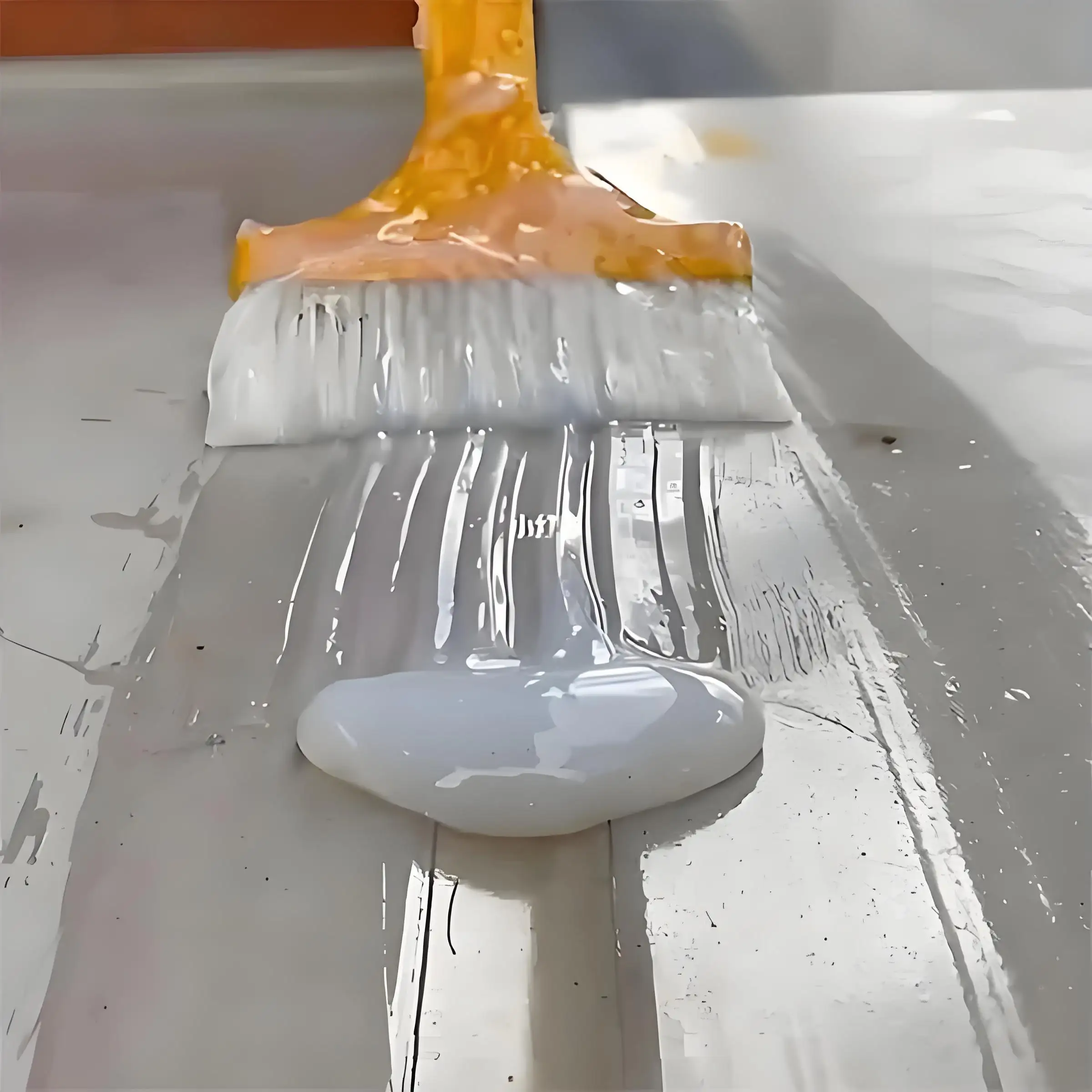
Some surfaces must stay visible after they are protected. A tiled balcony or a stone facade loses much of its value the moment a grey membrane covers it. This is the conflict transparent systems resolve: they block water while leaving the substrate unchanged. This article explains where such products fit, how the two chemical versions differ, what trade-offs to accept, and which checks matter before ordering a waterproof coating for tiles that must deliver invisible waterproof protection.
Such products are liquid-applied: they dry into a clear film or penetrate the substrate without changing its appearance. Two routes are common. Film-forming versions, typically water-based, cure into a thin, clear layer that repels liquid water; as a breathable waterproof coating, the cured film also lets trapped moisture escape. Penetrating versions, typically solvent-based, soak into the capillaries of concrete, brick, or stone and line the pore walls with a hydrophobic agent. Both pursue one outcome: water cannot enter, yet the surface keeps its look. The practical differences — preparation, drying time, application rate, treatment depth — drive the selection logic below.
Application follows one rule: use it where appearance matters and exposure is moderate. Typical zones include tile faces and joints on balconies and podium decks, stone cladding, exposed brick walls, and facades where a coloured film would spoil the design. A clear waterproof sealer also suits heritage work, where treatments must deliver invisible waterproof protection to conservation standards. In such settings a transparent waterproof coating preserves the finish; as a breathable waterproof coating, it also lets the wall dry outward. The same logic applies to any waterproof coating for tiles on walkable podiums, where owners keep the paving they paid for. It is not a substitute for structural waterproofing under hydrostatic pressure or across wide active cracks.
Published product-page data shows how the two versions divide the work. The water-based type is single-component, with solid content of at least 20 percent, a fully transparent cured film, a contact angle of at least 120 degrees, water tightness passing at 0.2 MPa for 30 minutes, and an application rate of 0.1 to 0.3 kg per square metre. The solvent-based version differs: active content of at least 15 percent, penetration of 5 to 15 mm into porous substrates, contact angle of at least 130 degrees, water tightness passing at 0.3 MPa for 30 minutes, and 0.2 to 0.5 kg per square metre. In short, the water-based film — effectively a clear waterproof sealer for tile and dense surfaces — is the breathable waterproof coating with low VOC; the solvent-based penetrant suits porous or weathered masonry where depth matters more. Choose a waterproof coating for tiles on adhesion and appearance; choose a penetrant on depth.
Choosing a clear product means accepting limits: with a thin film, a transparent waterproof coating offers less crack-bridging reserve than a reinforced opaque membrane. Elastomeric coloured systems span hairline movement; clear systems generally cannot. Abrasion and UV act directly on a clear film, so walkable surfaces may need a topping. In return, a clear waterproof sealer avoids peeling edges and colour mismatch, needs no repainting, and, as a breathable waterproof coating, reduces blistering risk on older walls while delivering invisible waterproof protection exactly as designed. Sound surfaces with light exposure gain the most; cracked or heavily loaded areas still belong to opaque, reinforced assemblies.
Consider a distributor supplying a city-centre hotel renovation: glazed tiles over a suspended podium slab, and an owner who refuses visible membrane after earlier work elsewhere left black patches beside the entrance. The specification team selects a waterproof coating for tiles — in practice a clear waterproof sealer — for the tile field and joints, applies it at the published rate in two passes after re-grouting; the original paving stays untouched. The result is invisible waterproof protection confirmed by ponding tests before handover: no seepage below, no change to the facade. The hidden technical roof received a pigmented elastomeric product instead: transparent and opaque systems share one building by function.
Before ordering, confirm six points. First, substrate porosity, which decides between film-forming and penetrating products. Second, the required appearance: must the surface stay fully unchanged? Third, exposure class: rain and splash water suit a transparent waterproof coating, while standing water or negative-side pressure does not. Fourth, breathability needs, especially on older walls where trapped moisture causes spalling; there a breathable waterproof coating is the right category. Fifth, application rate and coverage, so the budget reflects real multi-coat work for any waterproof coating for tiles. Sixth, documentation: both published versions carry CE and ISO 14001 certification, with TDS, MSDS, and COA that support the invisible waterproof protection claim in tender files. A clear waterproof sealer ordered against this checklist performs predictably; one ordered on price alone often does not.
Yes, provided the tiles and joints are clean, sound, and free of wax. Applied over the tile face, the film also seals the joints, the usual entry path for water on tiled balconies. Any waterproof coating for tiles delivers invisible waterproof protection only on sound, repaired substrates.
A film-forming clear sealer leaves a thin continuous layer on dense substrates such as glazed tiles. A penetrating treatment soaks 5 to 15 mm into porous masonry without a surface film.
It can be, but wet rooms normally justify an opaque system with higher build, because tile or screed covers it anyway; indoors breathability matters less than film thickness. Transparent products earn their cost where the surface stays visible, delivering invisible waterproof protection in finished spaces.

2026/11/20
How an APP waterproof membrane handles heat: 130°C softening point, torch application windows, overheating signs, summer storage, and thermal aging checks.

2026/11/20
The science of a breathable waterproof membrane: water vapor diffusion, Sd values, three grammage grades, water column resistance, and wrong-use cases.

2026/11/20
Single-ply or two-ply, every flat roof is a stack. See how a self adhesive waterproof membrane for roof systems handles base, cap, insulation and drains.

2026/11/20
How the polyester scrim sets tensile strength and dimensional stability of reinforced TPO membrane rolls, with welding, roll sizes and selection tips.

2026/11/20
How an aluminum foil coated bitumen waterproof membrane reflects solar radiation, lowers surface temperature, and what maintenance keeps savings alive.

2026/11/20
SBS modified bitumen waterproof membrane property groups: tensile strength, low-temperature flexibility, heat resistance, surface finishes, applications.
Links to the corresponding full news page.

The eight questions overseas buyers ask most — factory ownership, capacity, batch consistency and lead times, answered straight.

SBS membranes, polymer sheets, coatings and geomembranes — six product lines are operating simultaneously.

Pre-sales specification, on-site technical support and post-delivery maintenance across 100+ export markets.

Waterproofing performance is decided in the specification and the detailing, not just the material. Our technical team helps you select the right system, resolve site questions as they arise, and stay reachable long after the container lands.
