 EN
APP Waterproof Membrane: High-Temperature Stability Guide
2026/11/20
How an APP waterproof membrane handles heat: 130°C softening point, torch application windows, overheating signs, summer storage, and thermal aging checks.

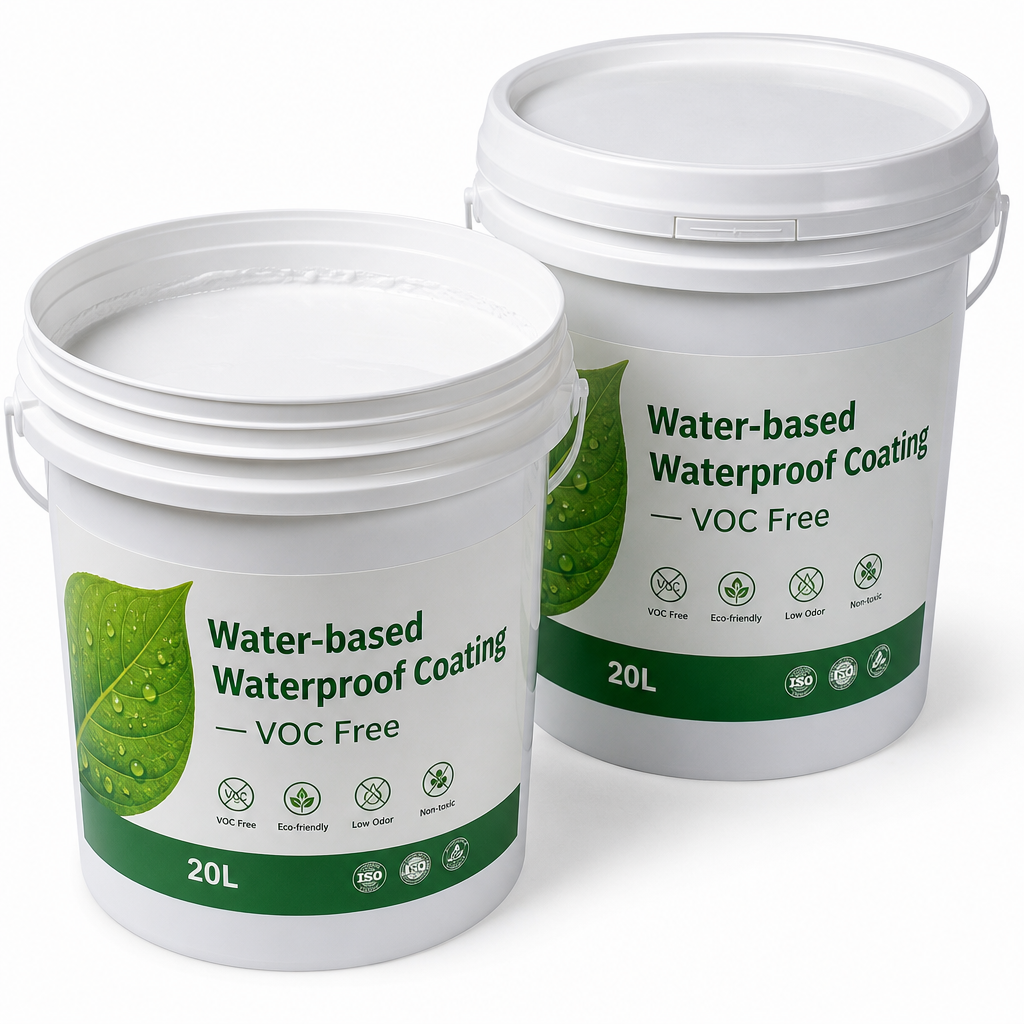
Selecting between water based and solvent based paints is a fundamental engineering decision for commercial waterproofing contractors, facility managers, and building envelope specifiers. Rather than treating the choice as a simplistic debate between eco-friendly formulas and traditional heavy-duty coatings, procurement teams must analyze how a water based waterproof paint or a solvent based waterproof paint interacts with the structural substrate, ambient climate window, ventilation constraints, and long-term moisture exposure. Both coating categories can form durable, impermeable barriers when specified and installed as a complete, multi-coat commercial roof coating assembly.
A disciplined specification workflow begins by auditing the receiving substrate condition, reviewing the polymer chemistry on the technical data sheet, and aligning the curing mechanism with actual site weather forecasts. Following this structured evaluation of water based and solvent based paints prevents premature blistering, intercoat delamination, and costly structural leaks far more effectively than relying on generic marketing labels.
When evaluating water based and solvent based paints, the terms water and solvent define the primary liquid vehicle that suspends the resin binders, pigments, and functional additives inside the container. Once brushed, rolled, or sprayed onto a concrete deck, masonry wall, or metal roof, this liquid carrier must evaporate so the solid polymer particles can coalesce or chemically cross-link into a continuous waterproof membrane. While the carrier governs application viscosity, odor, and evaporation speed, long-term hydrostatic resistance is equally driven by the underlying resin family, whether acrylic, polyurethane, epoxy, or modified bitumen.
A water based waterproof paint utilizes deionized water as its primary diluent, occasionally assisted by trace coalescing glycols. As water evaporates into the surrounding air, microscopic polymer droplets pack tightly together and fuse into a breathable yet water-tight film. Because they release minimal volatile organic compounds, waterborne systems are widely favored where low odor, non-flammability, and rapid tool cleanup with plain water are operational priorities. Conversely, a solvent based waterproof paint dissolves dense molecular resins inside organic hydrocarbons such as xylene, toluene, or mineral spirits. As these volatile solvents flash off, the dissolved polymer chains entangle and cross-link into a dense barrier, requiring strict jobsite ventilation, explosion-proof lighting, and personal respiratory protection.
Comparing water based and solvent based paints requires weighing distinct operational trade-offs across five critical field dimensions. Regarding environmental and indoor air safety, waterborne formulations emit negligible fumes and pose zero flash-fire hazards during storage, whereas solvent-borne coatings demand strict vapor extraction, flame arrestors, and hazardous waste disposal protocols. Regarding climatic sensitivity, a water based waterproof paint relies strictly on water evaporation, meaning high ambient relative humidity above eighty percent or cold temperatures near freezing will drastically stall film coalescence and risk rain washout. In contrast, a solvent based waterproof paint evaporates via vapor pressure independent of atmospheric humidity, allowing reliable curing in damp coastal air or chilly autumn temperatures down to zero degrees Celsius.
Surface wetting and substrate penetration also separate these two technologies. Solvent-borne carriers exhibit naturally lower surface tension, enabling the liquid primer to cut through microscopic oil residues, wet out chalky masonry pores, and chemically bite into aged existing coatings. Waterborne systems possess higher surface tension, demanding immaculate degreasing and mechanical profiling to prevent cratering or flash rusting on bare carbon steel. Finally, regarding vapor permeability, a cured water based waterproof paint typically remains micro-porous, allowing trapped sub-slab moisture vapor to breathe outward without blistering the film, whereas solvent-based polyurethanes and epoxies form non-breathing vapor barriers capable of withstanding continuous ponding water and chemical immersion.
A water based waterproof paint represents the optimal engineering choice for occupied commercial buildings, interior subterranean basements, hospital corridors, food-processing plants, and enclosed parking garages where toxic solvent vapors are strictly prohibited. High-solids waterborne elastomeric acrylics and polyurethane dispersions can be applied rapidly as a commercial roof coating via airless spray or medium-nap rollers without disrupting adjacent building tenants. Furthermore, municipal environmental regulations in many jurisdictions mandate low-VOC coatings for routine roof maintenance and exterior masonry sealing.
To achieve maximum service life when applying water based and solvent based paints, site supervisors must respect the product’s minimum film-forming temperature, commonly abbreviated as MFFT. If concrete or metal deck temperatures drop below ten degrees Celsius overnight, the polymer particles in a water based waterproof paint cannot fuse properly, leaving a powdery, cracked film that absorbs water upon the first rainfall. Additionally, when applying waterborne coatings onto bare ferrous metal flashings or structural steel, contractors must utilize a specialized flash-rust inhibitive primer so the water carrier does not oxidize the steel during initial drying.
A solvent based waterproof paint remains indispensable for heavy-duty industrial infrastructure, cold-season roof refurbishments, petrochemical containment dikes, and non-porous substrates exposed to standing water or aggressive chemical splash. Because organic solvents dissolve high-molecular-weight polymers into true solutions rather than emulsions, a cured solvent based waterproof paint achieves superior cross-link density, tensile strength, and abrasion resistance compared to standard single-component waterborne alternatives.
During winter construction schedules or high-humidity marine deployments, specifying a solvent based waterproof paint prevents costly weather delays. Moisture-cured solvent polyurethanes actually utilize ambient atmospheric moisture to accelerate chemical cross-linking, allowing a commercial roof coating or plaza deck system to achieve rain resistance within hours even in cool, overcast climates. When renovating aged roofs already coated with legacy bitumens or urethanes, solvent systems provide superior intercoat chemical fusion, provided the contractor executes a preliminary solvent-rag rub test and adhesion patch to confirm compatibility without lifting the old layer.
While comparing water based and solvent based paints establishes the correct application platform, neither carrier can compensate for neglected structural detailing or inadequate film thickness. In building envelope investigations, over eighty percent of premature leaks originate at unreinforced concrete shrinkage cracks, unprimed parapet transitions, clogged roof drains, and thin coating coverage over sharp aggregate ridges rather than carrier chemistry failure.
Whether procuring a water based waterproof paint or a solvent based waterproof paint from an industrial manufacturer, B2B buyers must specify a unified, multi-layer system. This includes a penetrating substrate primer tailored to concrete porosity or metal oxidation, an elastomeric joint sealant coupled with polyester reinforcing fabric over all moving joints and pipe penetrations, a high-build waterproof body coat, and an ultraviolet-stable commercial roof coating topcoat. Contractors must continuously monitor wet-film thickness using calibrated notched gauges during application, calculating the required wet build from the product’s volume solids percentage so the cured dry film meets the exact micron specification.
Before finalizing purchase orders for water based and solvent based paints, engineering teams should execute a systematic six-step verification protocol. First, audit the substrate composition and moisture content, using digital tramex meters or calcium chloride kits to check whether trapped slab moisture requires a breathable waterborne system or a moisture-mitigating epoxy primer. Second, categorize the exact water exposure, distinguishing between vertical wind-driven rain, intermittent roof puddling, constant subterranean hydrostatic pressure, and chemical washdowns.
Third, align the project schedule with local meteorological forecasts, verifying that ambient air temperatures, substrate temperatures, relative humidity, and the three-degree dew-point safety margin satisfy the technical data sheet throughout application and curing. Fourth, audit site safety and regulatory constraints, confirming whether VOC emission caps, indoor air quality standards, or hot-work fire restrictions rule out flammable solvent carriers. Fifth, require suppliers to provide batch-matched primers, intermediate coats, reinforcing meshes, and certified laboratory test reports verifying elongation and tensile strength for all water based and solvent based paints under consideration. Sixth, enforce strict field inspection milestones, checking dry-film thickness, pinhole holiday continuity, and complete chemical cure before opening the waterproofed structure to traffic or water immersion.

2026/11/20
How an APP waterproof membrane handles heat: 130°C softening point, torch application windows, overheating signs, summer storage, and thermal aging checks.

2026/11/20
The science of a breathable waterproof membrane: water vapor diffusion, Sd values, three grammage grades, water column resistance, and wrong-use cases.

2026/11/20
Single-ply or two-ply, every flat roof is a stack. See how a self adhesive waterproof membrane for roof systems handles base, cap, insulation and drains.

2026/11/20
How the polyester scrim sets tensile strength and dimensional stability of reinforced TPO membrane rolls, with welding, roll sizes and selection tips.

2026/11/20
How an aluminum foil coated bitumen waterproof membrane reflects solar radiation, lowers surface temperature, and what maintenance keeps savings alive.

2026/11/20
SBS modified bitumen waterproof membrane property groups: tensile strength, low-temperature flexibility, heat resistance, surface finishes, applications.
Links to the corresponding full news page.

The eight questions overseas buyers ask most — factory ownership, capacity, batch consistency and lead times, answered straight.

SBS membranes, polymer sheets, coatings and geomembranes — six product lines are operating simultaneously.

Pre-sales specification, on-site technical support and post-delivery maintenance across 100+ export markets.

Waterproofing performance is decided in the specification and the detailing, not just the material. Our technical team helps you select the right system, resolve site questions as they arise, and stay reachable long after the container lands.
