 EN
APP Waterproof Membrane: High-Temperature Stability Guide
2026/11/20
How an APP waterproof membrane handles heat: 130°C softening point, torch application windows, overheating signs, summer storage, and thermal aging checks.

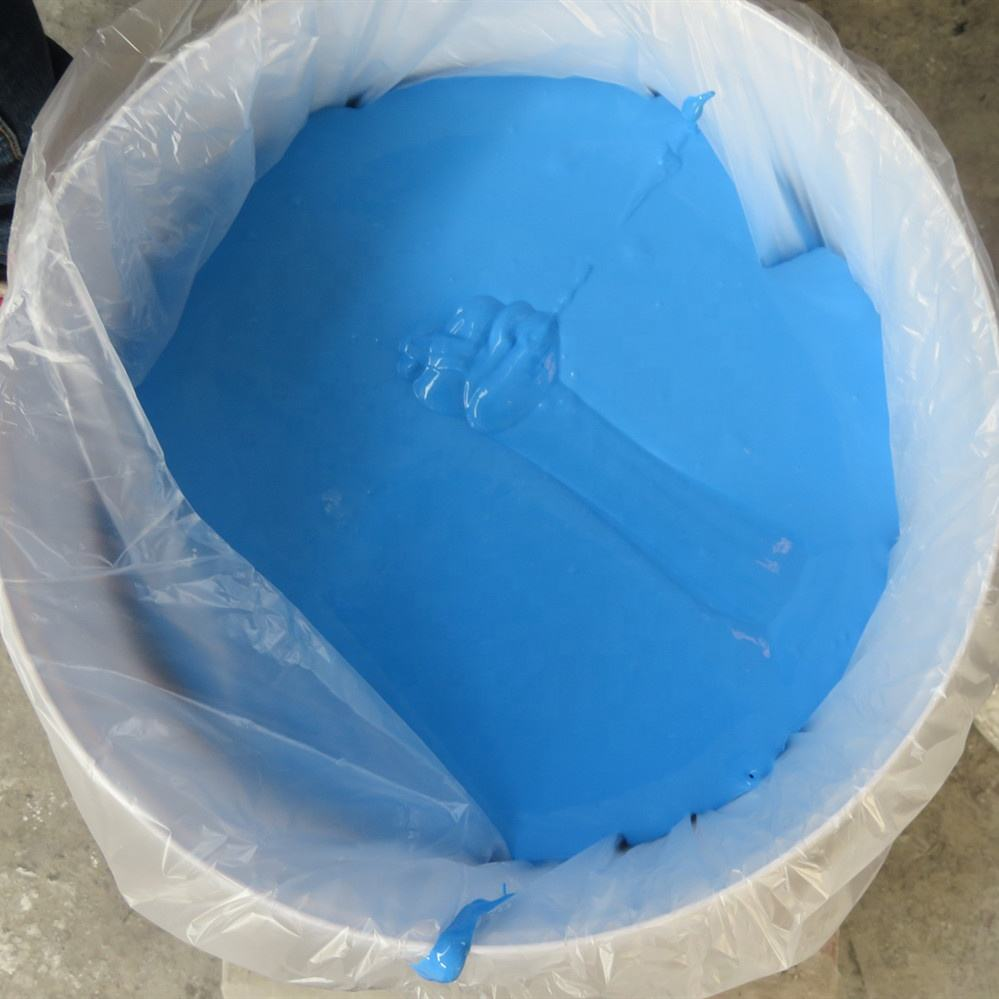
A film delivered as a dispersion of polymer droplets behaves nothing like one dissolved in solvent: it smells different, dries differently, cleans up differently and fails differently. That dispersion is the story, and the pail tells you more than the brochure.
In a water based coating the polymer is dispersed rather than dissolved, so it stays thixotropic in the pail and firms up only as the water leaves. Solid content for the standard grade is at least 55%, with elongation at least 200%, tensile strength at least 1.0 MPa and water tightness passing 0.3 MPa for 30 minutes.
A water based waterproofing membrane carrying 65% solids, as the acrylic grade does, builds the same film in fewer passes than a 55% product. A solvent based coating carries resin in a different medium and cannot be judged on solids at all, so cross-category tables mislead.
The practical advantage in an occupied building is not a certificate, it is the absence of a smell that empties a floor for two days. A low voc coating lets a wet room, a kitchen or a basement store be recoated while the rest of the building keeps working, and that is the business case.
On one school kitchen refurbishment a water based coating went down over a weekend with 20kg pails at 1.5 to 2.0 kg/m² in two passes, and the kitchen reopened on Monday with no odour complaint and tile adhesive straight onto the film. The system also removes solvent containers, soaking rags and the fire load they add to a site, and a project that already bans hot work tends to reach the solvent based coating question next.
Water-based systems are forgiving about the moisture state of a mineral substrate. A matt-damp slab that would blush under a solvent film usually takes a water based waterproofing membrane once free water has gone, because the dispersion wets a damp pore. What no dispersion tolerates is standing water or a saturated pore structure, since the polymer cannot coalesce over a liquid interface.
That distinction belongs in the method statement, not a sales conversation. A low voc coating over a correctly prepared slab bonds across the whole surface; over a puddle it blisters within a season. Test for dark patches, let them dry, and check whether the solid content assumes a primer.
The published surface dry time for the standard water based coating is 2 to 4 hours at 20°C, at 1.5 to 2.0 kg/m² in two coats. Those are laboratory conditions. Relative humidity, airflow and film thickness all move the figure, and a cool humid morning can double it. A solvent based coating flashes off on a different curve.
Do not recoat until the previous pass has lost its water, or trapped moisture hazes the film. Protect the work from rain until cure is complete, because a water based waterproofing membrane that still looks white is still vulnerable, whatever its solid content. A low voc coating rewets with a damp cloth within the window, not after it, so schedule the second pass for the morning rather than the late afternoon.
Brushes, rollers and mixing tools clean in water before the film sets, which keeps solvent washings out of the waste stream and keeps a solvent store off the site. A water based coating in 20kg pails is easier to move through an occupied building than drums plus thinners, the residual cost of a solvent based coating.
Rinse tools immediately, because a dried acrylic film ruins a roller, and never discharge wash water to a surface drain. The logistics gain of a water based waterproofing membrane is real, but it depends on the crew treating wash water as controlled waste. A low voc coating leaves no solvent rag to dispose of, one less waste route to document. Check the solid content before assuming two pails will cover the wall.
Two advantages remain. The first is penetration: a high-penetration solvent based coating carries resin into a porous substrate and seals pores that a dispersion sits on top of. The second is cold weather, where a solvent-borne film still coalesces at temperatures that stall water evaporation.
A low voc coating also struggles on a dusty, friable or cold substrate, because there is no water tolerance left to trade on. The honest specification uses both: solvent for the penetrating prime, a water based waterproofing membrane for the build coats where odour and cleanup dominate. Choosing one carrier for a whole project is habit, not engineering, even when Shandong Dingtai Waterproof supplies both, and the solid content column rarely settles it.
At equal elongation and tensile values the cured film performs the same in service. The standard grade reaches 200% elongation and 1.0 MPa, so a solvent based coating is chosen for penetration or cold weather, not for strength.
Over a matt-damp mineral surface, usually yes, once free water has gone, and a low voc coating is no different there. Over a saturated or weeping wall no coating holds, and a water based coating should not be specified until the water source is dealt with.
Two passes at 1.5 to 2.0 kg/m² is the published rate for a water based waterproofing membrane of standard grade. Solid content tells you how much film that buys for a low voc coating, and a thick single coat traps water and dries unevenly, so extra passes at the stated rate beat one heavy pass.

2026/11/20
How an APP waterproof membrane handles heat: 130°C softening point, torch application windows, overheating signs, summer storage, and thermal aging checks.

2026/11/20
The science of a breathable waterproof membrane: water vapor diffusion, Sd values, three grammage grades, water column resistance, and wrong-use cases.

2026/11/20
Single-ply or two-ply, every flat roof is a stack. See how a self adhesive waterproof membrane for roof systems handles base, cap, insulation and drains.

2026/11/20
How the polyester scrim sets tensile strength and dimensional stability of reinforced TPO membrane rolls, with welding, roll sizes and selection tips.

2026/11/20
How an aluminum foil coated bitumen waterproof membrane reflects solar radiation, lowers surface temperature, and what maintenance keeps savings alive.

2026/11/20
SBS modified bitumen waterproof membrane property groups: tensile strength, low-temperature flexibility, heat resistance, surface finishes, applications.
Links to the corresponding full news page.

The eight questions overseas buyers ask most — factory ownership, capacity, batch consistency and lead times, answered straight.

SBS membranes, polymer sheets, coatings and geomembranes — six product lines are operating simultaneously.

Pre-sales specification, on-site technical support and post-delivery maintenance across 100+ export markets.

Waterproofing performance is decided in the specification and the detailing, not just the material. Our technical team helps you select the right system, resolve site questions as they arise, and stay reachable long after the container lands.
