 EN
APP Waterproof Membrane: High-Temperature Stability Guide
2026/11/20
How an APP waterproof membrane handles heat: 130°C softening point, torch application windows, overheating signs, summer storage, and thermal aging checks.

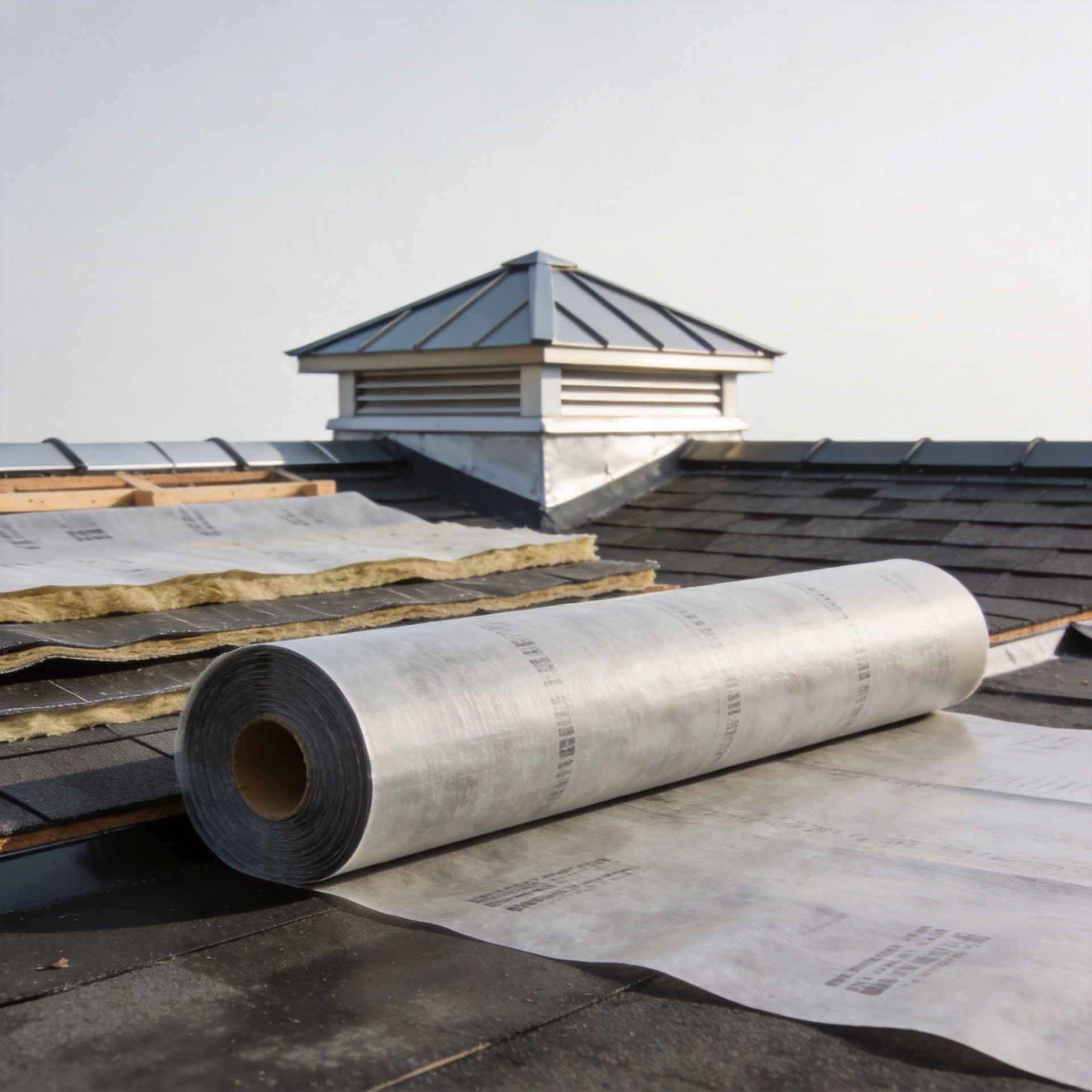
A roof is a stack of decisions, and the waterproof layer sits at the center. Specifying a water proof membrane for roof service starts with the build-up beneath it — cast concrete, profiled steel, or timber — because the deck decides adhesion, fastening, and movement. The families below appear as a specifier meets them: one sentence per product, one figure from its published datasheet, then the habits that decide whether any waterproof membrane lasts.
Every roofing membrane inherits its behavior from the deck. Cast concrete accepts primers, torch, and full adhesion, so nearly every family is open. Profiled steel and timber restrict open flame and punish trapped moisture, pushing the choice toward cold-applied systems. A water proof membrane for roof steel or timber behaves differently from the same product on concrete. Slope matters first: a draining deck asks less of its waterproof membrane than a ponding one. Confirm falls, outlets, and deck moisture before ordering, because roof waterproofing is cheaper to correct at survey stage than after burial.
On concrete, modified bitumen remains the reference family. APP modified sheets carry a softening point of at least 130°C for exposed fields under sustained solar load, installed by torch or cold adhesive. SBS modified sheets stay flexible down to -25°C with tensile strength of at least 800 N/50mm, suiting decks that see cold winters and movement. Where flame is restricted, a polyurethane liquid product cures into a seamless film with elongation of at least 450%, flowing around drains and upstands without laps. Each is a legitimate water proof membrane for roof concrete decks; climate, exposure, and fire rules decide. For any of them, roof waterproofing begins with primer and printed lap margins, and no roofing membrane outperforms its substrate preparation.
Large low-slope surfaces often justify a single-ply system instead. A polyester-reinforced TPO sheet, produced in 1.2 mm to 2.0 mm, delivers tensile strength of at least 250 N/50mm, and its white surface reaches a solar reflectance index of at least 104, trimming cooling load on sun-exposed decks. A homogeneous PVC waterproof membrane elongates at least 250% and heat-welds into a continuous sheet with a minimum 40 mm overlap, absorbing movement on cracking or settling substrates. Both weld by hot air, so seam quality control — not lap counting — is the main roof waterproofing inspection task. When one roofing membrane is weighed against another, weldability and thickness availability usually settle the choice, and a water proof membrane for roof use is judged by the seams it actually forms.
Profiled steel and timber change the calculus: open flame is usually banned, and ribs, joints, and fastener heads demand detail pieces. Self-adhesive bituminous rolls answer both. A 1.5 mm grade with a colored mineral surface bonds at peel adhesion of at least 1.5 N/mm and stays pliable from -15°C to 90°C, doubling as an exposed finish on balconies and light pitched roofs. A 1.2 mm PE-film grade presses onto primed decks with no torch and stays thin enough to sit under tiles and screeds. A water proof membrane for roof steel decks must follow the ribs and joints rather than fight them, and roof waterproofing on cold decks succeeds or fails at those pressure-rolled laps.
First, keep water moving. Verify slope and outlets before the first roll opens, because ponding exceeds what most systems are rated to accept. Second, run laps with the flow, shingle-fashion — the oldest rule in roofing membrane work — and hold the printed overlap width on every joint; a lap that sheds water survives on gravity, a reversed lap depends on sealant. Third, treat details as the system: upstands, outlets, corners, and penetrations concentrate failures, so cut pieces, tapes, and pressure rolling deserve equal attention. Fourth, close with acceptance rather than assumption: probe seams, check terminations, and flood-test zones where the deck allows. These habits protect any water proof membrane for roof assembly; roof waterproofing succeeds on routine, not on heroics.
A food-processing plant in a coastal province shows the logic in one project. Reroofing ran over live production on a building that mixed all three deck types. The concrete bays took torch-applied SBS rolls; the steel canopy took a fastened single-ply sheet with taped terminations; the timber office wing took a 1.2 mm self-adhesive roll, because hot-work permits were impossible during production hours. Laps ran with the fall, penetrations were dressed with pre-cut pieces, and each zone was flood-tested before the next opened. The supplier, Shandong Dingtai Waterproof, scheduled deliveries against that zoning plan. One roofing membrane strategy in three products closed the punch list without reopening a zone — proof that a water proof membrane choice is a roof waterproofing plan deck by deck, with every waterproof membrane in the handover file.
APP modified bitumen is the usual answer: a softening point of at least 130°C is published for exposed service, and foil-faced versions add reflection. Confirm the deck accepts torch work, or specify a bonded single-ply roofing membrane instead.
Rarely. Roof waterproofing is zoned: bitumen and liquid systems suit concrete, while cold-applied self-adhesive rolls suit steel and timber. Unify accessories, terminations, and inspection records so the assembled waterproof membrane reads as one documented system.
Lap widths against the datasheet, seam probes on welded sheets, terminations at upstands and outlets, and flood-test records. A water proof membrane for roof projects is accepted on evidence, and a roofing membrane without records is a liability.

2026/11/20
How an APP waterproof membrane handles heat: 130°C softening point, torch application windows, overheating signs, summer storage, and thermal aging checks.

2026/11/20
The science of a breathable waterproof membrane: water vapor diffusion, Sd values, three grammage grades, water column resistance, and wrong-use cases.

2026/11/20
Single-ply or two-ply, every flat roof is a stack. See how a self adhesive waterproof membrane for roof systems handles base, cap, insulation and drains.

2026/11/20
How the polyester scrim sets tensile strength and dimensional stability of reinforced TPO membrane rolls, with welding, roll sizes and selection tips.

2026/11/20
How an aluminum foil coated bitumen waterproof membrane reflects solar radiation, lowers surface temperature, and what maintenance keeps savings alive.

2026/11/20
SBS modified bitumen waterproof membrane property groups: tensile strength, low-temperature flexibility, heat resistance, surface finishes, applications.
Links to the corresponding full news page.

The eight questions overseas buyers ask most — factory ownership, capacity, batch consistency and lead times, answered straight.

SBS membranes, polymer sheets, coatings and geomembranes — six product lines are operating simultaneously.

Pre-sales specification, on-site technical support and post-delivery maintenance across 100+ export markets.

Waterproofing performance is decided in the specification and the detailing, not just the material. Our technical team helps you select the right system, resolve site questions as they arise, and stay reachable long after the container lands.
