 EN
APP Waterproof Membrane: High-Temperature Stability Guide
2026/11/20
How an APP waterproof membrane handles heat: 130°C softening point, torch application windows, overheating signs, summer storage, and thermal aging checks.

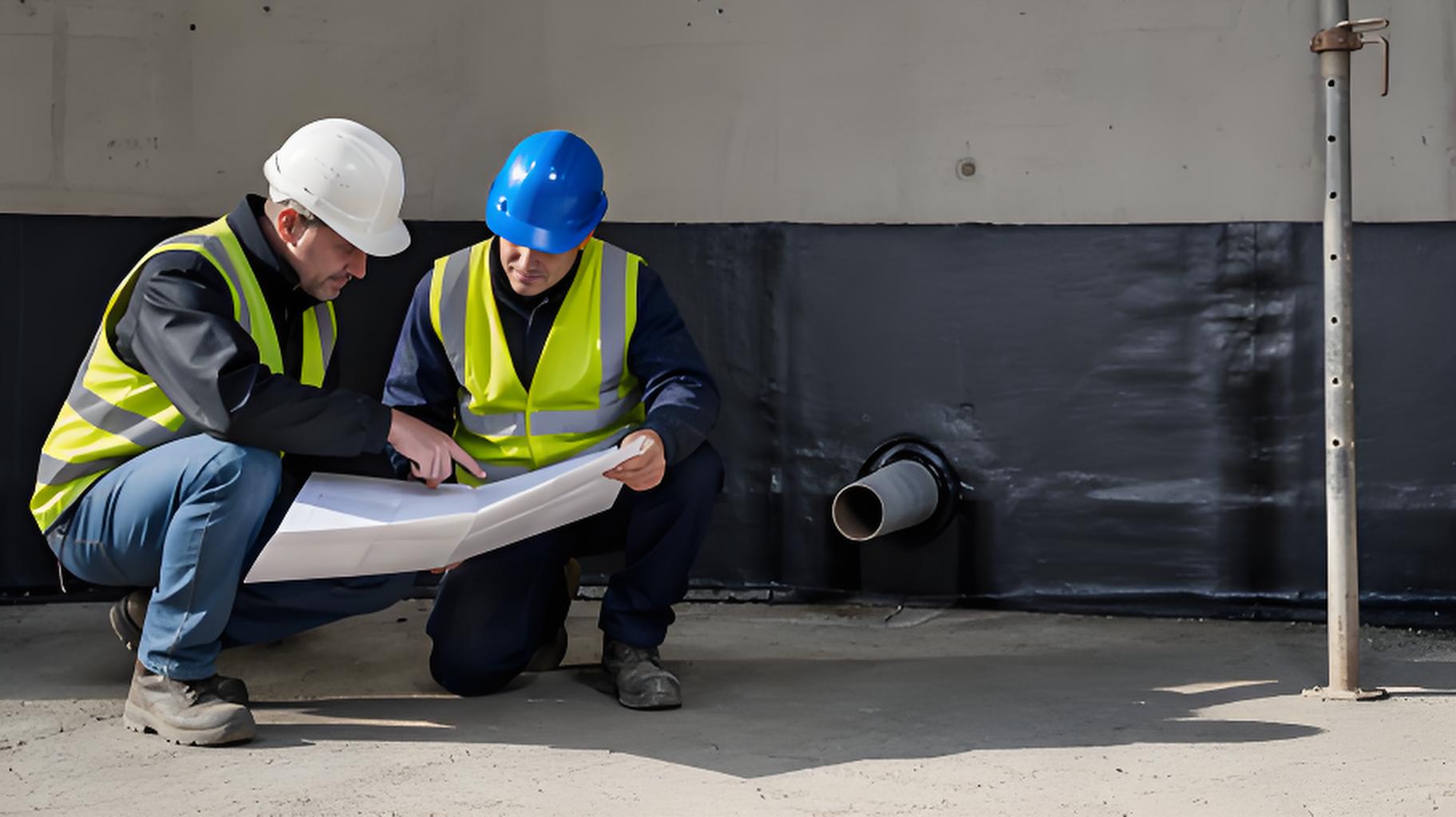
Pre-sales consultation, in-process technical support and post-sales maintenance — how a waterproofing manufacturer supports buyers across 100+ export markets.
Ask a buyer what went wrong on their last difficult import and you rarely hear "the material was defective". You hear that the wrong product was specified for the substrate, that nobody flagged an installation constraint until the crew was already on site, or that when a question came up six months after delivery, the supplier had gone quiet.
Waterproofing is unusually exposed to all three. It is a material whose performance is decided as much by specification and installation as by the product itself, and whose failures surface long after the invoice is settled. So we treat service as spanning three distinct stages — pre-sales consultation, in-process technical support, and post-sales maintenance — rather than as something that begins when a complaint arrives.
Stage one: getting the specification right before anyone pays
The cheapest problem to fix is the one caught at enquiry stage, and the most common problem we catch there is a product-substrate mismatch.
A buyer asks for a torch-on bitumen membrane because that is what they bought last time. But this project is an occupied building where open-flame application is restricted, which means a cold-applied self-adhesive membrane is the appropriate route. Or a buyer specifies sheet membrane alone for a basement dense with pipe penetrations, without the liquid coating needed to seal the corners, joints and penetrations where leaks usually begin.
Pre-sales consultation exists to surface this. The questions we ask are deliberately practical:
● What is the substrate, and what condition is it in?
● Is the area above grade, below grade, or a containment structure?
● Is open flame permitted on site?
● What is the exposure — permanently covered, or UV-exposed for decades?
● Who is installing, and what systems have they worked with before?
● Does the project require compliance documentation for tender or audit?
● The last one matters more than buyers expect. Our HDPE geomembranes meet international thickness and tensile standards with CE-compliant documentation available — but which documentation you need should shape the order, not be discovered after it lands.
Because we run six product lines across three factories — bitumen membranes, polymer membranes, waterproof coatings, geosynthetics and floor coatings — we can recommend the material a project needs rather than the one line we happen to run. A single-product factory is structurally incentivised to make every problem look like a job for its product.
Stage two: support while the order is in production and on site
Once an order is placed, quality control is where support becomes concrete rather than conversational. Raw materials are checked on intake, output is tested batch by batch, and containers are inspected before loading.
Each checkpoint corresponds to a real failure mode. Intake checks catch off-spec inputs before they enter a production run. Batch-by-batch testing means a deviation is caught within a batch rather than discovered across an entire shipment. Pre-loading container inspection catches the mundane errors that cause disproportionate trouble: wrong quantities, wrong variant, damaged packaging that will not survive the voyage.
Batch-level records also give an after-sales conversation somewhere to start. If a question arises about material behaviour on site, "which batch, from which run" is the first question that leads anywhere. A supplier without those records can only offer sympathy.
Technical support continues while the crew is installing. Installation questions do not wait for business hours in China, and they are usually specific and urgent: how to detail a particular penetration, what surface preparation a substrate needs, how to handle a transition between two materials, what ambient conditions the coating will tolerate. Ten years of export experience across Europe, the Americas, Southeast Asia and Africa means most of these questions have been asked before, in a similar climate, by a crew with a comparable background.
Pre-shipment container loading inspection
Stage three: after delivery
The stage most suppliers quietly skip. Post-sales maintenance support matters in waterproofing precisely because the timeline is long — a roof system installed this year raises questions in year three, and a below-grade system may not be interrogated until something appears on a wall.
What we can usefully do at that stage: help diagnose from photographs and a description, distinguish between a material issue and an installation or building-movement issue, advise on repair method and compatible materials, and supply matching material for a repair from the same product family. Our on-time delivery rate is 99.9%+, which applies to a small remedial consignment as much as to a full container — a repair that waits three months for material is not a repair, it is a second failure.
Being honest about diagnosis is part of this. Many leaks reported as membrane failures turn out to be detail failures at a penetration, movement cracking in the structure, or drainage that was never adequate. Telling a customer that their problem is not our product does not win the argument, but it does get the building fixed — and it is the reason buyers come back with the next project.
Why the structure holds up across 100+ markets
Our materials have shipped to more than 100 countries across Europe, the Americas, Southeast Asia, Africa and the Middle East, with total export revenues exceeding US$1.5 billion. That scale is only sustainable because service is a process rather than individual goodwill.
Three things make it work at distance. First, we own the factories — every product we quote is made on our own lines in Shouguang, so a technical question has a real answer rather than a forwarded email. Second, dedicated production, technical and export teams mean the person answering a specification question is not the same person chasing a booking. Third, third-party verification: in 2019 we were certified as a verified supplier after an audit of our facilities, capacity and processes, so a new buyer does not have to take our claims on trust.
What this means for your next order
If you are evaluating waterproofing suppliers, service quality is hard to assess from a quotation — every supplier's website promises support. Three checks are more revealing than any promise:
1.At enquiry, ask a specification question rather than a price question. A supplier who answers with a recommendation and a reason is thinking about your project. One who answers with a catalogue is not.
2.Ask what quality records exist per batch. If the answer is vague, there will be nothing to investigate later.
3.Ask what happens if a problem appears in year two. Listen for a process, not a reassurance.
We would rather be judged on those three answers than on a service pledge. Send us a project brief — substrate, exposure, installation constraints, documentation requirements — and you will see the first of them in our reply.

2026/11/20
How an APP waterproof membrane handles heat: 130°C softening point, torch application windows, overheating signs, summer storage, and thermal aging checks.

2026/11/20
The science of a breathable waterproof membrane: water vapor diffusion, Sd values, three grammage grades, water column resistance, and wrong-use cases.

2026/11/20
Single-ply or two-ply, every flat roof is a stack. See how a self adhesive waterproof membrane for roof systems handles base, cap, insulation and drains.

2026/11/20
How the polyester scrim sets tensile strength and dimensional stability of reinforced TPO membrane rolls, with welding, roll sizes and selection tips.

2026/11/20
How an aluminum foil coated bitumen waterproof membrane reflects solar radiation, lowers surface temperature, and what maintenance keeps savings alive.

2026/11/20
SBS modified bitumen waterproof membrane property groups: tensile strength, low-temperature flexibility, heat resistance, surface finishes, applications.
Links to the corresponding full news page.

The eight questions overseas buyers ask most — factory ownership, capacity, batch consistency and lead times, answered straight.

SBS membranes, polymer sheets, coatings and geomembranes — six product lines are operating simultaneously.

Pre-sales specification, on-site technical support and post-delivery maintenance across 100+ export markets.

Waterproofing performance is decided in the specification and the detailing, not just the material. Our technical team helps you select the right system, resolve site questions as they arise, and stay reachable long after the container lands.
