 EN
Enquiry
Share the project, not just a product code — we recommend what actually fits.

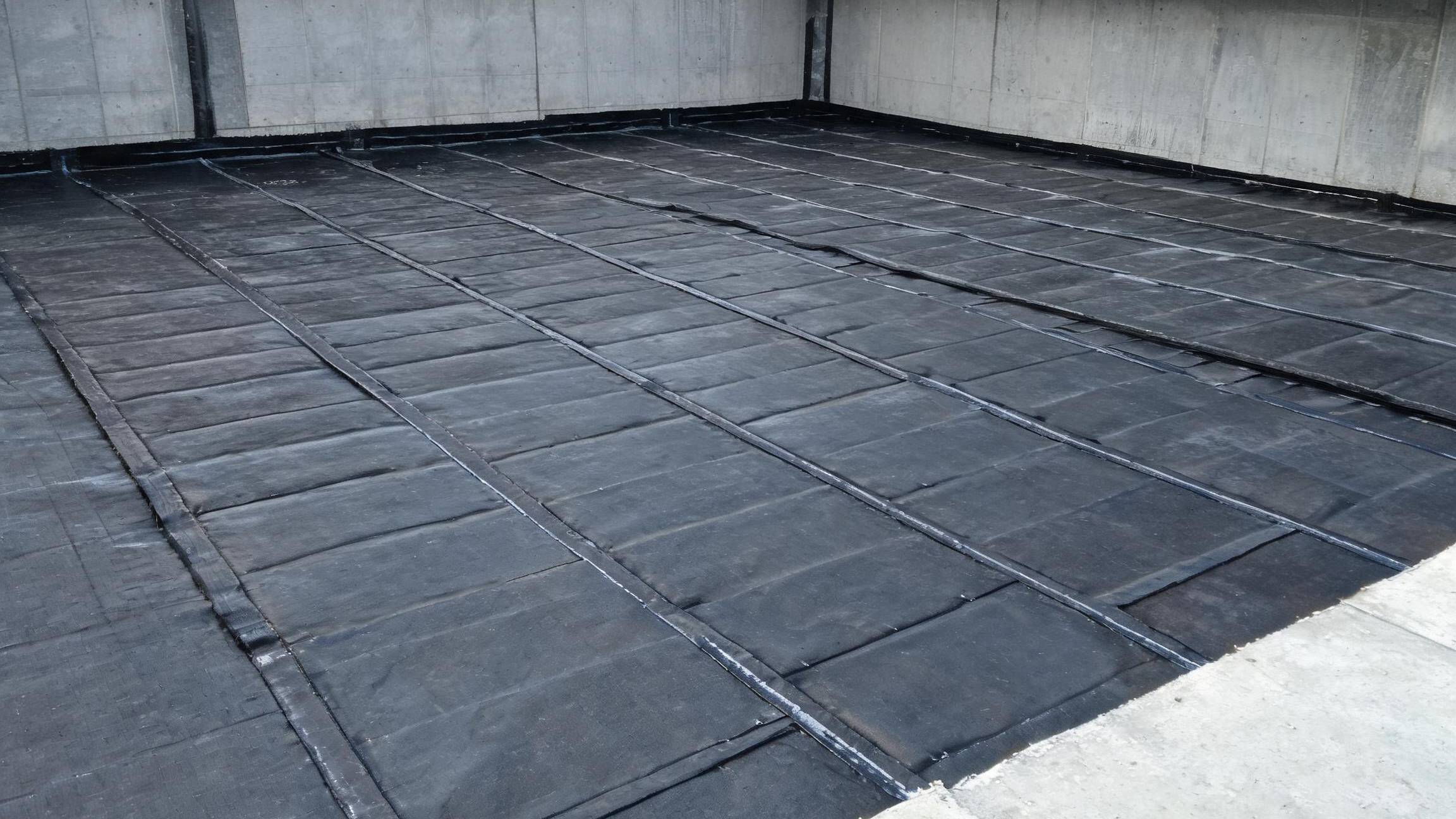
Below-grade waterproofing has one property that makes it fundamentally different from every other application: you cannot go back and fix it.
Once the structure is poured and the excavation backfilled, the waterproofing layer is buried under thousands of tonnes of concrete and soil. A leak that appears two years later cannot be repaired from the outside at any sensible cost. The owner is left with negative-side injection grouting — expensive, disruptive, and rarely a complete solution.
There is a second problem specific to below-grade work: lateral water tracking. If water penetrates a conventional loose-laid membrane at any point, it can travel between the membrane and the concrete until it finds a crack or construction joint, and emerge somewhere entirely unrelated to the entry point. Finding the actual breach becomes nearly impossible.
And a third: torching is often prohibited. Confined excavations, timber shoring, adjacent occupied buildings — many below-grade sites will not permit open flame.
| Element | Product | Specification |
|---|---|---|
| Slab and walls | Self-Adhesive Waterproof Membrane | 1.5 mm, cross-laminated HDPE film, pre-applied |
| Construction joints | Polyurethane Waterproof Coating | Two-component, applied as a reinforcing band |
| Wet-area finishes | JS Cement-Based Waterproof Coating | Two-component, applied to internal faces |
| Protection layer | Non-Woven Geotextile | 300 g/m², installed before backfilling |
Why pre-applied, not post-applied. A pre-applied membrane is laid before the concrete is poured, so the concrete cures directly against the adhesive face. The bond that forms is integral — the membrane and the concrete become mechanically locked together. Water that gets past a damaged point has nowhere to travel, because there is no void to travel through. Any leak stays local, which means it stays findable.
Why self-adhesive, not torch-on. No flame, no gas bottles, no hot-work permit, no fire watch. In a confined excavation this is not a convenience — it is often the only permissible method.
Why a geotextile protection layer. Backfill contains stones. Membranes get punctured by backfill far more often than by anything that happens during installation. A 300 g/m² non-woven layer costs very little relative to the membrane it protects.
A basement envelope where the waterproofing is bonded to the structure rather than lying against it. If damage occurs, water cannot migrate — the leak appears where the breach is, and can be dealt with as a local repair rather than a forensic investigation.
For internal wet areas — plant rooms, lift pits, tanking to habitable spaces — the cement-based coating gives a positive-side layer that bonds directly to the concrete and accepts tiling or screed directly.
2026/09/06
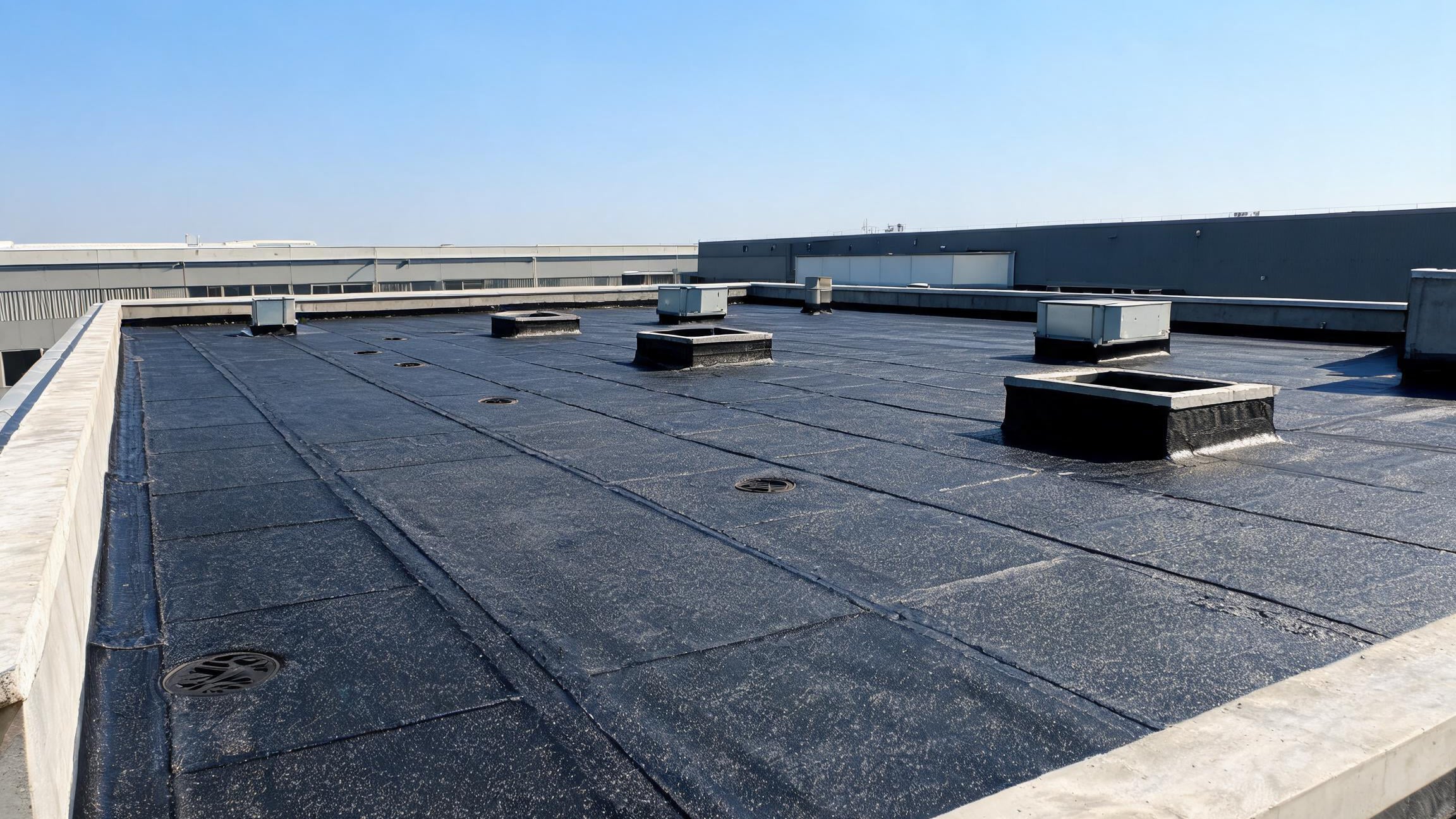
The Challenge A large-span commercial roof — a distribution warehouse, a retail centre, a factory shed — presents a waterproofing problem that has almost nothing to do with the open field of the roof. The field is the easy part. The failu...
2026/09/08
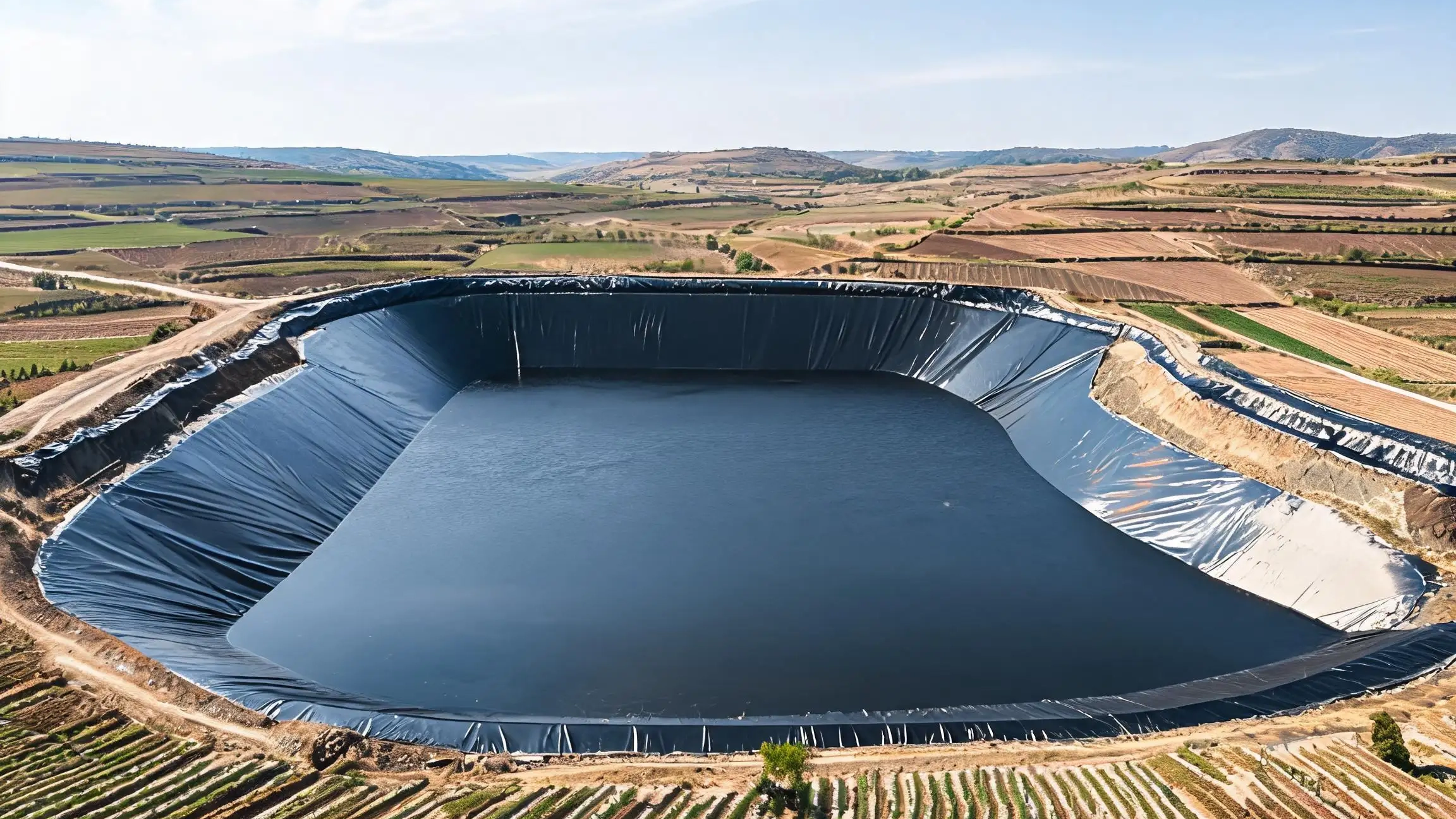
The Challenge An unlined earth reservoir in a region with permeable subsoil can lose a large share of its stored volume to seepage before any of it reaches a crop. In agricultural regions where water is the constraint on yield, that loss is the diffe...
Six steps, one point of contact. You will know what happens next at every stage — and who to ask if it does not.

Share the project, not just a product code — we recommend what actually fits.

Our engineers specify the full system and send data sheets for your contractor.

Samples first. Then a full quotation — price, loading and lead time.

Made on our own lines in parallel — nothing subcontracted.

Batch-tested and photographed before loading. Documents ready with the goods.

Tracking shared, documents couriered. We stay reachable after arrival.
