 EN
Enquiry
Share the project, not just a product code — we recommend what actually fits.

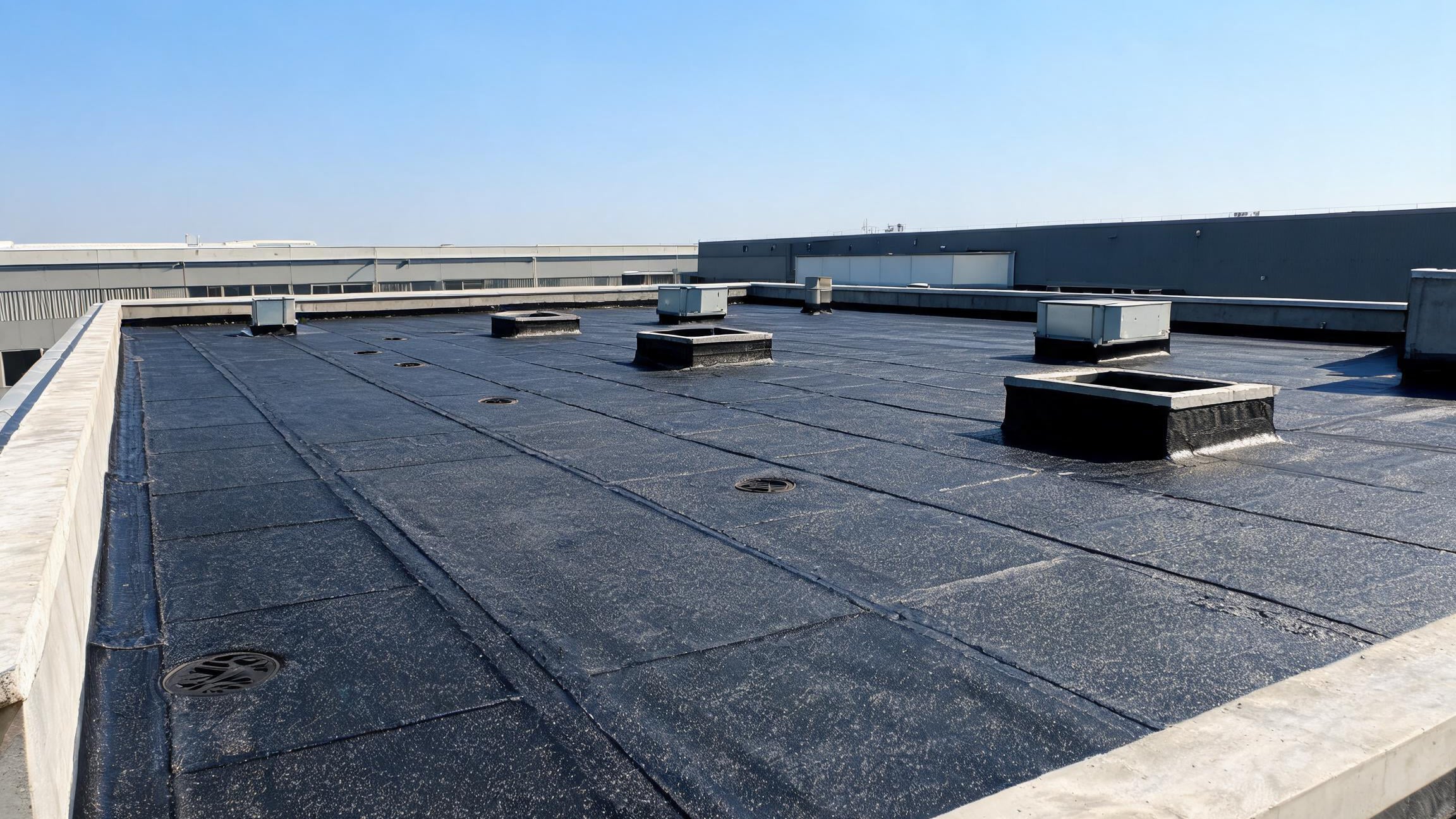
A large-span commercial roof — a distribution warehouse, a retail centre, a factory shed — presents a waterproofing problem that has almost nothing to do with the open field of the roof.
The field is the easy part. The failures happen at the penetrations: rooflights, extraction fans, HVAC curbs, drainage outlets, and the perimeter upstand where the roof meets the parapet. On a 20,000 m² roof there may be several hundred of these details, and every one is a potential entry point.
Add thermal movement. A dark roof surface in a continental climate can swing from −20 °C in winter to +70 °C in summer. The deck expands and contracts underneath the membrane every single day. A waterproofing layer that cannot absorb that movement will eventually crack — usually at a seam, usually at a detail.
| Layer | Product | Specification |
|---|---|---|
| Primer | Bitumen primer | Applied to cleaned, dry concrete deck |
| Base layer | SBS Modified Bitumen Membrane | 3 mm, polyester reinforced, PE film both faces |
| Cap layer | SBS Modified Bitumen Membrane | 4 mm, polyester reinforced, mineral granule surface |
| Details | Polyurethane Waterproof Coating | Liquid-applied at all penetrations and upstands |
Why SBS, not APP. SBS elastomeric bitumen stays flexible down to −25 °C. APP is the better choice in consistently hot climates. For anywhere with a real winter, SBS is the specification.
A two-layer system with liquid-reinforced details gives a roof that is continuous — no straight path from surface to deck anywhere on the roof, including at the several hundred points where something passes through it.
The mineral granule cap surface protects the bitumen from UV, which is the single largest cause of premature ageing in exposed bitumen roofing. Granule colour also reduces surface temperature slightly compared with a black finish.
2026/09/07
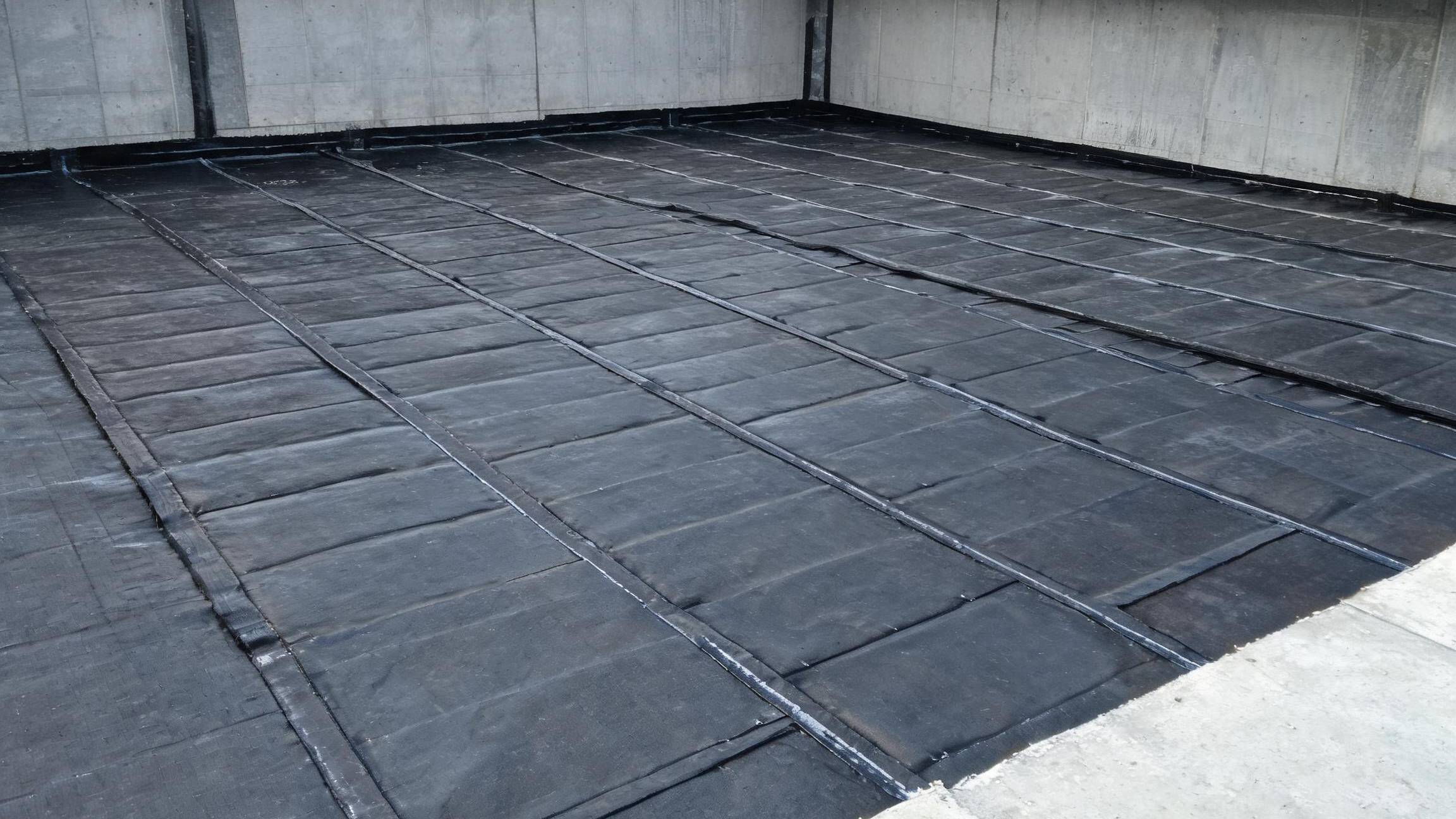
The Challenge Below-grade waterproofing has one property that makes it fundamentally different from every other application: you cannot go back and fix it. Once the structure is poured and the excavation backfilled, the waterproofing layer is buried ...
2026/09/08
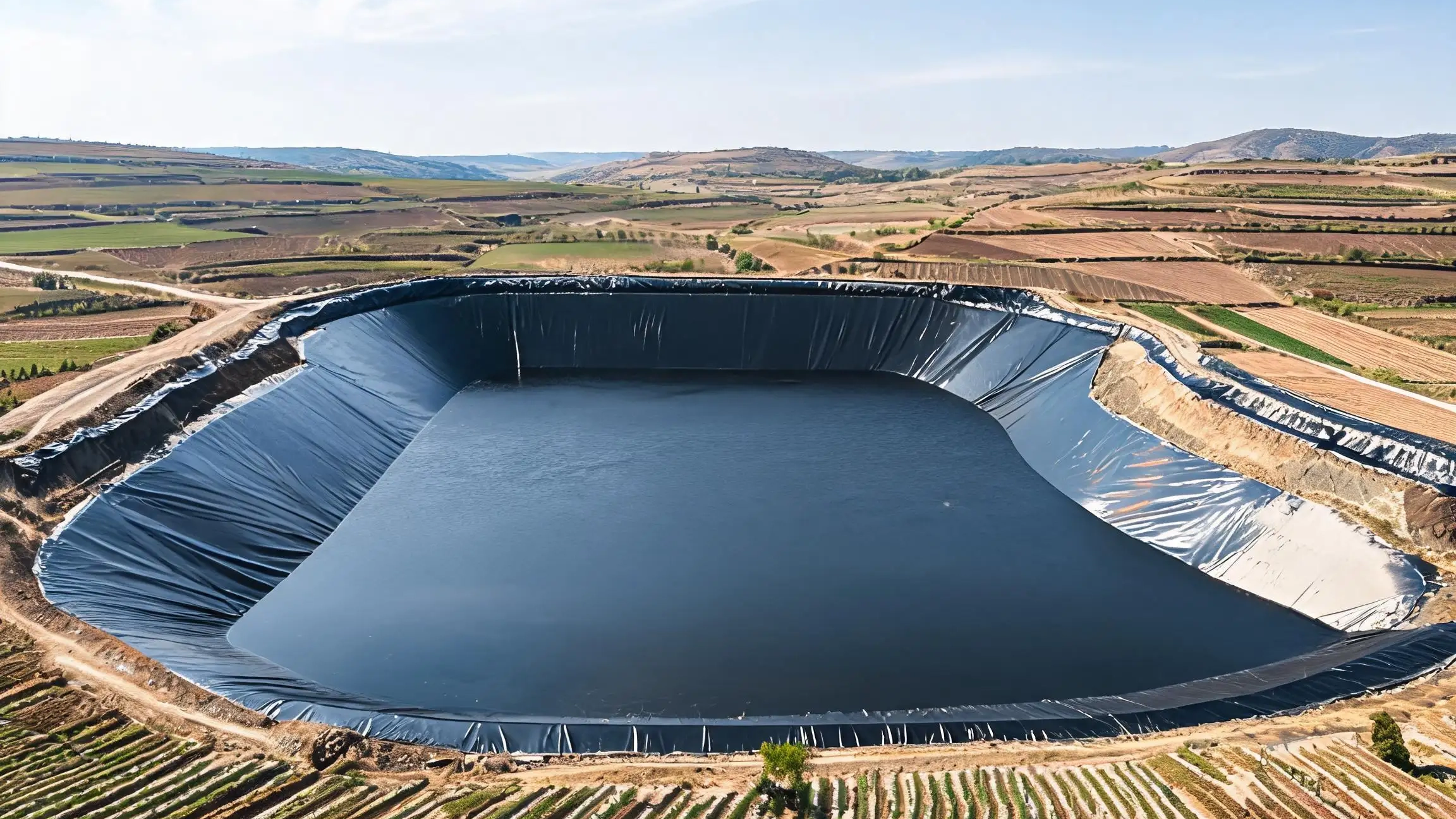
The Challenge An unlined earth reservoir in a region with permeable subsoil can lose a large share of its stored volume to seepage before any of it reaches a crop. In agricultural regions where water is the constraint on yield, that loss is the diffe...
Six steps, one point of contact. You will know what happens next at every stage — and who to ask if it does not.

Share the project, not just a product code — we recommend what actually fits.

Our engineers specify the full system and send data sheets for your contractor.

Samples first. Then a full quotation — price, loading and lead time.

Made on our own lines in parallel — nothing subcontracted.

Batch-tested and photographed before loading. Documents ready with the goods.

Tracking shared, documents couriered. We stay reachable after arrival.
